



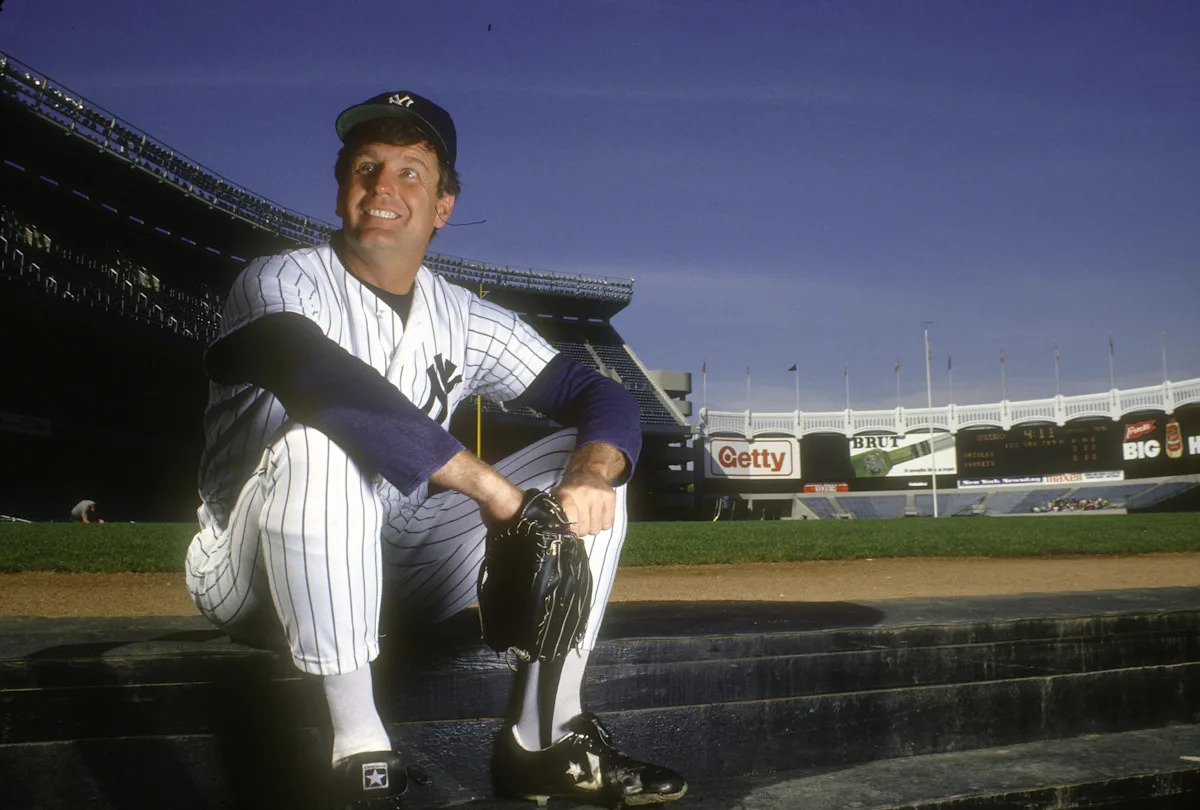
In the baseball canon, Tommy John’s name gets used with more frequency and gravity than almost any one else’s. Unlike some of the other cemented names in the game’s history, John’s recognition comes largely from reasons outside of his play. Now, this does make sense, given the importance of the surgery that bears his name, but it’s also perhaps a bit unfair, as the left-hander was a very good, and sometimes great, pitcher in the big leagues for the better part of three decades.
A four-time All-Star who enjoyed a run of particular run of excellence in the late ‘70s and early ‘80s, John made his mark on and off the field, as a monument of longevity, and of course, providing the name to the procedure that forever changed the game.
Tommy John
Born: May 22, 1943 (Terre Haute, IN)
Yankees Tenure: 1979-82, 1986-89
Born in Indiana in 1943, Thomas Edward John would be pitching in the Major Leagues 46 years later, taking a route that was anything but straightforward.
He made his big league debut back in 1963 with Cleveland, as a spry 20-year-old. The lefty spent two decent-but-brief seasons in Cleveland, before being shipped to the South Side of Chicago in a three-team trade. He had his first great season with the White Sox in ‘68, when he managed a sub-2 ERA and made his first All-Star team.
Prior to the 1972 season, Tommy John was traded to the Dodgers in as high-profile a one-for-one trade as you will see, sent in exchange for Dick Allen. Allen immediately went and won the MVP award in ‘72, but John did his best to match it, entering the best and most significant stretch of his career. His first two seasons in L.A. saw him pitch over 400 combined innings with a neat and tidy 3.00 ERA.
While John had already established himself as a reliable and highly effective starter, his fame would skyrocket for the wrong reasons in the mid-’70s. After an excellent start to the 1974 campaign, the lefty had to leave mid-game in a July start against the Expos. John heard a pop and had significant pain in his throwing elbow; he would not return for the rest of the season. An external doctor told John that it was a career-ending injury, having torn his UCL, though Dodgers’ team doctor Frank Jobe had different plans. He performed the now universally known and eponymous reconstructive surgery, using a tendon from John’s wrist and placing it in his throwing elbow. It was a leap of faith, with the procedure never being done on an athlete, but it was a resounding success. John missed all of the ‘75 season, but ultimately returned, pitching 14 more seasons following the procedure, and of course, paving the way for thousands of other hurlers.
Following the famed procedure, the veteran starter returned for his age-33 season, and was just as good as ever. In fact, it would mark the beginning of the finest stretch of his career. The lefty pitched three more seasons with the Dodgers, working well over 200 innings in each, finishing second in Cy Young voting in ‘77, and making another All-Star team during that stretch. Following another excellent run in 1978, the 15-year veteran hit free agency for the first time, when he signed a three-year deal with the Yankees.
Upon arrival, the impact John had was immediately clear. In 1979, He set a career high with 276.1 innings pitched, doing so at a very high level, managing a sub-3 ERA, notching his first 20-win campaign, and once again finishing second in Cy Young voting. Now several years removed from his revolutionary surgery, the doubt that shadowed him was rightfully subdued.
When the 1980s rolled around, John had entered his late-30s, but he remained near the top of his game. He tossed a whopping 265.1 innings, he won another 22 games, and made his fourth (and third consecutive) All-Star team. In 1981, despite his medical history and 40th birthday beginning to knock on the door, John continued to deal. Although he pitched in just 140.1 innings, thanks to a strike and a frightening medical scare with one of his sons, it was one of his best seasons from a run prevention standpoint, posting a 2.63 ERA in the shortened campaign.
During his initial stretch in New York, he did his part in the postseason as well, particularly in 1981. That year, he was the winning pitcher in Game 1 of the ALCS, stymieing the A’s with six innings of one-run ball. Then in Game 2 of the World Series against the Dodgers that season, John tossed seven shutout frames and did not allow a baserunner to reach until the fifth inning.
Tommy John was traded to the Angels in August of 1982, and despite being 39 at the time, he still had plenty of baseball ahead of him. He pitched in parts of four seasons for the Angels, not quite meeting his standards of performance, but continuing to pitch plenty of innings. After a brief and disappointing finish to the ‘85 season with Oakland, John once again defied the odds and continued to pitch for four more seasons after.
All of this time came in a return to the Yankees. He even posted a sub-3 ERA in over 70 innings in ‘86, and tossed 187.2 innings a year later at the age of 44. Tommy John would pitch his final game at 46-years-old in the 1989 season with New York.
Tommy John’s career and legacy in the baseball world is as significant as some of the biggest names in the game. While that may be primarily for reasons aside from his playing ability, the lefty was a terrific pitcher, and was generally as durable as they come for multiple decades. His eponymous surgery is certainly vital to baseball history, but John should also be remembered as an excellent pitcher, who pitched more than 4,700 Major League innings.
Here’s to a happy 83rd birthday to one of baseball’s biggest names!
See more of the “Yankees Birthday of the Day” series here.
Read the full article here


