






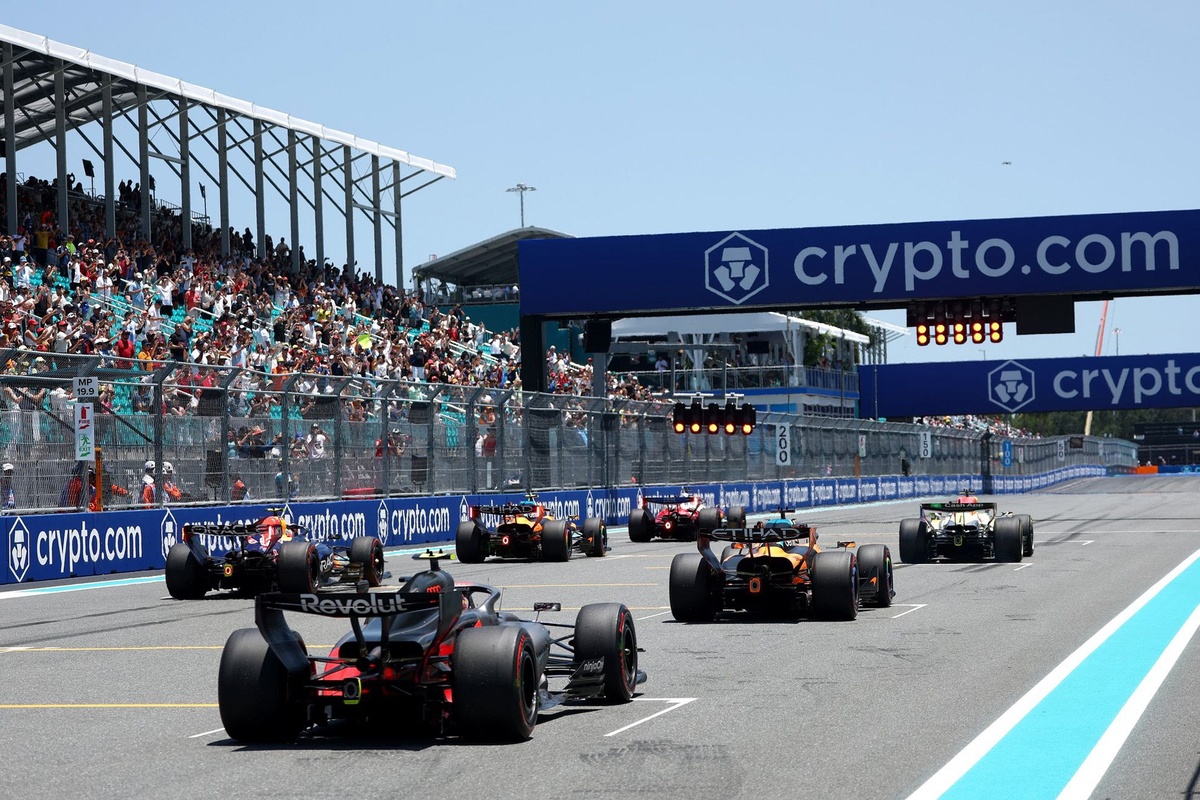
After the practice starts during winter testing in Bahrain proved rather problematic for several Formula 1 outfits, the issue quickly sparked a political debate in the paddock.
Many teams wanted more time during the starting procedure to spool their turbochargers and build up the revs, but Ferrari was not keen on that idea as its smaller turbo gave the Scuderia a competitive advantage off the line.
The eventual compromise was the so-called pre-start procedure, a five-second warning with blue flashing lights on the grid once all cars have lined up following the formation lap.
After its introduction, Fred Vasseur made it clear that this was also the maximum Ferrari was willing to accept, saying “enough is enough”.
The biggest safety concerns surrounding the start have since been addressed, although FIA single-seater director Nikolas Tombazis believes the pre-start procedure will remain in place for the 2027 F1 season.
“I think the five seconds are an established process now, I don’t see why it would change in this regulation cycle,” Tombazis told a select group of media, including Autosport.
Thanks to the smaller turbo, Ferrari had an advantage off the line earlier this year; the extra five seconds was the maximum Vasseur was prepared to accept
Photo by: Alex Bierens de Haan / Getty Images
“That does not have to do with safety. It has just to do with having different cars arriving on the grid at different times, and drivers need to be able to prepare in order to have, let’s say, a proper start.
“I don’t think it’s so much a safety topic. The electrical part is more of a safety topic.”
With those final words, Tombazis was referring to a safety net the FIA has created to prevent a repeat of what happened during the season opener in Melbourne.
There, Liam Lawson got away from his grid slot extremely slowly, with Franco Colapinto only narrowly – and miraculously – managing to avoid him. According to Tombazis, the FIA learned from that incident.
“Well, first of all, we have worked on start line safety,” he said. “From when we discussed the Miami package in late April until now, we’ve been working on some emergency recovery, so electrical parts to help recover a car that has a very slow start and therefore not to risk cars stalling, etc.”
Tombazis was referring to the so-called “low power start detection” system, which detects when a car accelerates unusually slowly after the driver releases the clutch.

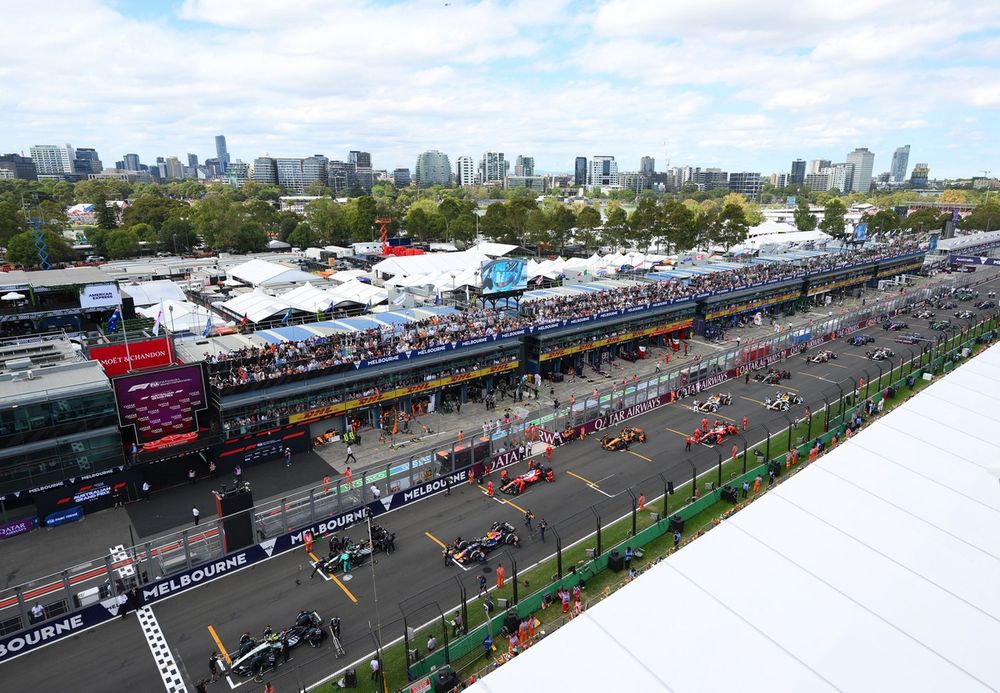
In Melbourne, Colapinto only just managed to avoid Lawson. Since then, safety has improved, according to the FIA
Photo by: Simon Galloway / LAT Images via Getty Images
In such cases, an automatic MGU-K deployment is triggered to ensure a minimum level of acceleration, according to the FIA.
Tombazis has previously made clear that this system certainly does not provide drivers with a competitive advantage. When the system is activated, it merely prevents a dangerous scenario such as the one involving Lawson in Melbourne.
The automatic MGU-K deployment can turn a disastrous start into a bad one, but according to Tombazis it cannot turn a bad start into a competitive one.
This system has addressed the biggest safety concerns, but despite that, the FIA sees no reason to scrap the pre-start procedure for next year.
We want to hear from you!
Let us know what you would like to see from us in the future.
Take our survey
– The Autosport.com Team
Read the full article here


