

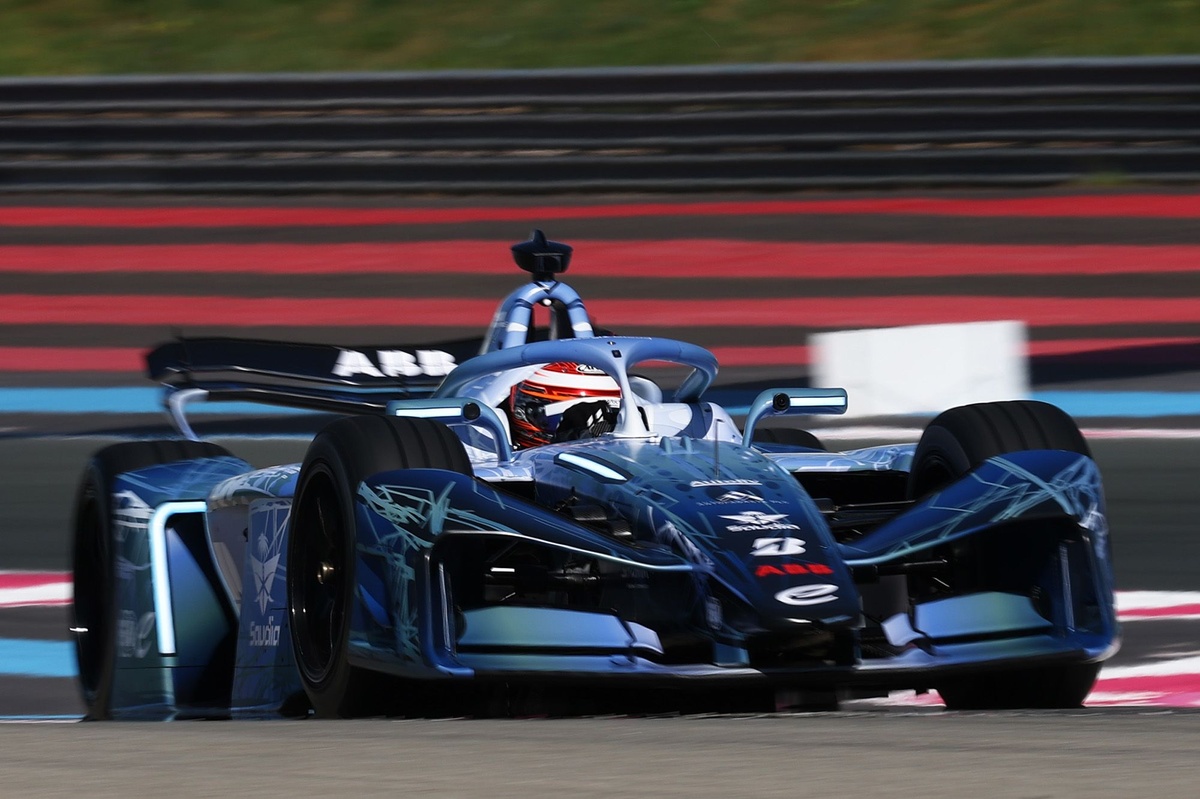
When Formula E unleashes its brand-new generation of machinery– the 600kW, all-wheel drive Gen4 car– it will do so on its most diverse calendar yet, with a mixture of street circuits, classic permanent venues and abridged grand prix tracks.
The time when relatively slow and unimpressive Formula E cars had to be kept to tight, chicane-laden venues to keep their batteries humming along appears to be finally over, and while the likes of Tokyo and Berlin Tempelhof are still on the 21-race 2026-27 schedule, the all-electric series has also traded in the London ExCeL for former grand prix venue Brands Hatch, and expanded to the Circuit of The Americas and Zandvoort.
It is a simple necessity for the larger and wider Gen4 to stretch its legs and put on a show, but one that is also underpinned by its impressive energy regeneration technology, even if Formula E will still add chicanes to most of its grand-prix calibre venues. As a result, FE is changing its identity from a street circuit championship to a calendar that looks increasingly similar to the mix of venues Formula 1 has gravitated towards.
“It kind of has to be, because we’re growing up,” Formula E CEO Jeff Dodds told Autosport. “You go back 12 years when we were in our infancy and you had two cars [that drivers swapped between] because the batteries weren’t very good. The top speeds weren’t very high. We didn’t have any fans. So you wanted to take the races to places where they were naturally put for people around.
“We’ve got over 400million fans around the world now. The cars are capable of almost delivering a similar speed and performance to a Formula 1 car. So inevitably, we have to match the circuit to where the championship is. We want to be close to a big, urban location and we want to be on a circuit that allows the car to show itself off.
“London has been brilliant for us; indoor, outdoor race, great for fans, very disruptive. But you couldn’t put the Gen4 car on that circuit. I went out and visited Bobby Epstein at COTA three years ago. We both decided at the time we’d be better to wait for the bigger, more powerful Gen4 car, which is more suitable for the circuit.”
By adding a second United States race to its two Chinese rounds, Formula E is clearly going after some of the same markets as its big brother, with F1 moving to three US rounds in recent years while courting Chinese manufacturers.
Austin’s COTA joins fellow grand prix venue Miami as the second US round on the 2026-27 Formula E calendar
Photo by: Andy Hone/ LAT Images via Getty Images
At the same time the all-electric series is also bullish about going after F1 with the performance of its future Gen5 car. Having gone from the 350kW Gen3 Evo to the Gen4, which has a race mode of 450kW and an attack mode of up to 600kW, is a generational leap of performance. Dodds was adamant “Gen4 gets us right on the heels [of F1], and Gen5 is probably faster.”
While Dodds acknowledges there is some competition, he stressed the rising tides lift all boats as international motorsport is gaining a foothold alongside NASCAR and IndyCar in the US.
“It’s a bit of both,” he said. “It helps build communities of motorsport fans around those cities. The more you have non-IndyCar and NASCAR races in the US, it starts to raise the awareness of other styles of racing. It’s good for us to have more than one race there. It’s probably good for us that F1 has established more of a fan base there. And it’s a key market. There’s no scenario where we’re not looking to grow our footprint and grow our presence there.”
That two-pronged relationship with F1 was also on display at the recent Monaco E-Prix, when the series invited reigning world champion Lando Norris and other drivers to check out the event, and Norris’ glowing comments on the level of competition would have gone down well with the electric series’ marketing team, though there was a risk of taking the spotlight away from its own leading personalities.
Sprint races done right? How Formula E is trying to “unleash” its Gen4 car
Suggesting Formula E can one day rival F1’s exploding commercial and mainstream popularity still seems fanciful at best, but that doesn’t mean there aren’t ways the electric series can find ways to offer a different product. F1’s six sprint races have been hit and miss, being popular with broadcasters and promoters but offering little competitive variety compared to the main grand prix, with talks ongoing to shake up the format as the series aims to go to double digits from next year.
With its Gen4 car, Formula E has turned the car’s energy constraints into an opportunity to do something different. From the 2026-27 season, the series will introduce a shorter sprint race on its double-header race weekends, with one race the typical E-Prix featuring battery management, and a shorter, so-called E-Prix Unleashed race where drivers can push the impressive new cars to the limit, giving the two races a very distinctive look and feel.
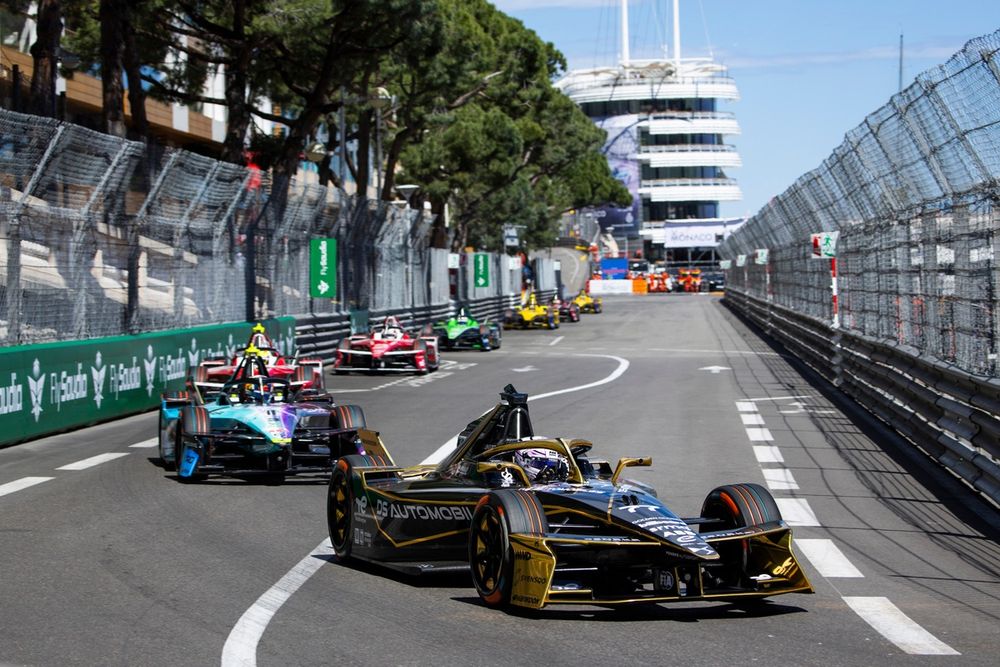
Formula E is ‘growing up’ to move to an increasing number of grand prix venues, complementing its street circuit roots.
Photo by: DPPI
“What people are used to is the strategic part of the racing,” Dodds explained. “We often call it like a game of chess on a racetrack. Battery regeneration, complex racing strategy. What we’ve heard from fans is you’ve got this great new Gen4 car coming. It’s a shame we can’t see it outside of qualifying, really showing off its full potential because there will be points where people are regenerating the battery.
“The E-Prix Unleashed is a race that’s about 10 minutes shorter, but effectively it’s full send. From the moment the lights go out, you get to see 450 kilowatts, high downforce. You get to see these cars flat out. If you came for a weekend, you’d see one complex strategy race and then you get to see the drivers in that beast of a car, just send it in a performance race.”
There might be a world in which the shorter, flat-out race actually becomes the main attraction for fans, but Formula E is keen to preserve its strategy element too, at least for the time being.
“Yes, for a couple of reasons,” Dodds said. “It allows us to have a longer race, which is important, but also it kind of replicates real-world EV driving. Our cars have to regenerate 40% of battery life through the race in the same way that if you’re driving an EV in the city, you have the ability to regenerate the battery through braking and heavy cornering.
“Part of it is about showing the technology off as well. Now, we might be on a call in four or five years’ time where we’re on solid state batteries and technologies advance to the next level and everyone’s buying cars with a 1000-mile range. We might be sitting here saying we don’t need that element of strategy anymore. We can do an hour’s race flat out. But for now, it’s a very interesting part of our championship and a differentiator for us.”
Amid Formula E’s push and pull with F1, divergence looms on the horizon
While tech advances and policy decisions appear to have made F1 and Formula E converge more than ever, F1’s looming return to V8 engines with a bigger emphasis on combustion power will ensure that trend will be reversed in four or five years’ time.
Dodds felt that move was “counter-intuitive” to what the market will look like by then, but having clearly defined identities will help each series stand out from the crowd.
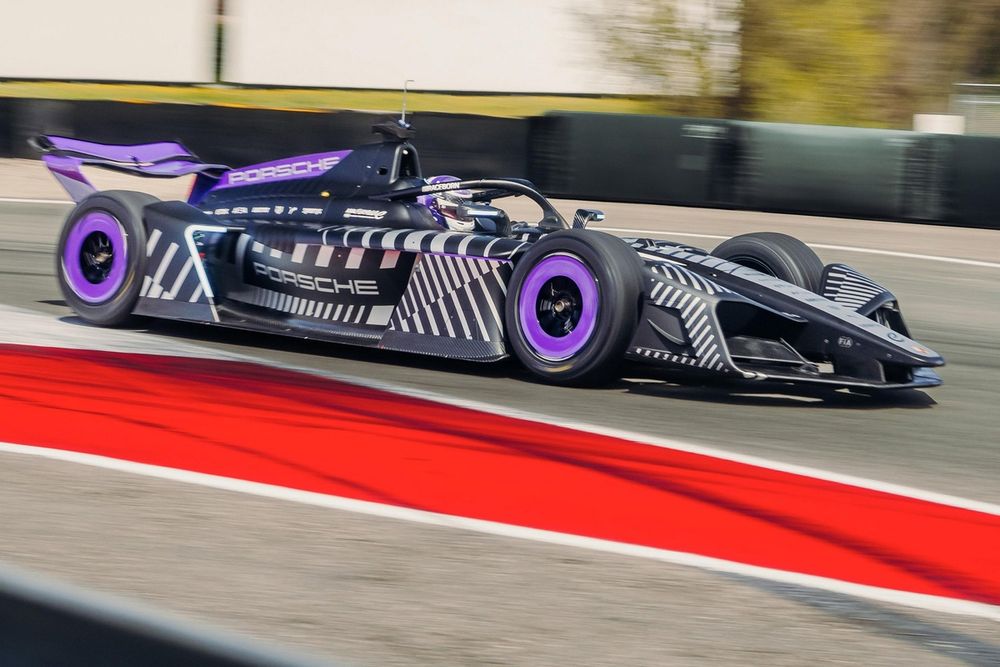
Porsche Gen4
Photo by: Porsche
“The fact that F1 has talked more about electric racing recently is not a bad thing for us from an awareness point of view,” Dodds commented. “But do I think it’s a sensible thing for them to do from our point of view? Yes, of course, because we are pure electric racing. They’ll move to pure combustion racing. That allows us to completely differentiate ourselves. We do the electric racing thing, they do the combustion racing thing. That makes a lot of sense.
“The only thing I’d say is that by 2030 the likelihood is there will be 45million electric vehicles sold around the world that year, double today’s number. So, they’ll be moving towards combustion at a time where domestic mobility is moving very squarely towards electrification. That’s the only thing that feels a bit counter-intuitive to me.
“But from a pure racing spectacle point of view, I think it’s cleaner for fans to know there’s a combustion racing series over there, there’s a pure electric racing series and there’s a couple of hybrids in WEC and IndyCar.”
Regardless of any F1 comparisons or rivalries, there is a lot riding on the much quicker Gen4 car to boost Formula E to the next level, with Dodds optimistic the series has built up strong momentum to keep growing.
When asked by Autosport what the series needs to do next to get to the next level, he replied: “I think we’re already doing the things that it takes to get to the next level. One, we’re already growing. We’re a fast-growth business. We’re growing our revenues. We’re growing our fan base. We’re growing our TV audience. A bigger calendar, taking our product to more people is important. An improved and increased media and digital footprint is really important.
“But to do all of those things, you need to attract people with compelling racing and a great racing car. We’ve had compelling racing for years, but not a racing car that people have looked at and said: ‘That’s as fast or getting close to being as fast as a Formula 1 car.’
“Well, we’re in that world now. I think the ingredients are all there. We just need to keep pushing.”
We want to hear from you!
Let us know what you would like to see from us in the future.
Take our survey
– The Autosport.com Team
Read the full article here