






A sudden, unexpected wave of Formula 1 drivers ignoring blue flags in the Hungarian Grand Prix was caused by a system failure.
Flag signalling has evolved along with technology with F1. Previously, it was just physical flags being waved trackside, but more visible light panels were subsequently added, and drivers now see blue flags pertaining to them on their steering wheel display.
However, in Sunday’s race at the Hungaroring, blue flags were reported to be shown randomly and without driver numbers on the dash, which caused a number of close calls and, at times, incidents.
“We didn’t have any feedback on the dash, on the cars,” Esteban Ocon explained. “So, we only had the blue flag panels, but not with our numbers.
“For example, I was racing Isack [Hadjar] exit of pitlane, but I was a lap down, I didn’t know. So, I might have blocked him for three corners. But by the time the engineers told me, ‘Well, you’re not racing him’, you don’t know because the blue flag is always flashing the whole lap. So, yeah, it’s not really clear.”
Autosport understands the FIA was aware of the ongoing issue and therefore relied on physical flags and light panels.
Carlos Sainz, Williams
Photo by: Liam Fabre
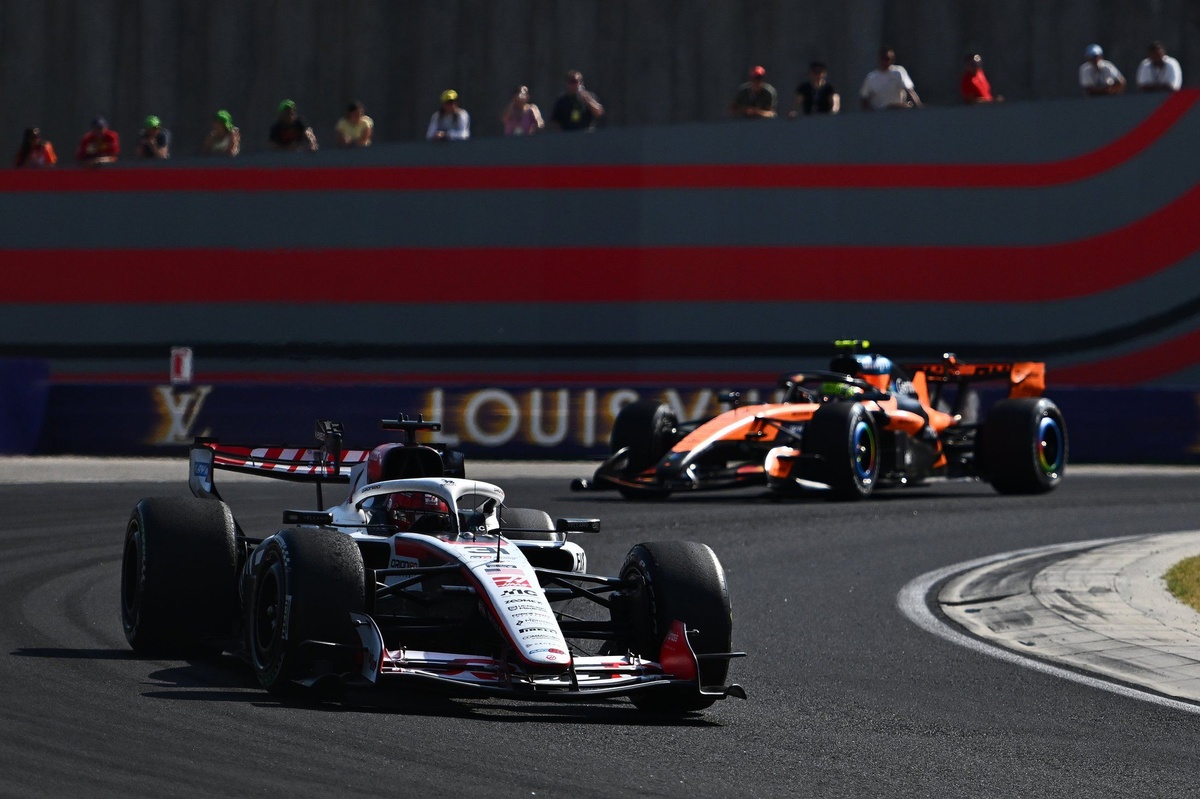
This did not prevent confusion out on track, with the highest-profile example being Carlos Sainz’ collision with Oscar Piastri coming out of Turn 2, which contributed to the McLaren driver losing the lead of the race to team-mate and eventual winner Lando Norris as he attempted to lap the Williams.
“At this stage, I had no idea I was about to get lapped, and on top of that I was in a big fight with Fernando [Alonso], trying to undercut him into the corner,” Sainz explained.
“I wouldn’t have expected Oscar to be there. Even if he was there, or I would have expected, he was on my dead spot on the angle, so it was impossible, honestly, from my side to avoid it.
“Probably a bit better communication would have helped, but at the same time, [it is] a racing thing that sometimes happens.”
Sainz still copped a five-second penalty, with stewards viewing the McLaren’s position in the Spaniard’s blind spot – but not the blue-flag situation – as a mitigating factor, hence why it wasn’t a 10-second penalty.
A similar sanction went Oliver Bearman’s way as the Haas driver failed to respect blue flags when lapped by Isack Hadjar. The contrite Briton felt it was difficult to do better in those tricky circumstances.

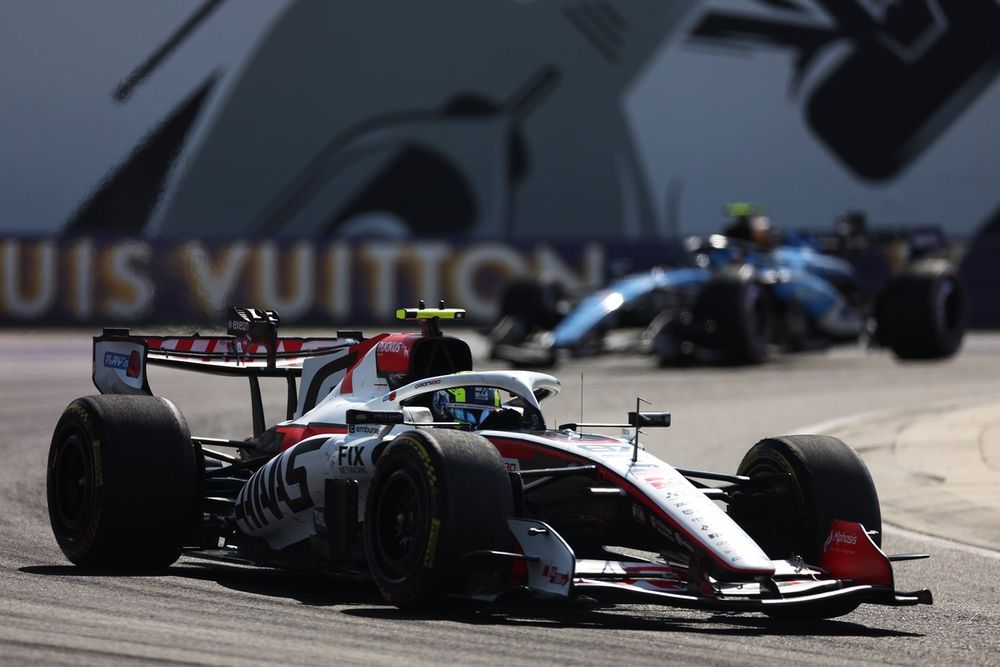
Oliver Bearman, Haas F1 Team
Photo by: Alastair Staley / LAT Images via Getty Images
“I feel bad about the blue-flag penalty with Hadjar, because honestly it was a bit of a nightmare out there,” he lamented.
“You go through basically the infield, you don’t have time to check in the mirrors, and basically every lap I did I had blue-flag screens coming up. This race, they weren’t working properly, so it was tough to know if it was you or the car behind or the car ahead or whatever getting the blue flag.
“Obviously, it wasn’t malicious, I’m a lap down, I’m not trying to do anything bad, but obviously I feel bad for anyone’s race that I may have compromised.”
Bearman further explained: “At the start of the race, I was getting blue flags after six laps, and I thought, ‘Wow, that’s strange. We’re not that slow to be lapped in six laps’.
“So from lap six basically until lap 70, there were some blue flags every single lap, so it was really tough to know what was real, what was fake, what was for me, what wasn’t, because normally you have your number, this time it was just the blue. So, like I said, nothing malicious, I had to really rely on the team to help me through those blue flags.”
Additional reporting by Ronald Vording and Stuart Codling
We want to hear from you!
Let us know what you would like to see from us in the future.
Take our survey
– The Autosport.com Team
Read the full article here


