

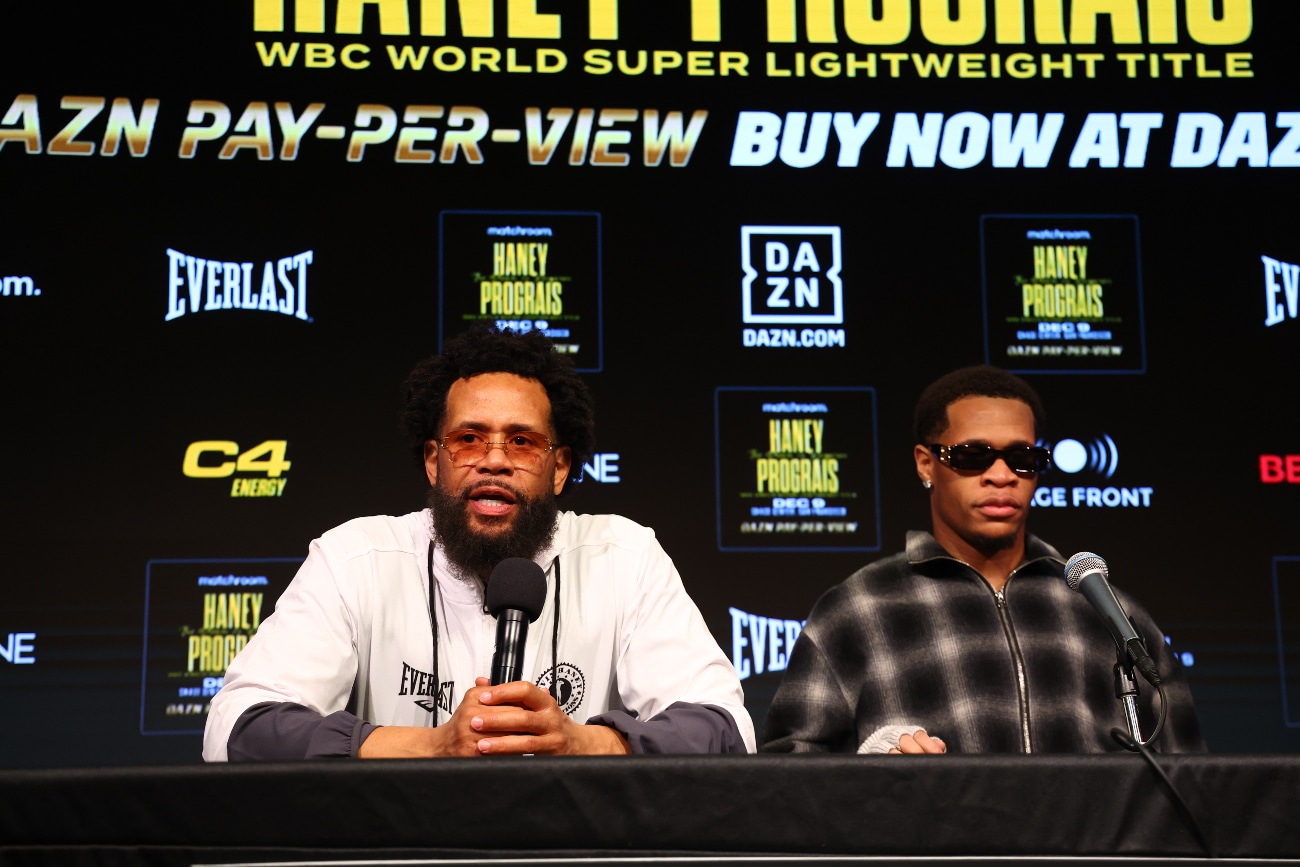

Hearn is essentially saying that while Haney was built into a recognizable name, he never became a self-sustaining financial engine. The cost of his purses, combined with the promotional spend, apparently outweighed the ticket sales and DAZN subscriptions he brought in.
“I’m not prepared to lose a couple of million sticking Devin Haney on a card,” Hearn said.
Hearn explained that signing Haney was still important at the time, especially as a young American fighter with upside, but the numbers behind the shows didn’t fully deliver. He said Matchroom “paid through the nose” to bring Haney in and push him forward, even if the payoff wasn’t immediate.
That experience now shapes how he approaches Haney as an opponent or headliner. Hearn made it clear he’s no longer willing to absorb losses just to attach a recognizable name to a card.
He contrasted that with promoters who may still be in a building phase, pointing to situations where companies are willing to take short-term financial hits.
“Others are. They might lose a couple of million, it’s okay because they’re building their roster,” Hearn said. “I’ve been in that position before. I’m not in that position anymore.”
Haney has still secured major paydays, including appearances on Saudi-backed events and high-profile U.S. cards, and Hearn acknowledged that the fighter and his father Bill have handled their business well. But from a promoter’s standpoint, the calculation has changed.
If the biggest promoter in the sport says he won’t put a guy in a main event because he’ll lose $2 million, it’s hard to argue that the fighter is a true “draw.” It suggests Haney’s status was partially manufactured by high guarantees rather than organic fan demand.
Read the full article here