






With All-Star week upon us, I wanted to share a few favorite All-Star memories, beginning with 1984.
In 1984, for the first time, more than one of our players was named to the All-Star team—we had three: Dave Stieb, Damaso Garcia, and Alfredo Griffin.
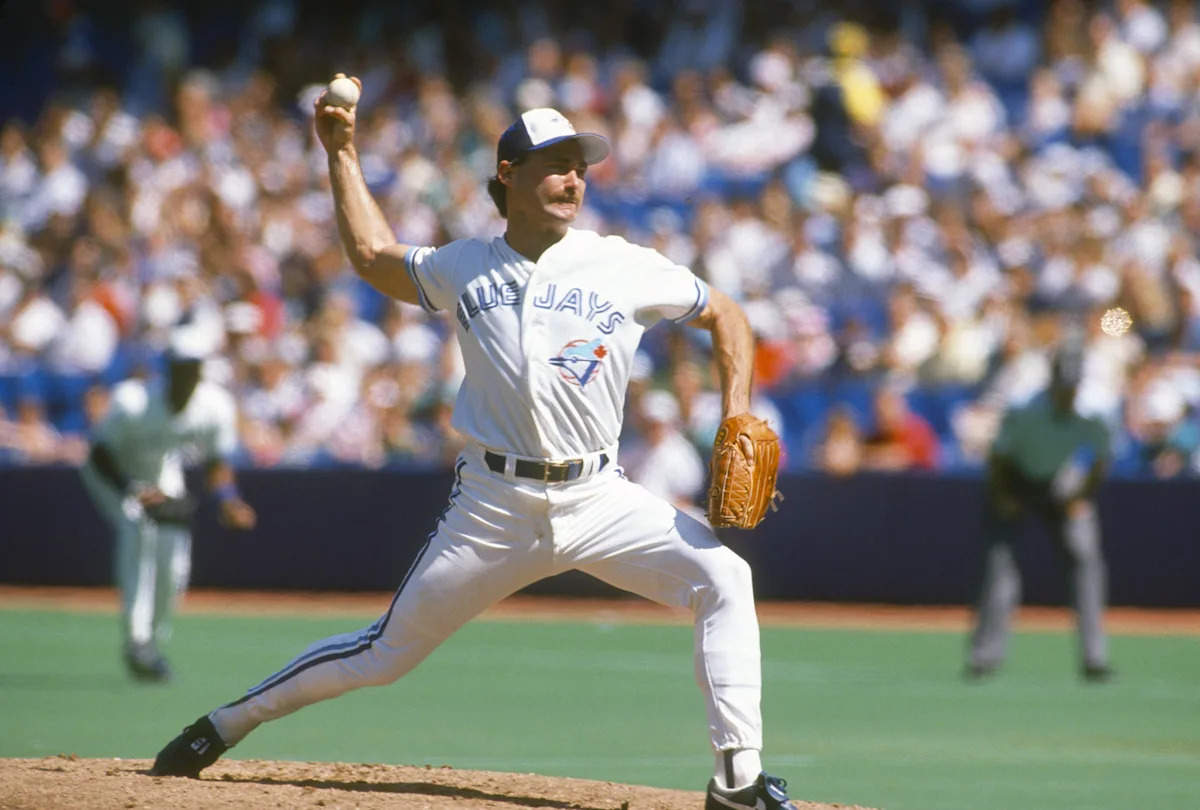
Stieb earned his fourth All-Star nod that year. He ultimately set the franchise record with seven All-Star selections (Roy Halladay was named six times as a Jay). In 1984, for the second consecutive year, Stieb was picked as the starting pitcher. He delivered another stellar season; at the break, he was 9-3 with a 2.42 ERA, and opponents were hitting just .210 against him. He finished 16-8 with a 2.83 ERA, as the team placed second in the AL East at 89-73—15 games behind the eventual World Series champion Detroit Tigers.
Stieb didn’t replicate his strong start from the 1983 game. Steve Garvey singled after ground outs by Tony Gwynn and Ryne Sandberg, then advanced to second on a Reggie Jackson error. Garvey scored on Dale Murphy’s single to left, colliding with catcher Lance Parrish at the plate—Parrish was charged with an error for dropping the ball, so Stieb wasn’t credited with an earned run. Stieb then struck out Mike Schmidt—always impressive to fan one of the best third basemen in baseball history.
In the second, Stieb struck out Darryl Strawberry before giving up a solo homer to Expos catcher Gary Carter, who would be named game MVP. He then retired Ozzie Smith on a grounder and Chili Davis on a lineout to end his two-inning outing. The NL went on to win 3-1, with Stieb taking the loss. He faced four future Hall of Famers.
Garcia made his first All-Star team in 1984 and repeated the honor the following year. He exemplified the kind of middle infielder popular at the time: decent batting average, little power, few walks, and just enough speed to steal bases at nearly a break-even rate. At the break, Damaso was hitting .303/.329/.394, with 27 steals and 48 runs scored—a strong first half. By today’s standards, you’d want him to draw more walks, get on base more often, and maybe provide some extra power. He finished the season with a .284/.310/.374 line, 46 steals, and 79 runs scored.
Damaso entered the game in the bottom of the sixth, replacing starter Lou Whitaker. He had an at-bat in the eighth, popping out foul, and made one play in the field.
But what makes this story a favorite of mine is Griffin’s role. Griffin is arguably one of the least deserving All-Star picks ever. He was a defense-first shortstop in the John McDonald mold, but in 1984, even his hitting lagged behind Johnny Mac’s standards. At the break, Alfredo was hitting .241/.250/.317. Playing nearly every day, he had only 3 walks, 10 extra-base hits, 6 steals (caught 3 times), and 31 runs scored. He didn’t improve after the break, finishing with a .241/.248/.298 line, 4 homers, and 30 RBI. Notably, he posted a walk rate of just 0.9%—less than 1%. So, sorry Clement, I shouldn’t be so hard on you for not taking walks.
So how did Alfredo end up on the team? Back then, MLB provided All-Star players with plane tickets and a hotel room for two. Usually, the player would bring his wife or girlfriend (just a joke!). Damaso invited his friend and teammate, Griffin, to join him in San Francisco. The day before the game, Alan Trammell injured his arm and couldn’t play. With a last-minute roster spot and no time to fly in another player, AL manager Joe Altobelli gave the spot to Griffin—“partly because he’s a fine player, but mostly because he was here.” He made the team simply for being in the right place at the right time.
Griffin entered the game in the bottom of the sixth, replacing Cal Ripken, but never got to bat—Don Mattingly pinch-hit for him in the ninth. He did record an assist on defense. That was his lone All-Star appearance.
I love this story. No matter how much voters or managers might mess up today, you’ll never see someone with a season like Griffin’s make an All-Star team again. He made it just by being there, fitting the uniform—and that’s the whole story.
Read the full article here


