



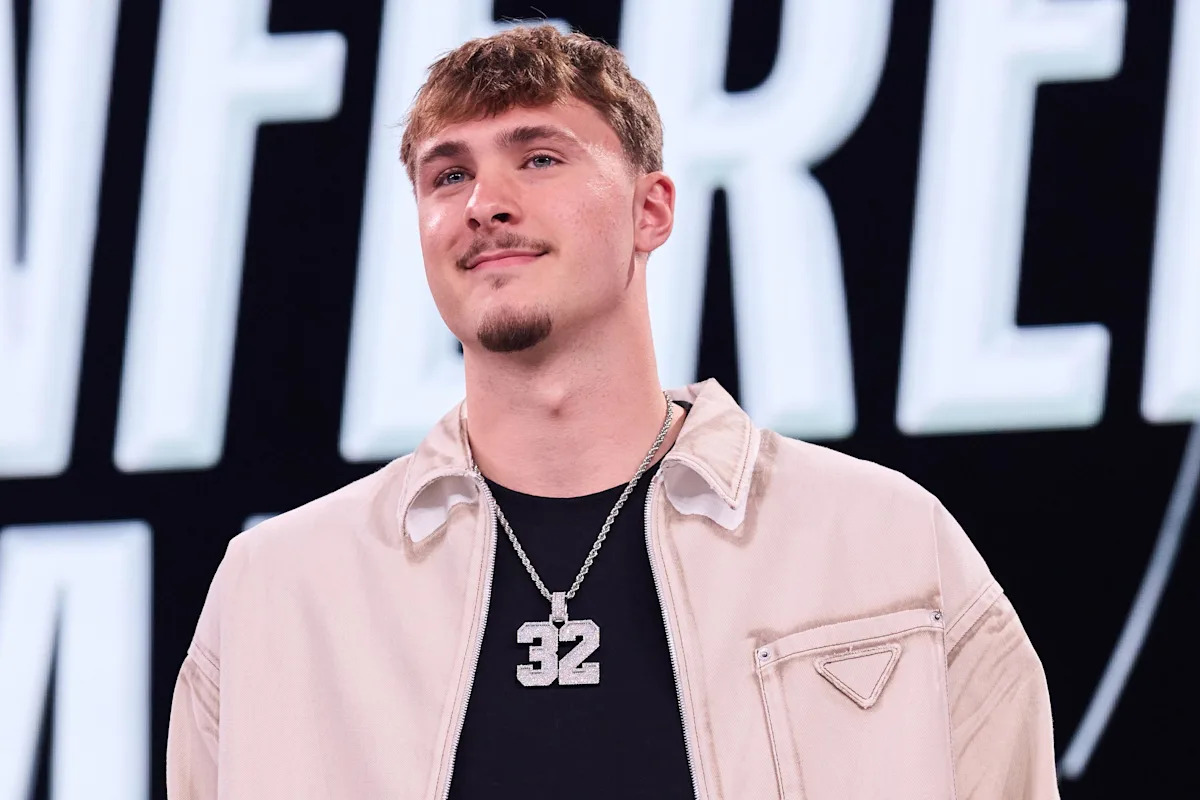
After a fantastic rookie season, the natural next question regarding Cooper Flagg is, just how good can he be? Specifically, can he become good enough to be the best player on a championship team? He has a lot of promising attributes — defensive intuition, scoring with physicality, touch unprecedented for a kid his age and a growth rate higher than 99 percent of teenagers. The glaring hole in his game is the 3-point shot, something that he made at just 29.5 percent last season. It would be easy to say that to get to the next level, he needs to become a great shooter. I would argue, however, that that isn’t necessary. Becoming a league-average shooter is fine, but he really needs to lean into what he does best: score in the paint.
If you watched Flagg at all last year, you would know the most obvious part of his game was his control and pace going downhill. He was not just good at driving for a rookie — he was among the league’s best at scoring on the way to the basket. Of players who drove at least 12 times per game (Flagg was at 12.8), he was seventh in the NBA in points per drive (0.71). This was partially due to the physicality he displayed and his ability to get to his spots at will, but a lot of it had to do with his touch in the paint. According to NBA.com, Flagg took the sixth-most non-rim paint field goals, and shot them at just above 47 percent:
For someone his age, playing in a conference with guys like Victor Wembanyama, Chet Holmgren, and Rudy Gobert patrolling the paint, that is incredibly impressive. He never shied away from driving into the league’s finest shot-blockers, evidenced most clearly by the below highlight Giannis Antetokounmpo for a crucial late-game finish:
We know he is great from 15 feet and in. But, in a space-and-chuck league, why would he not try to get his 3-point shot up to 40 percent on volume? Well, let’s look at the last seven non-Steph Curry NBA Finals MVPs and what they did in the regular season from three:
|
Player |
3P% |
3PA |
|---|---|---|
|
Jalen Brunson, 2026 |
36.9 |
7.1 |
|
Shai Gilgeous-Alexander, 2025 |
37.5 |
5.7 |
|
Jaylen Brown, 2024 |
35.4 |
5.9 |
|
Nikola Jokic, 2023 |
38.3 |
2.2 |
|
Giannis Antetokounmpo, 2021 |
30.3 |
3.6 |
|
LeBron James, 2020 |
34.8 |
6.3 |
|
Kawhi Leonard, 2019 |
37.1 |
5.0 |
Cooper Flagg shot 29.5 percent from distance on 3.5 attempts in his rookie year. The league average was 36 percent last season and has hovered between 35 and 37 percent since 2019. All of these guys who won Finals MVP were no better than a percentage point (or two in Jokic’s case, but he shot just two threes a game) than the league average. What they all did, however, was get to their spot at will and score in the paint. They were forces of nature, for lack of a better term. That is exactly what Flagg should focus on to get to the next level.
Now, he certainly has to shoot better. If he makes 36 percent of his threes versus 30 percent, that opens up the floor for his drives. If he takes between five and six threes a game and makes two to three of them, he becomes respectable enough for the defense to stretch. But, of his 11 30-point games last year, he shot more than six threes just twice, and scored 40 points three times while shooting five or fewer. That is the formula: be lethal going downhill, and shoot enough threes to keep the defense honest. If Flagg bumps up his efficiency on the shots he is already borderline elite at creating, we will be looking at a guy who resembles all of the recent Finals MVPs.
Read the full article here


