







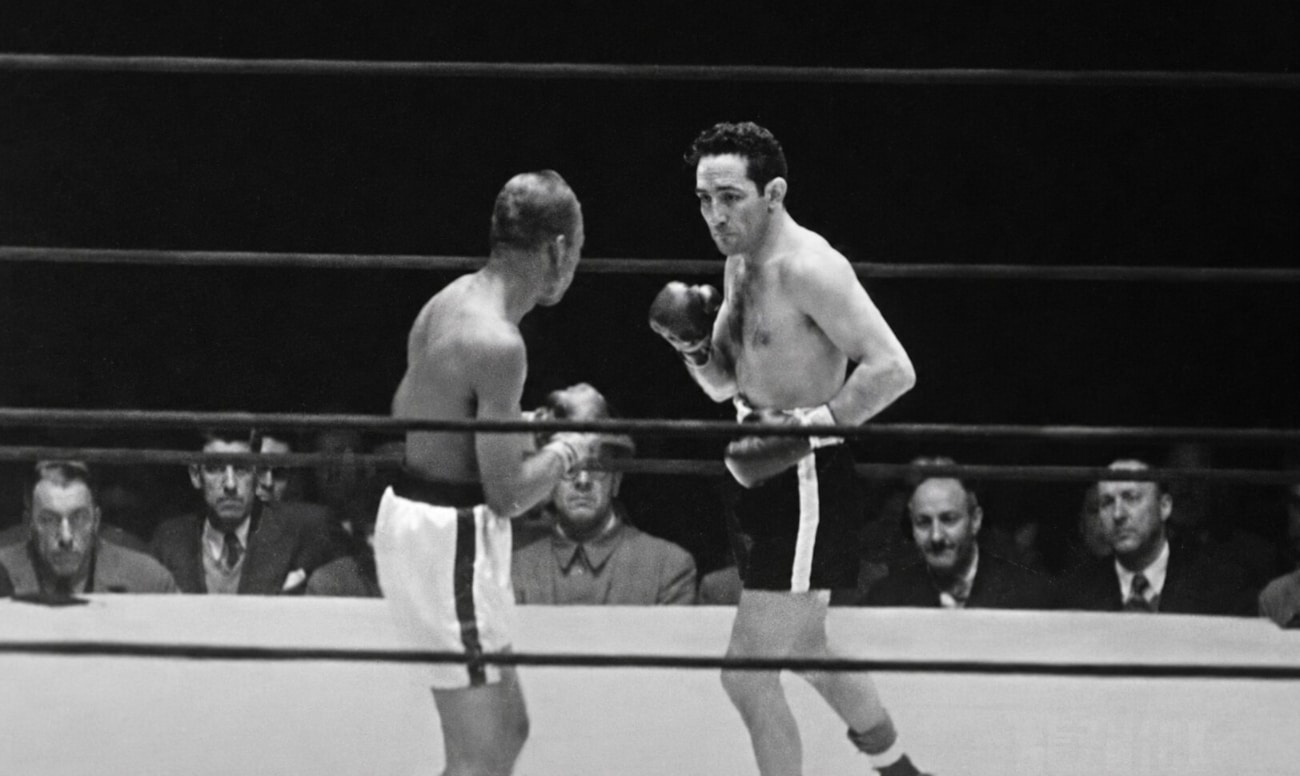


Willie Pep recorded 229 victories, Archie Moore won 186 times and Sugar Ray Robinson collected 174 wins. Fritzie Zivic, Henry Armstrong, Nicolino Locche, Kid Gavilan, Julio Cesar Chavez and Roberto Duran also passed 100.
Their totals came from a boxing economy built around regular ticket sales at local halls and arenas. Boxers needed another booking to collect another purse. Staying active also kept them in fighting condition, reducing the need for the long rebuilding camps associated with current appearances.
Modern headliners receive broadcast guarantees and purses that allow them to earn more from one event than an earlier fighter might have made across dozens of appearances. The financial pressure to box every few weeks has disappeared at the highest level.
A Loss Once Meant Something Different
Promoters today market a perfect record as proof of superiority. One defeat can reduce a fighter’s television value, weaken his negotiating position and send his handlers searching for several favorable opponents to rebuild him.
Earlier generations had less reason to protect every number. A defeat could be treated as experience because another fight might be available within weeks. Weekly club shows also gave developing professionals room to accumulate 40 or 50 contests before reaching the national level.
That regional structure has largely disappeared. Many prospects now move from long amateur careers into televised professional fights without passing through the same volume of club competition.
The Fighters Paid to Test Prospects
Kristian Laight finished with 12 wins, 279 losses and nine draws, but calling him one of boxing’s greatest losers misses his value. He completed 300 fights and was stopped only five times. That required defensive awareness, composure and a clear understanding of how to survive difficult rounds.
Promoters trusted Laight to test developing fighters without turning every bout into a reckless war. He provided rounds, exposed mistakes and helped matchmakers judge if a prospect was ready to advance.
Reggie Strickland served a similar role during a 360-fight career, compiling 66 wins, 276 losses and 18 draws. Peter Buckley recorded 32 wins, 256 losses and 12 draws while facing future champions including Naseem Hamed, Kell Brook, Acelino Freitas and Gavin Rees.
Both men regularly traveled into the territory of promoted fighters. Winning a close points decision under those conditions was difficult, especially when the local boxer represented the financial investment behind the event. Their records cannot be separated from the purpose they served.
Too many upsets would cost a journeyman future calls. Getting knocked out too easily offered little developmental value. The job required operating between those extremes.
Boxing records tell us who won and lost, but not what each fighter was being paid to accomplish. Wickwar’s 340 victories preserve the remains of an industry built on constant competition. Laight’s 279 defeats expose the workforce that allowed another generation to learn its trade.
Both records belong in boxing history, though not for the same reason.
Al-improved screenshot of Willie Pep.
Read the full article here


