






Xaivian Lee committed to Gonzaga on Wednesday, announcing it on his Instagram eight days after a California court granted him a fifth year of eligibility and the ability to enter the transfer portal.
The Zags have their guy at the point guard spot. What’s still uncertain is who their “backup guy” will be. And I’m of the opinion that the value of Nathan de Sousa has gotten lost in the excitement over Gonzaga’s other two recent point guard signings.
The Saga So Far…
If you’re all caught up with who’s eligible and why for the Zags or if you aren’t interested in a refreshing neener-neener sidenote on why Donovan Dent’s decision to sign on at LSU has proven deliciously ironic, please feel free to skip ahead, here.
The commitment of Xaivian Lee ends (for now…) a migraine-inducing Gonzaga backcourt drama that began months ago, when former commit Jack Kayil elected to stay in the NBA Draft process, and former point guard Mario Saint-Supery signed a multiyear deal with Valencia Basket in mid-July, leaving Gonzaga’s backcourt effectively decimated.
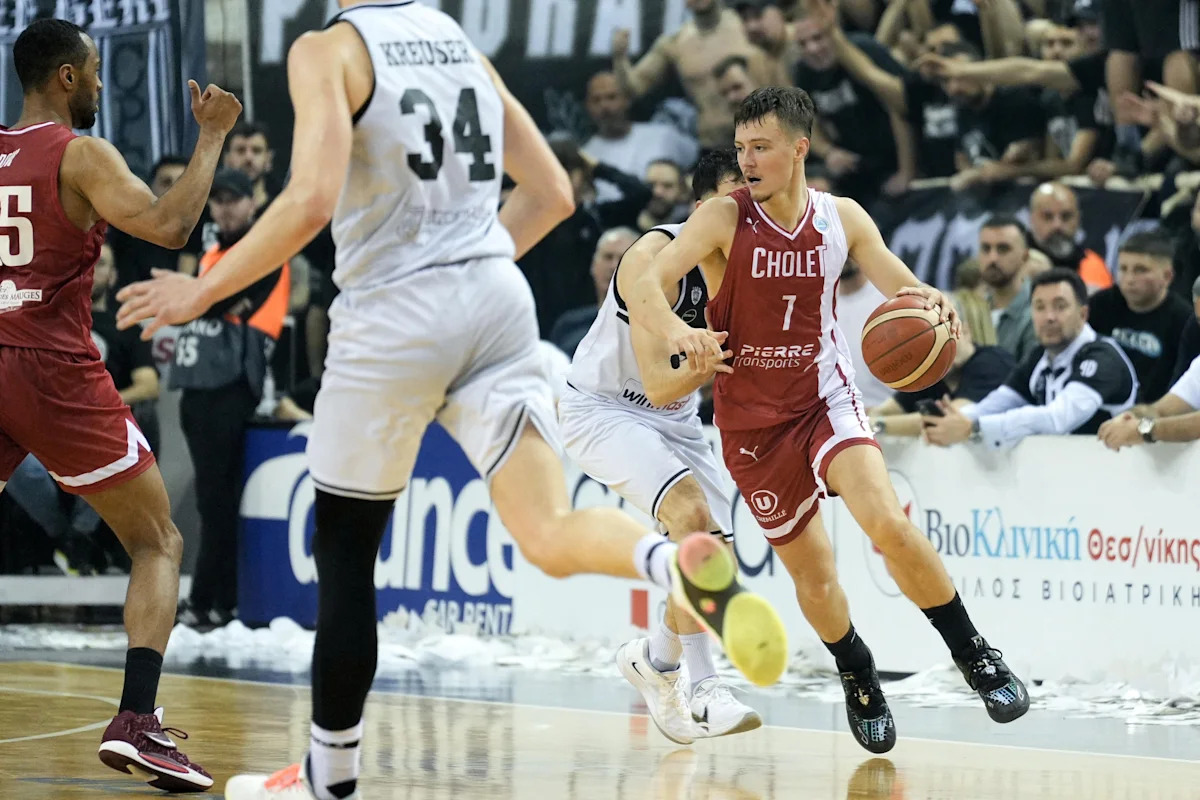
The Zags had already added Nathan de Sousa on June 26, before Saint-Supery’s exit. De Sousa is a 23-year-old French point guard who spent the last five seasons with Cholet Basket of the LNB Elite. Then on Aug. 5, Gonzaga secured a commit from Javon Bennett, a 5-foot-10 fifth-year guard who started all 37 games for Dayton last season. Bennett committed after court rulings gave him a fifth year of eligibility. The following week, the injunctions that granted it in the first place were put on hold pending appeal by the NCAA.
To add weird insult to weirder injury, UCLA fifth-year transfer Donovan Dent, the other point guard Gonzaga had been linked to all month, committed to LSU, stepping out of the frying pan and directly into the fryer of Division I eligibility.
A Quick Note on the Situation at LSU…
The finger-licking irony for any Zag fan miffed with Donovan Dent for signing on in Baton Rouge is that LSU currently has just four players whose eligibility for the 2026-27 season isn’t in significant jeopardy. Four. Total.
Recent UCLA transfers Skyy Clark and Dent bring the count of eligible players to six but with an important asterisk, as that eligibility is currently being challenged on appeal by the NCAA.
The other six players that coach Will Wade signed this offseason (five legit European pros and former Utah Jazz signee RJ Luis) are still waiting on a first ruling to decide whether their professional status precludes them from a return to college. Luis’s preliminary injunction lasted exactly one day before the SEC itself approved a new policy that would prevent him and any other former pro from playing in the conference at all; a policy which comes with massive penalties for any school that violates that order.
That’s the roster situation at LSU. Dent signed on two weeks ago knowing all of it, securing a hefty bag for himself but betting his last season of competition on a team where two-thirds of the roster is looking less and less eligible by the day.
The Eligibility Math
This may all be a moot point in the first place. Javon Bennett’s eligibility was successfully stayed by the NCAA, so his only path forward is either to throw his name into another state-level suit or to keep his fingers crossed that the NCAA’s appeal process plays out lickety-split.
Nathan e Sousa’s case for eligibility in the first place is also probably significantly stronger than Bennett’s. De Sousa still needs the NCAA to process an international eligibility waiver, part of the same review of overseas pros keeping most of LSU’s roster sidelined. His case is more straightforward than coach Will Wade’s, though. What he was paid in France likely falls well below the compensation threshold that would classify him as a true, legitimate professional in the eyes of the NCAA and thus wouldn’t preclude him from college eligibility. The second problem is a travel visa. He told The Spokesman Review on Aug. 22 that he expected it within days and planned to be in Spokane this week. Based on his Instagram story, he’s still in Paris, watching the French national team in the FIBA World Cup 2027 European qualifiers.
Visa approval can be a bizarre and Kafkaesque bureaucratic nightmare. There’s no way to check in on that timeline from the outside, so for now it’s a waiting game.
Back to Spokane
What it all boils down to is that Xaivian Lee is now the first of the three committed point guards who is both eligible and cleared to play (again, for now…).
Lee is a 6-foot-4 fifth-year guard from Toronto who played three years at Princeton and one at Florida. In the Ivy League, he averaged 17.1 points as a sophomore and 16.9 as a junior and took first-team all-conference in 2024 and 2025. Last season he put up 11.6 points and a team-high 4.2 assists as Florida’s starting shooting guard. Although the NCAA is still appealing the status of every class of 2022 athlete, Gonzaga, for the time being, has a point guard.
But Lee won’t play 40 minutes a night, and the Zags have struggled to maintain offensive continuity in the past when their table-setting lead guard takes a rest. Whoever steps in behind him has a crucial role to play. The assumption up til now has been that it falls to Javon Bennett, but the Zags have another good option available.
In Defense of Nathan de Sousa
“NDS” came off the bench in all 36 of his appearances for Cholet last season and averaged 10.2 points in 19.2 minutes a game. He posted a 42.6 percent assist rate and a 2.7 assist-to-turnover ratio while using nearly a quarter of Cholet’s possessions, which is a starter’s workload with a reserve’s minutes. Cholet finished fifth in a 16-team league at 19-11 in the regular season with him running the second unit.
It’s easy to see why the assumption would be Javon Bennett over Nathan de Sousa. He’s a known, box-score-proven guard who just averaged 15.8 points on a first-team All-Atlantic 10 season and beat BYU and Florida State doing it. De Sousa is an unproven 23-year-old walking in from a foreign pro league most fans have never heard of. That instinct makes sense on name recognition but falls apart once you look at what Xaivian Lee contributes on the floor and what might be needed when he’s off it.
Bennett’s last season at Dayton ran on volume. 12.7 shots a night across 34.5 minutes, 471 attempts on the year, the most on Dayton’s roster, to get to 15.8 points a game. Scale that down to the 12 or 13 minutes a backup point guard in Gonzaga’s system is likely to play, and it lands around five or six points, and that assumes he shoots exactly like himself against Pac-12 defenses that are a step up from the A-10 in size and physicality.
Five or six points isn’t nothing, but it also costs you the distribution the offense actually runs on. Lee puts up 6.1 assists per 40 minutes. Bennett puts up 3.4. The guard you’d bring in to cover a cold shooting night from Lee might be the more consistent outside threat, but he moves the ball at roughly half the rate, which is trading one problem for another.
Defense is the bigger problem. The knock on Lee through four years of scouting is that bigger, more physical guards move him off his spot, and at 5-foot-10 and 165 pounds Bennett gives up height and weight to Lee himself and to the guards he’d be checking in Lee’s place. Pull Lee for a shooting slump, put Bennett in for a scoring nudge, and the perimeter shell gets worse in the process.
De Sousa doesn’t have either problem. He played those 19.2 minutes a night in a complementary role and still ran close to five assists a game, a rate that scales to better than 10 per 40, and he did it while playing hard-nosed, aggressive defense. Listings run from 6-foot-1 to 6-foot-3 at 194 pounds, and the scouting language out of France consistently mentions his toughness and his passing feel.
What he does with the ball looks nothing like what Lee or Bennett do with it. Lee led the Gators with 4.2 assists per game in 27.4 minutes a night, creating off the dribble and pulling up for a clean look or kicking to the right man in traffic, the same face and demeanor whether it drops or rims out. Lee has always been all business. De Sousa, on the other hand, gets downhill, finds the roller, draws fouls at the rim, and then screams in a defender’s face about it. The Zags have not had a Nathan de Sousa in a long while, maybe ever. They’re two very different point guards, and two completely different looks when something needs to change.
Lee is the higher-usage engine, undoubtedly, built to create off the bounce and put the ball in the right hands when it needs to be there, with the thinner frame that comes with that game. De Sousa is built to guard up, keep the offense moving without needing touches, and absorb minutes against backcourts with more size than Lee can handle. Lee running it and de Sousa spelling him for up to 15 minutes a night plays to what each is built to do and lets the Zags switch looks and get some much-needed spark based on who’s across from them.
Final Thoughts
Xaivian Lee solves the no-point-guard problem. He doesn’t solve the logjam behind him. Javon Bennett’s game needs touches he won’t get in a bench role, and his size compounds the problem on the defensive side. De Sousa, however, has already shown he can do exactly what Lee doesn’t: body up larger guards and pump up the energy with his aggressive and chaotic style of play. He did it all while playing bench minutes for a professional club and without needing the offense to run through him.
The temperament gap makes it more interesting. Lee gets a shot up and jogs back down the floor, quiet about it either way. De Sousa’s temperament can best be described as “high energy” or “hustle guy” or “absolute maniac.” A team needs two speeds at that position sometimes. Lee and De Sousa give Gonzaga that. Lee and Bennett give Gonzaga a bad answer to a tough question of size, skill, and fit.
None of it may end up mattering, remember. Bennett’s eligibility is stayed, maybe for good, and Nathan de Sousa is still in Paris waiting on a visa and a waiver with no public timeline attached. But if this breaks the way it looks like it’s breaking, Gonzaga isn’t scrambling for a fallback behind Lee. They already have the guy who committed back in June, before any of this started. That’s a decent place to land in the last week of August.
Read the full article here


