

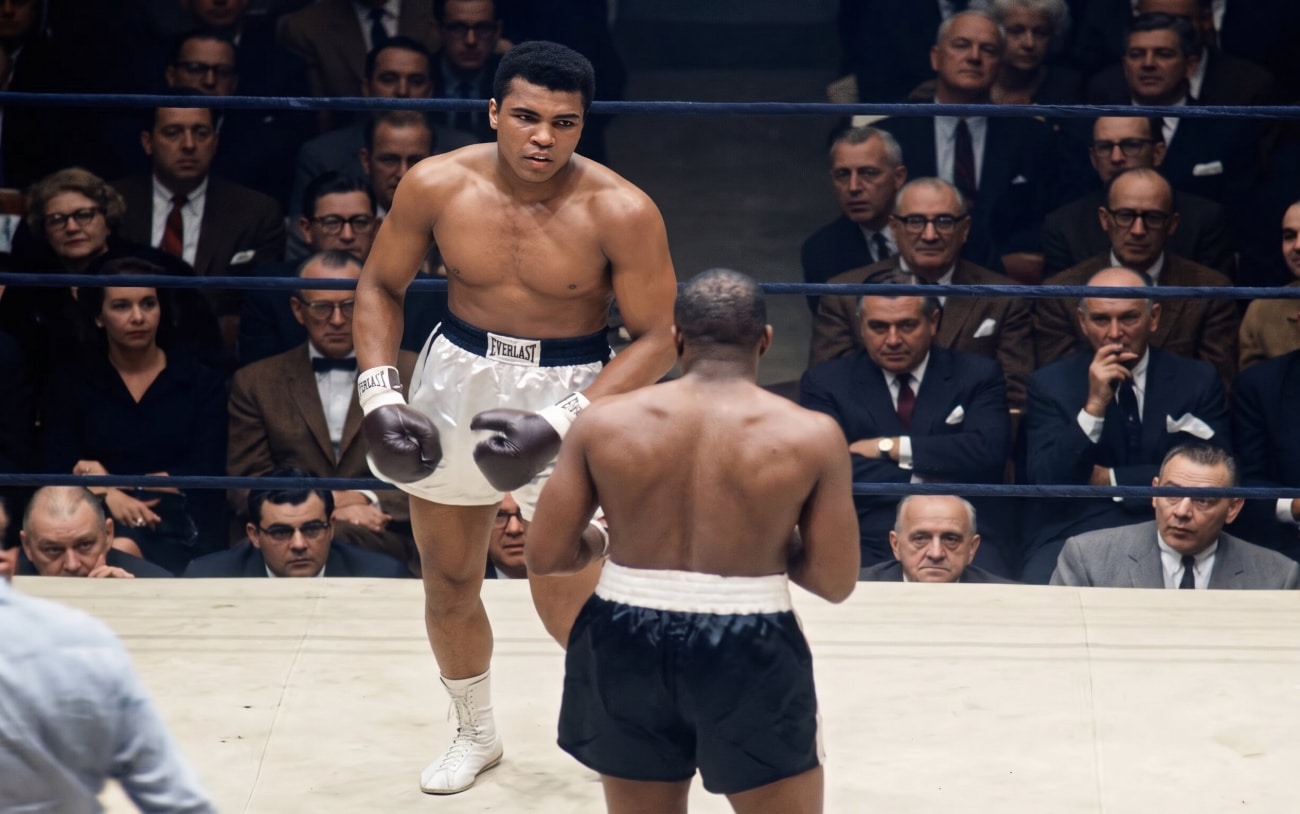
Long before Cassius Clay shocked Sonny Liston to capture the world title, many in boxing believed Doug Jones might expose the technical flaws that would prevent the young contender from reaching the top. Their March 13, 1963 meeting at Madison Square Garden was more than another step up the rankings. It was viewed as the first genuine attempt to separate the rising star’s confidence from his actual ability.
The 10-round eliminator matched the second- and third-ranked contenders, with Floyd Patterson occupying the top spot while preparing for his rematch with Liston. Clay entered with a perfect 17-0 record and was installed as a 3-1 favorite, but Jones had earned respect throughout the division with his disciplined counterpunching and recent victory over Zora Folley. Fighting before a sold-out New York crowd, Jones represented Clay’s toughest professional test to that point.

Despite his unbeaten streak, skepticism remained. His speed and reflexes had overwhelmed previous opponents, yet critics remained unconvinced those strengths would survive against a seasoned contender who refused to be intimidated. His habit of pulling straight back with his hands low also invited scrutiny. If Jones timed those defensive lapses, many believed the young contender’s shortcomings would finally cost him.
Clay intensified the spotlight. He first predicted a sixth-round stoppage before changing it to the fourth after spotting a newspaper photograph of Jones reading a book titled The Rise and Fall of Cassius Clay. He mocked Jones throughout the promotion. Jones responded calmly, saying Clay’s boasting increased both purses while maintaining he would win.
Jones immediately justified the pre-fight concerns. He landed clean right hands early, repeatedly timing Clay as he leaned straight back, and absorbed the favorite’s attacks without flinching. When the fourth round passed without the promised knockout, the Madison Square Garden crowd greeted Clay with loud boos. The final rounds remained competitive before Clay finished with a stronger burst of activity to secure a unanimous decision.
The verdict settled little. Two officials scored the fight five rounds to four with one even for Clay, while the referee had him comfortably ahead. Many ringside writers disagreed, with one media poll producing more scorecards for Jones than Clay. The disputed result, combined with Jones’ performance throughout the contest, left many wondering whether Clay was truly ready for Sonny Liston.
History answered those questions quickly. Clay stopped Henry Cooper three months later before defeating Liston in one of boxing’s greatest upsets. Jones never received his own title opportunity despite pushing the future champion harder than almost anyone during his rise. For one night inside Madison Square Garden, Doug Jones forced the boxing world to question whether the sport’s loudest prospect was truly destined to become heavyweight champion.
Click here to subscribe to our FREE newsletter
Related Boxing News:
Last Updated on 2026/08/05 at 10:11 PM
Read the full article here