The Formula 1 paddock, like many villages, has grown in recent years but still not by so much as to acquire town or city status. Add in the fact that most of the teams on the grid are either based in Britain’s ‘motorsport valley’ or have R&D footprints there, facilitating regular moves of personnel, and word gets around.
It does so particularly when an organisation is perceived as troubled, and people contemplating an approach from headhunters ring around their old friends and acquaintances to run the ruler over whether taking the paycheque is worth the aggro. If you nurture a belief that personnel working for opposing teams don’t talk to one another, you would be very wrong.
So it is well known within F1 circles that when Aston Martin’s weekend performance disappoints, as it almost invariably does these days, the following Monday’s schedule will include factory personnel being summoned for a vicious roasting by team owner Lawrence Stroll. “A difficult man to work for,” was the verdict of one former employee – an individual who knows better than to end a sentence with a preposition, so the experience must have been discombobulating indeed.
Thus Adrian Newey will become Aston Martin’s fourth team principal in as many years. Otmar Szafnauer, in post when Stroll bought in, left when ex-McLaren man Martin Whitmarsh was brought in as CEO over his head. Szafnauer’s replacement, Mike Krack, was moved into another role after two seasons when Andy Cowell, former head of Mercedes-Benz High Performance Powertrains, was brought in to take over Whitmarsh’s role and, in the ensuing restructure, added team principal to his portfolio almost before the ink had dried on his business cards.
Word had been circulating for some months that Stroll was contemplating yet another ‘business transformation’, and Cowell’s role was set to be the facet which was transformed, but the widespread assumption was that ex-Red Bull team principal Christian Horner would be a candidate. It is widely known that Horner has been in contact with almost every team owner with regards to such a role.
Andy Cowell, Aston Martin Racing
Photo by: Zak Mauger / Motorsport Images
Newey’s name was on fewer bingo cards and yet the move makes great sense, particularly in a modern context. For the first five decades of the world championship, teams were typically run by individuals whose names were above the factory door – Ferrari, Cooper, Williams, Tyrrell, Ligier, Larrousse, and so on. The Lotus logo incorporated the initials of one Anthony Colin Bruce Chapman.
Around the time manufacturer money got involved, and Bernie Ecclestone whistled the commercial rights from under the teams’ noses, this breed began to fade and were pushed aside by a new generation of entrepreneurs, typified by the likes of Horner, Szafnauer and Toto Wolff. Now the role has become more specialised still and has chiefly become the province of ex-engineers: Andrea Stella, Frederic Vasseur, Laurent Mekies, James Vowles, Alan Permane, Ayao Komatsu and indeed Krack and Cowell. As a former sporting director and originally a mechanic, Sauber’s Jonathan Wheatley occupies territory adjacent to this.
And Newey has long had strong opinions about how his teams have operated. He left Williams, where he oversaw design of four championship-winning cars, because Frank Williams and Patrick Head did not want to dilute their shareholding by granting him equity in the business. They also reneged on assurances that Newey would be given more say in policy decisions – as he detailed in his autobiography, they hired Jacques Villeneuve and fired Damon Hill without consulting him.
There are several different accounts of how Newey’s relationship with McLaren broke down, his being that he and Whitmarsh were summoned to a meeting at team boss and principal shareholder Ron Dennis’s holiday home in the south of France, where it was put to them that they would be “given the keys” to the business when Ron decided to retire – but they would have to serve long and binding contracts, and Dennis would not put a timeline on his departure. Having turned down this proposal, it’s said, and then negotiating an ultimately abortive move to Jaguar Racing for a higher salary, Newey was effectively sidelined in a subsequent restructure of technical management.
But there are other voices who say Dennis, who for all his manifest eccentricities was unswervingly loyal to his employees and expected them to reciprocate, was devastated by what he saw as an act of disloyalty. They also say the much-maligned ‘matrix management system’ was an attempt to establish a more open and democratic exchange of ideas without a fustian system of hierarchy, and it was brought in after Newey’s adventurous but flawed MP4-18 proved to be a dud.

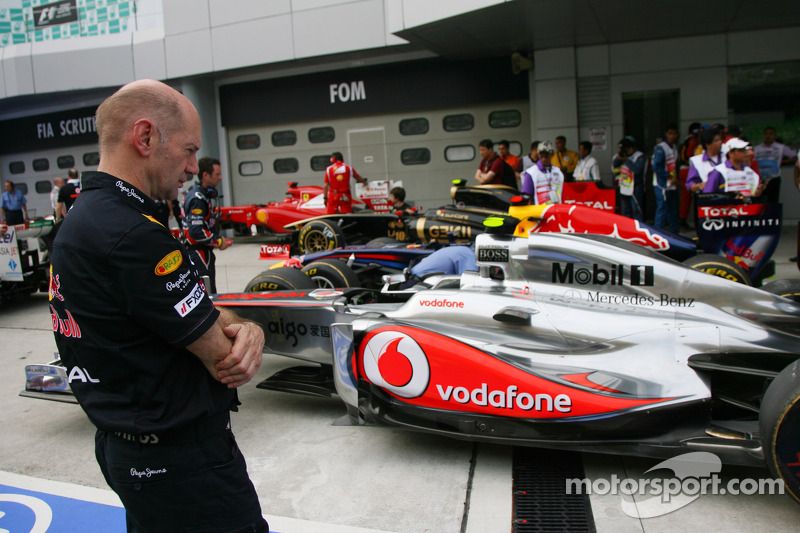
Adrian Newey, Red Bull Racing, Technical Operations Director looking at the McLaren
Photo by: XPB Images
Regardless of this, Newey has expressed strong opinions about team operations, not just at Williams but also at McLaren and Red Bull.
“Did we capitalise on it? No,” he said of McLaren making curiously heavy weather of winning the 1999 world championship despite Michael Schumacher being absent for much of it after breaking his leg at Silverstone.
“The team just fell asleep. We kept throwing things away. We lost our focus.”
Newey’s travails in restructuring the Red Bull Racing design office, including employees who refused to change their working methods and still habitually referred to the organisation as Jaguar Racing, are well documented. But he also pushed for major improvements in car build and race operations, especially after 2008, where Red Bull cars had a number of high-profile structural failures in the opening races – and failed to win a grand prix when junior team Toro Rosso, using the same chassis design but with a different engine, did.
He also identified the team’s strategic infrastructure and simulator capability as lacking and tapped up Giles Wood, who had been in charge of these at McLaren as well as being instrumental in the creation of the first raceable seamless-shift gearbox in 2005.
Now, if you were to be churlish, you could read this as saying “I designed these brilliant cars but their performance was squandered by the dunderheads running them.” But it is a difficult case to argue with someone whose authorial signature is on cars which have won 13 constructors’ championships and 12 drivers’ titles.
This is clearly what Stroll is thinking, having recruited Newey in a roving role as ‘managing technical partner’ on a five-year deal which is understood not only to involve equity in the business, but also to include performance bonuses. Not that he needs these as an incentive to excel – Dennis memorably described Newey as “one of the most competitive people I’ve ever met” – but because he feels his contribution is significant and should be rewarded as such.
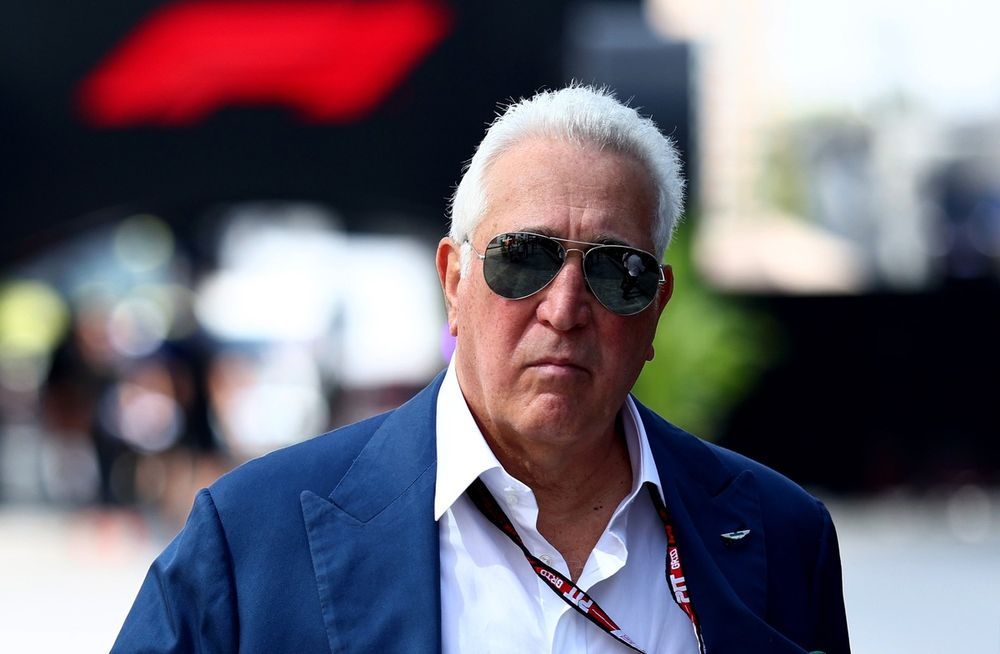
Lawrence Stroll, Owner of Aston Martin F1 Team
Photo by: Peter Fox / Getty Images
Stroll is believed to have approached several individuals with a track record in team leadership, including Audi F1 chief Mattia Binotto, and to have got at least as far as holding discussions with former McLaren team principal and Sauber CEO Andreas Seidl.
Horner has been hovering on the fringes but it’s understood that his requirement for equity, and for every aspect of the business to cross his desk, meant he was not seriously considered for the role. Aston Martin’s commercial and marketing facility is functioning perfectly well and needs no further steering, and the technical liaison with Honda and the fuel and lubes partners is Cowell’s new beat.
Insiders say that Newey and Cowell disagreed on both team operations and the direction of 2026 development, both of which are critical under the new regulations coming into place next year. The bulk of the design work on Aston Martin’s ’26 contender will be complete by now since the long lead-time items – floor, monocoque, etc – will have been signed off for production ahead of testing beginning early next year. Ditto Honda’s engine.
Pushing Cowell away from both technical development and team operations suggests that Newey has attained a degree of satisfaction with the design office after the recent arrival of Enrico Cardile from Ferrari as chief technical officer, and a restructure in which several recent high-profile recruits including aero chief Eric Blandin have departed.
Team operations have been a work-in progress this season and have often seemed muddled. Some strategic decisions – perhaps with a view to the prospect of having fire breathed over all and sundry come Monday – have seemed rather desperate, such ask keeping Lance Stroll out for absurdly long stints in Saudi Arabia and Singapore in the expectation of benefitting from Safety Car deployments which never came, and swapping Fernando Alonso onto slicks too early at Silverstone.
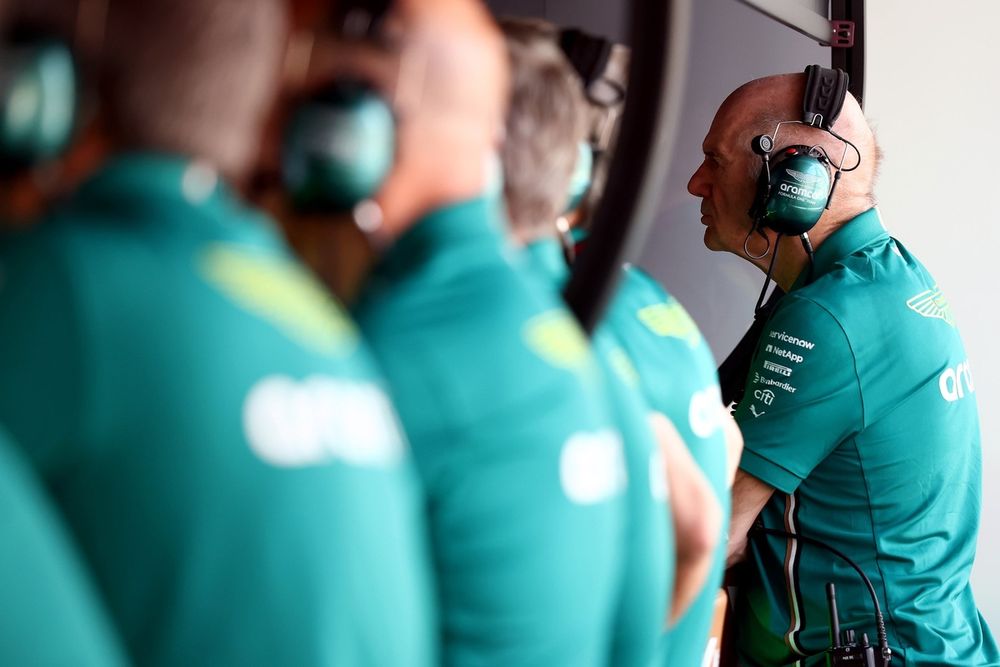
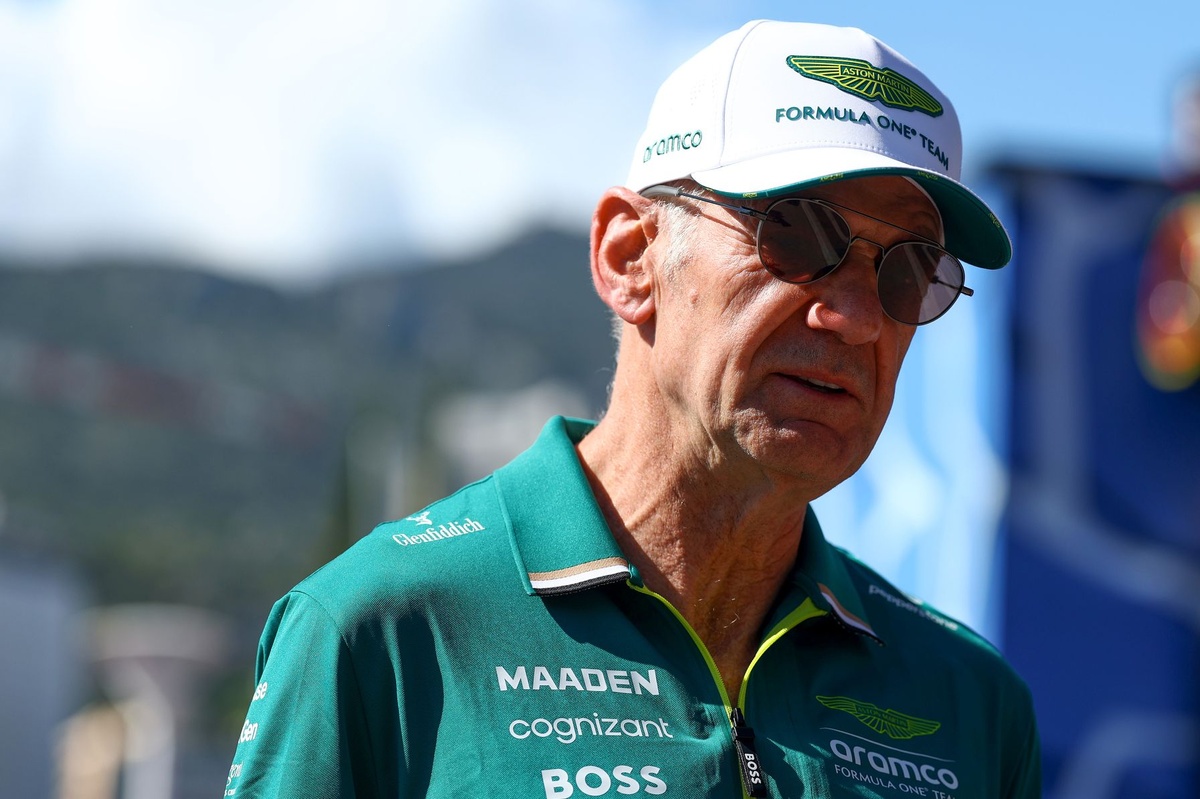
Adrian Newey, Managing Technical Partner of Aston Martin F1
Photo by: Zak Mauger / Motorsport Images via Getty Images
“All the people we lose places to, they have worse tyres or we just lose places for fun?” Alonso harrumphed on the radio.
“It’s crazy how you never get it right with me.”
Stroll ran as high as third in that race but was on the wrong tyres at the end and slipped back to seventh.
Newey, no doubt, will have been watching this unfold with pursed lips. Throughout this season, Aston Martin has insisted this is a “transitional year” given the arrival of Newey and Cardile, and the restructure implemented by Cowell after he arrived 13 months ago.
But the danger, when restructuring becomes a habit, and the machinations on the executive floor take on the aspect of the court of a medieval monarch, is that every year becomes a transitional year. If Newey’s first season in charge requires this line to be wheeled out again, it could be his head on the chopping block ere long.
We want to hear from you!
Let us know what you would like to see from us in the future.
Take our survey
– The Autosport.com Team
Read the full article here