

So much has already been said about how vital of an offseason this is for the Minnesota Timberwolves. It is being framed as the last chance to reset for a title window around Anthony Edwards to become an actual reality and not just something that podcast hosts bring up when discussing “dark horses.”
That is why so much of the conversation is: A) Devastatingly pessimistic and B) horrendously hard to find real answers.
The Wolves enter this offseason significantly behind the wagon that is the San Antonio Spurs and Oklahoma City Thunder in the Western Conference. Their roster is by no means talent devoid, even if it doesn’t stack up to those two leaders, with six top 100 players according to the Ringer. However, the general fit is abysmal. The focus has largely been on finding a star to raise the ceiling, but I want to go in a different direction.
While players like Ja Morant, Zion Williamson, and Domantas Sabonis (I have seen this one with my own two eyes and it is horrifying) bring reclamation projects whose bounce backs could result in a much stronger team, the larger issue with the Wolves roster is the way their best players all get in each other’s ways.
Julius Randle’s ball dominance limits the offensive growth of Jaden McDaniels and the ease in shot quality for Anthony Edwards, while his position locks Naz Reid into a bench role. Rudy Gobert’s non-shooting and stone hands mean that any offensive approach must be slowed and that attempts at the rim will often come against multiple defenders.
There are also considerable absences in skillsets that cause even more of these issues. Jaden is forced to be a point-of-attack defender instead of a weakside helper because there are none left on the roster. Why? Because the lack of a point guard has pushed Ant into a higher workload and resulted lower defensive effort.
These problems are all entangled with one another and impossible to cut out without addressing them all at once. To that point, a star, even one who bounces back, will not fix the general problems in this team’s DNA.
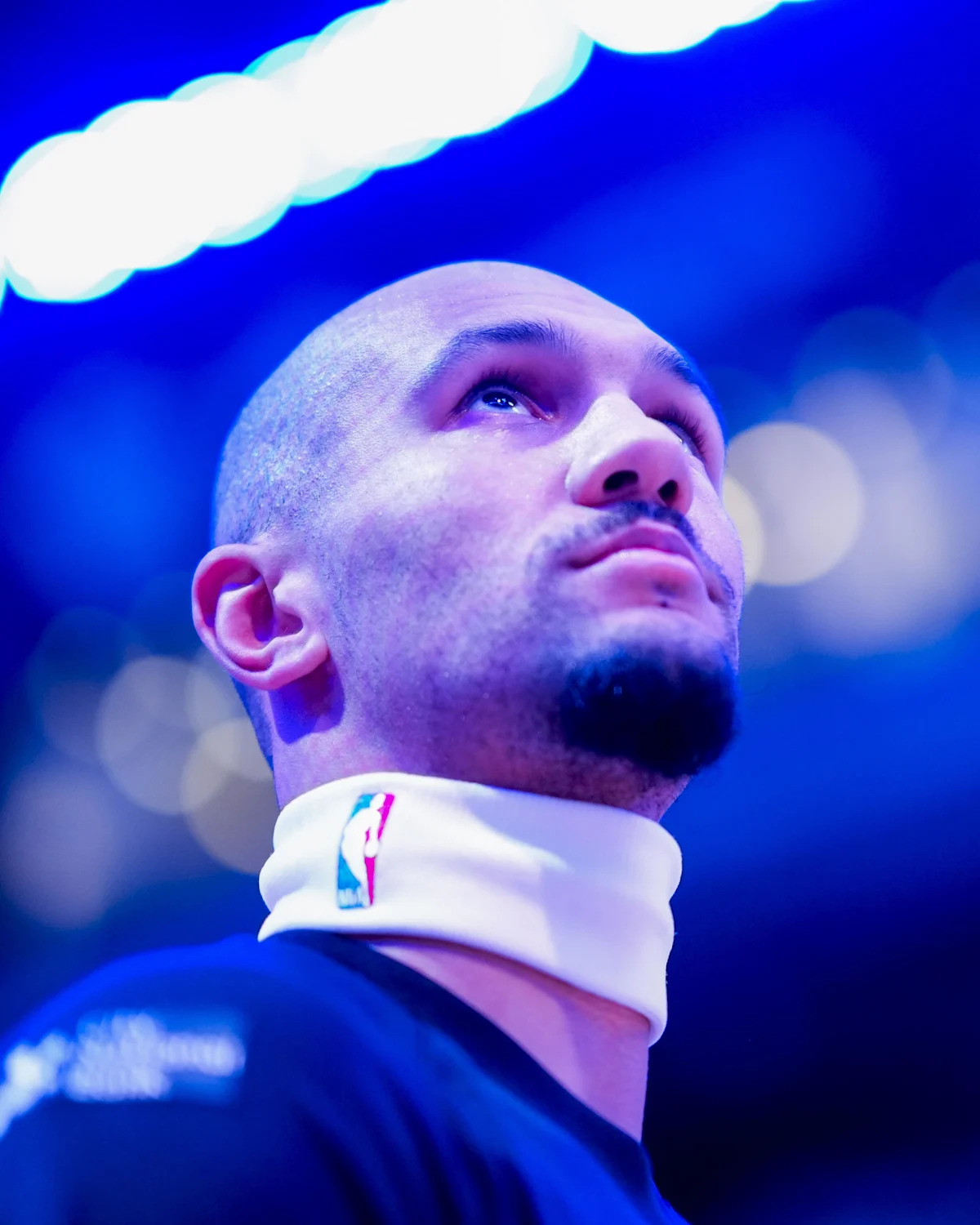
Enter Jalen Suggs.
Minnesota Timberwolves v Orlando Magic
Suggs has fallen out of favor in Orlando largely because of his contract and his overlap with their recent sixth pick Anthony Black. Add in a seeming regression in his scoring and shooting splits and it seems his time in a Magic uniform will soon be coming to an end.
He was also apocalyptically bad in the playoffs against Detroit.
If Suggs is on the market, and Orlando’s interest in Rudy Gobert is to be believed, then there is a real universe where Suggs, a handful of second rounders, and one of their many playable centers offers an incredible return for Minnesota, while still providing the Magic with real value.
But this is not a trade simulator. I’m sure you can do that yourselves if you are so interested. The money is easy to work with and the Magic are a fun suitor.
What I want to get into is the potential fit because all of those overlapping problems that make the Wolves so hard to fix are so easily solved by a player of Suggs’ ilk.
(sidenote, the reason this is about Suggs and not White is because I do not see a reason the Boston Celtics would dump White and the difference in cost between the two guards makes Suggs realistic and White not.)
There are a few main bullet points of what Suggs would bring to the Wolves, each of which have potentially massive domino effects.
First, Suggs is an excellent defensive player, with a strong core and intelligent approach at harassing specifically star ball-handlers, an overwhelmingly common archetype that the Wolves struggle with. He excels at navigating screens and using his low center of gravity, core strength, and excellent athleticism to prevent any sort of ease.
Second, he is also a deceptively good shooter. I know people are seeing the 33% three point percentage, and I refuse to invalidate a full season’s worth of numbers on a whim, but his shot diet last year was the type of thing you’d expect for a shot creator, not a supplementary option like what Suggs is.
He hit 39.2% of his catch and shoot threes last year and shot 40.7% from three overall just three short years ago. Between injuries and inconsistent usage, his numbers have struggled but he is still quite good in that regard.
Lastly, Suggs is still just 25, more than within the relative bounds of a young core around Edwards. Given the recent trend of star guards falling off before they reach 27 years old (think of Trae Young and Ja Morant), it’s helpful that Jalen does not have a game reliant on quick twitch athleticism in the way other players might.
There are, ultimately, two main perspectives on why this Wolves team needs a major change. Either they simply don’t have enough talent to compete or their team does not work together. If you believe the former, then this is not the target for you.
However, if you belong to the second camp, this is the guy for you.
Suggs’ arrival would immediately shift McDaniels to his preferred role, and would reinvigorate Edwards as a secondary POA defender. Offensively, adding a good spot-up shooter and acceptable full court mover would breath life into an offense that will be without a key shooter and was hugely prone to playing slow and not finding good shots.
Even in just a vacuum, imagine the rotation of guards the Wolves could throw out. Ant and Jalen together give you defense and scoring, support systems galore alongside Edwards on both sides of the ball while Suggs simply has to spot-up. When Ayo Dosumnu replaces Edwards, the offense speeds up, and the two make up for each other’s flaws.
High impact, low usage players are hard to come by. Well-suited glue guys that fit into the framework of what the Wolves have are somehow even harder to get. To find both of those things, in the form of a Minnesota native, at a low cost, could be a home run.
Suggs is expected to be dealt at or during the draft on Tuesday, and the hope should be that he ends up being the next lead guard of the Minnesota Timberwolves.
Read the full article here