







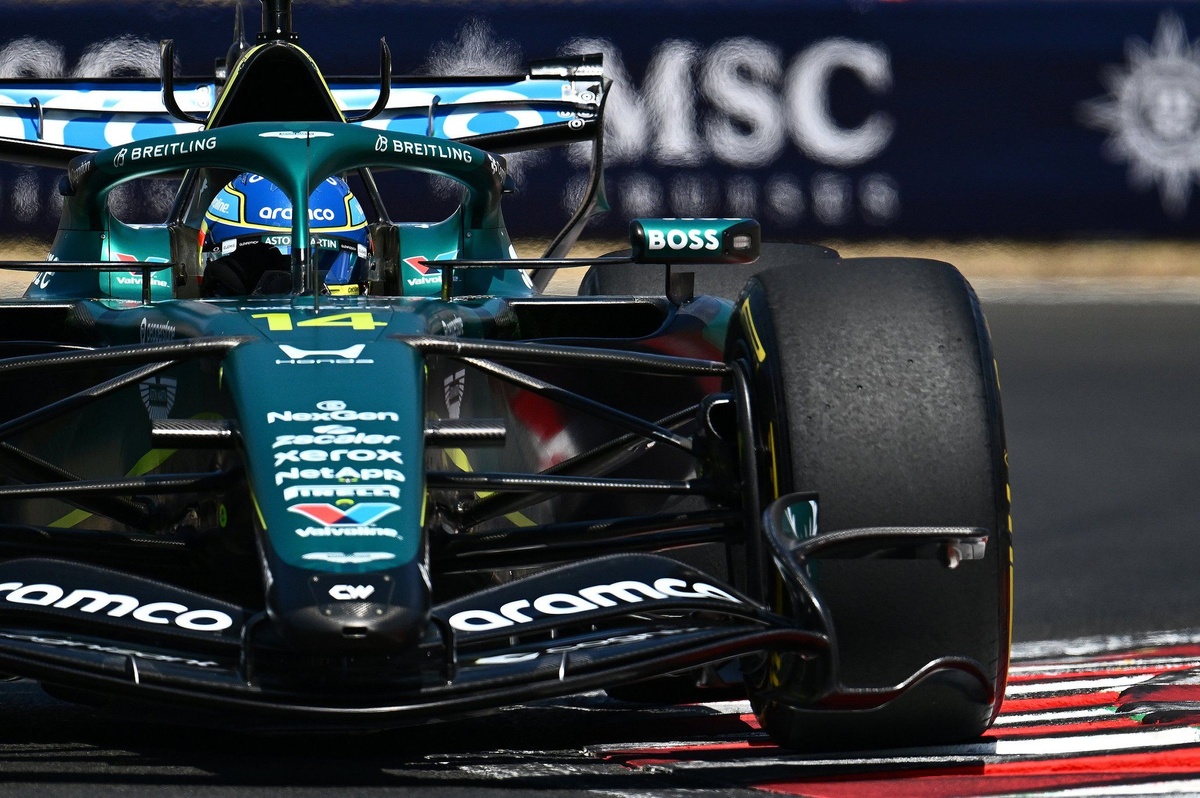
When Adrian Newey appeared at the FIA team principals’ press conference during the Formula 1 season opener in Melbourne, the legendary designer attracted attention for several reasons.
Newey spoke openly about Honda’s battery problems, acknowledged that his role as team principal had distracted him from his design duties to some extent, and said – with some exaggeration – that Honda had mainly been busy with solar panels in the intervening years.
Yet arguably the most interesting remark was still to come. That was the revelation that Aston Martin’s leadership had only discovered in November 2025 that the makeup of Honda’s F1 team was completely different from what it had been during its glory years with Red Bull.
The fact that this only became clear in November 2025 still sounds strange, given that the deal had already been agreed in 2023. What does that say about the homework Aston Martin had – or had not – done, and did the team not know exactly what it was signing up for years earlier?
Although that raises questions about Aston Martin’s approach, there is a logical explanation from Honda’s side. General trackside manager and chief engineer Shintaro Orihara says it is closely linked to the Japanese manufacturer’s overall philosophy.
“Honda is a very unique company. So, always, how to say, staff is moving between road car projects and the Formula 1 project,” Orihara told Autosport.
“Last year, we had a lot of, not new people, but some highly talented people coming from road car projects and some others who had worked within the Red Bull project.
Shintaro Orihara, Trackside General Manager and Chief Engineer of Honda Racing Corporation
Photo by: Alastair Staley / LAT Images via Getty Images
“We always develop talent in our Formula 1 project to boost Honda’s knowledge.”
The idea is for the company as a whole to benefit from the knowledge gained in F1, although building up the project with predominantly new personnel also came with significant drawbacks.
Specific F1 experience was lacking during the initial development phase, and according to Orihara, Honda eventually came to exactly that conclusion.
“Probably, at the end of last year, our total human development level was not sufficient for the Formula 1 level,” the Japanese reckoned. “And then, at winter testing, we’ve had quite tough moments, but those moments have developed our people. They have learned a lot of things about what we need to work in Formula 1.
“They already had enough knowledge and high-level skills, but [with those difficult moments] they gained experience on how they need to work in Formula 1.”
The opening months of 2026 have been a steep learning curve, with the inexperienced staff rapidly adapting to the demands of F1.
Honda has also taken action in another way. When it became clear at the end of 2025 that its workforce was not at the required level, Orihara says several Honda employees with experience from the Red Bull era were brought back into the F1 project, simply to provide a quick injection of additional experience and know-how.

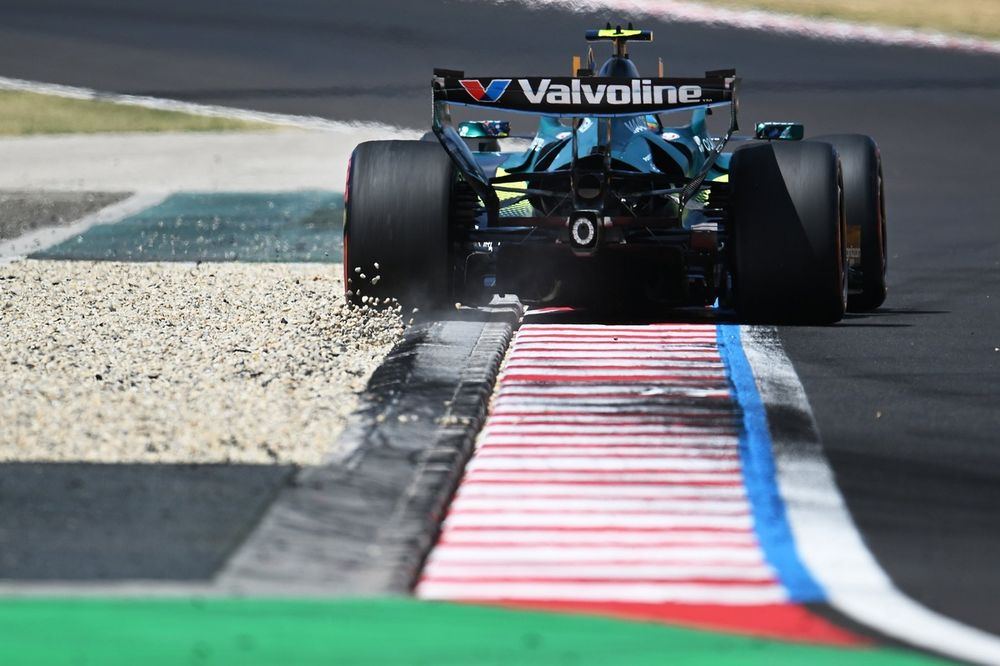
With its Zandvoort upgrade, which has already been tested during a filming day in Hungary, Honda hopes to make a first significant step
Photo by: Sam Bagnall / Sutton Images via Getty Images
Combined with the experience gained by the newer team members, Orihara believes Honda’s F1 operation is now at the required level.
This partly explains the difficult build-up phase – although several factors have played a role – but also why Honda is looking to the future with greater confidence.
“Besides that, our new people got those learning experiences from winter testing,” Orihara added. “I think that since then we have made good progress in terms of our staff development.
“And now I’m confident that we are in a good position to develop a strong power unit and also strong energy management [for the upcoming years].”
Honda has already indicated that with its Zandvoort upgrade it wants to return to what Orihara calls the “racing field” in terms of power unit performance, before targeting becoming a “top competitor” in F1 again by late 2027 or early 2028.
We want to hear from you!
Let us know what you would like to see from us in the future.
Take our survey
– The Autosport.com Team
Read the full article here


