

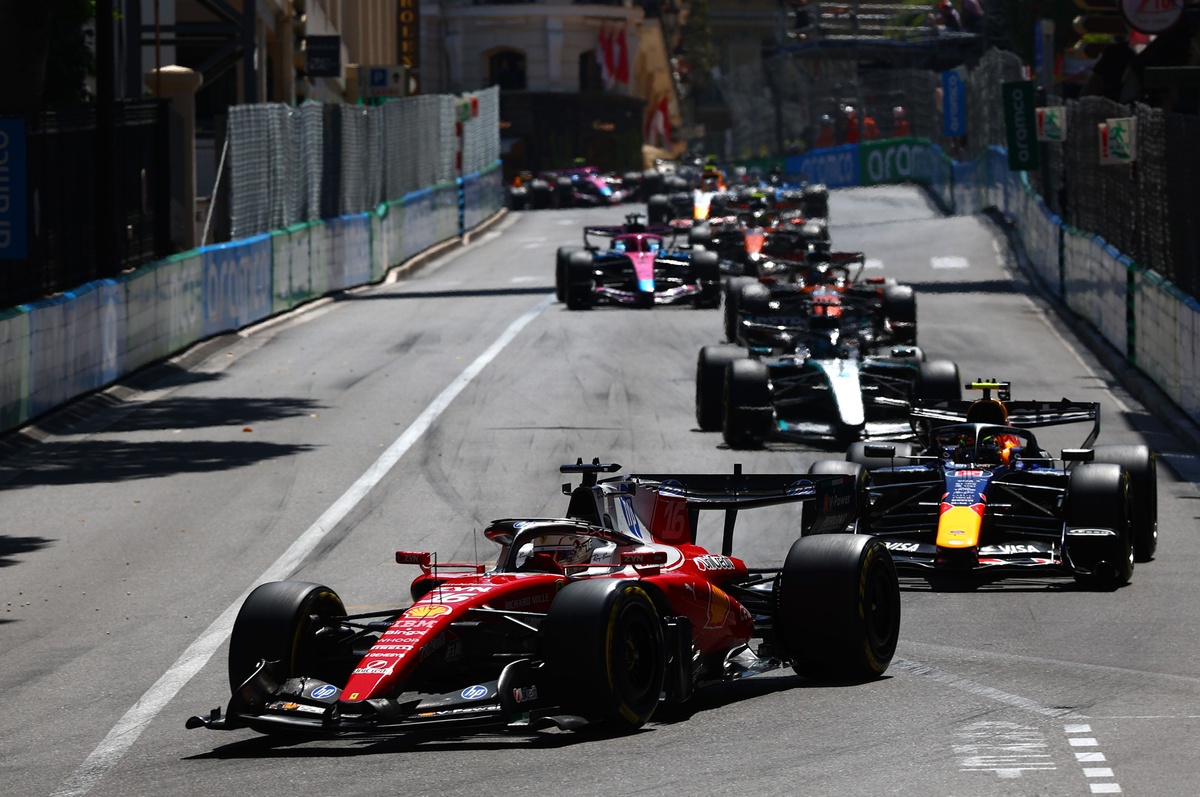
What exactly is causing the delay?
All Formula 1 manufacturers were informed of the initial results of the first ADUO (Additional Development and Upgrade Opportunities) period during the Monaco Grand Prix weekend and therefore know where they stand, subject to the additional check. That extra verification is taking place at the insistence of Red Bull-Ford Powertrains.
The newcomer was placed at the top of the initial ranking by the FIA, much to the surprise of those within Red Bull itself, where they argue that circumstances can have a major influence on the performance of their power unit.
When asked by Autosport, team boss Laurent Mekies explained that Red Bull is not opposed to the system as a whole, which will be discussed in more detail later in this article. Instead, Red Bull wanted the FIA to take another look at all of the data, sensors and methodology, as according to Mekies there is “not one single data sample” in which Red Bull holds an advantage over Mercedes.
This process started ahead of the Barcelona Grand Prix and was initially expected to take between seven and 10 days. That period has now elapsed, although after the factual verification there is still the matter of communication and the handling of the final outcome.
When can we expect clarity?
Once the factual verification has been completed, the results need to be explained to the party that requested clarification – in this case Red Bull Ford-Powertrains. That could happen in a meeting after the British Grand Prix, although the question remains whether the public announcement has to wait until then or whether it can be circulated beforehand.
The results have already been widely shared in the paddock after Lewis Hamilton got the ball rolling in Monaco. The outcome of the first ADUO period, which covered the races through the Canadian Grand Prix, is known to everyone: Red Bull-Ford sits at the top and therefore has no opportunity to introduce an upgrade.
Mercedes has an ICE deficit so qualifies for ADUO
Photo by: Alastair Staley / LAT Images via Getty Images
Mercedes falls into the category of having an ICE deficit of between 2-4%, which grants it one token. Ferrari, Audi and Honda are all more than 4% behind the benchmark, meaning they receive two upgrades this season and two more for next year. This is already common knowledge in the paddock, meaning it is merely a matter of waiting for things to be made official after the additional verification – provided that it does not alter the picture. In the worst-case scenario, this could take until after the meeting following Silverstone, although the FIA hopes to distribute the press release earlier.
How likely is it that the ADUO results will still change?
It is highly unlikely that the overall picture will change. The additional verification also appears to indicate that Red Bull-Ford will once again come out on top in terms of ICE performance.
There is also little doubt that Ferrari, Audi and Honda fall into the category of being more than 4% behind – with Honda logically having the largest gap to close, although that deficit is no more than 10% according to sources. Had it been larger than that, the additional permitted expenditure would have come into play.
The initial results surprised Red Bull by indicating that Mercedes is entitled to ADUO, and that is precisely one of the points the Milton Keynes-based outfit is challenging. “Where we certainly would like to have a deeper conversation about, is that we do not see one single data sample that indicates that we would have an advantage over our friends at Mercedes,” Mekies said when asked by Autosport.
Mercedes, however, has stated that the measurement methods and dataset have been compiled extensively by the FIA, and that the factual picture based on those figures is clear. Furthermore, the team explains that it would be extremely difficult to change the outcome given that work has already begun behind the scenes.
Why are manufacturers allowed to introduce upgrades before the FIA announcement?
One aspect that may surprise fans is that ADUO upgrades have already appeared on track before any public announcement has been made. Audi ran an updated power unit in Barcelona, while Ferrari brings its first ADUO upgrade of the year to Austria, with a revised turbo already in the pipeline for after the summer break.
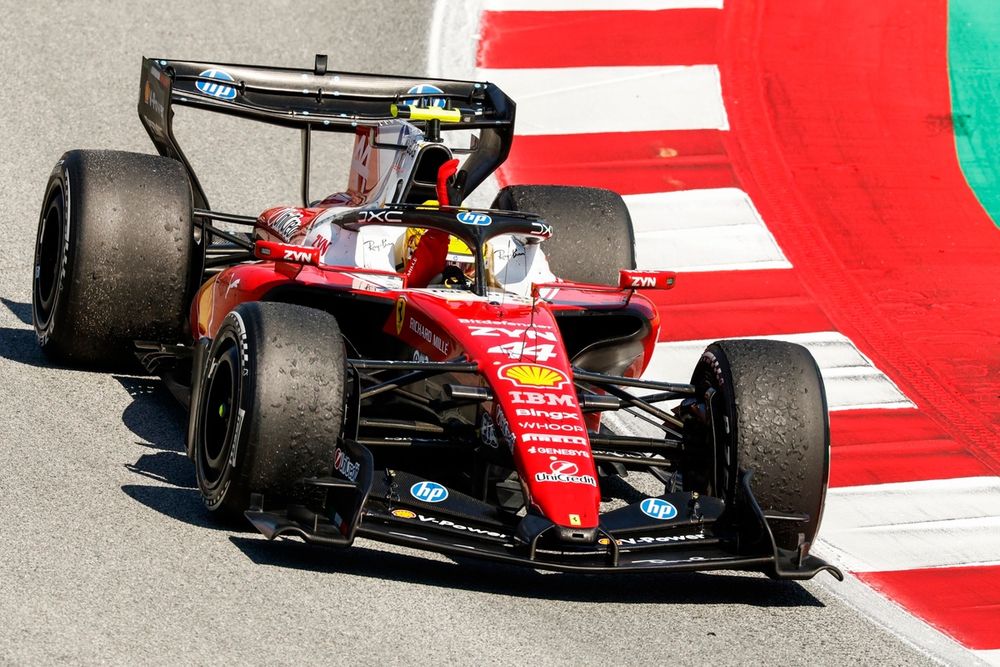
Ferrari will introduce engine upgrades this weekend
Photo by: Sam Bloxham / LAT Images via Getty Images
This is allowed because the message manufacturers received from the FIA in Monaco is currently valid and represented the official green light to introduce new parts. Communication between the FIA, teams and manufacturers is always decisive, not public communication.
Since there is no doubt that Ferrari, Audi and Honda are entitled to ADUO, it is no coincidence that two of those three have already introduced new developments to their power units. Honda revealed in Spielberg that it has planned an upgrade around the F1 summer break.
Red Bull is mainly questioning Mercedes’ ADUO status, although that is somewhat ironic. If Mercedes delays introducing its upgrade, apart from some earlier reliability tweaks, it could logically keep Red Bull at the top of the ICE ranking at future assessment points as well, which would also happen if rivals choose not to spend their tokens on the internal combustion engine.
Is the ADUO system actually working as intended?
While Red Bull’s request concerns a factual verification, the real issues with ADUO appear to run deeper.
There is a discrepancy between the measurement method – which only considers the ICE – and the permitted upgrades, which extend beyond that and also concern the electrical side of the power unit. In addition, parameters such as Ferrari’s smaller turbo are not taken into account, even though they do have an impact on power output.
These were, however, deliberate choices that manufacturers agreed to in the spring of 2025. The consensus was to keep the system as simple as possible, even though FIA single-seater director Nikolas Tombazis has said that he would have been open to making the parameters somewhat more complex.
That could have involved other parts of the power unit, as well as the championship standings to incorporate the actual on-track picture – something Mercedes was even willing to explore. However, that route was not chosen.
It means that teams cannot really complain publicly about how the system has been designed, although the current situation does raise the bigger question of whether the ADUO system requires a rethink in the longer term. Instead of serving as a safety net for manufacturers with a sizeable deficit, it has now become one of the biggest political battlegrounds in the paddock.
We want to hear from you!
Let us know what you would like to see from us in the future.
Take our survey
– The Autosport.com Team
Read the full article here