



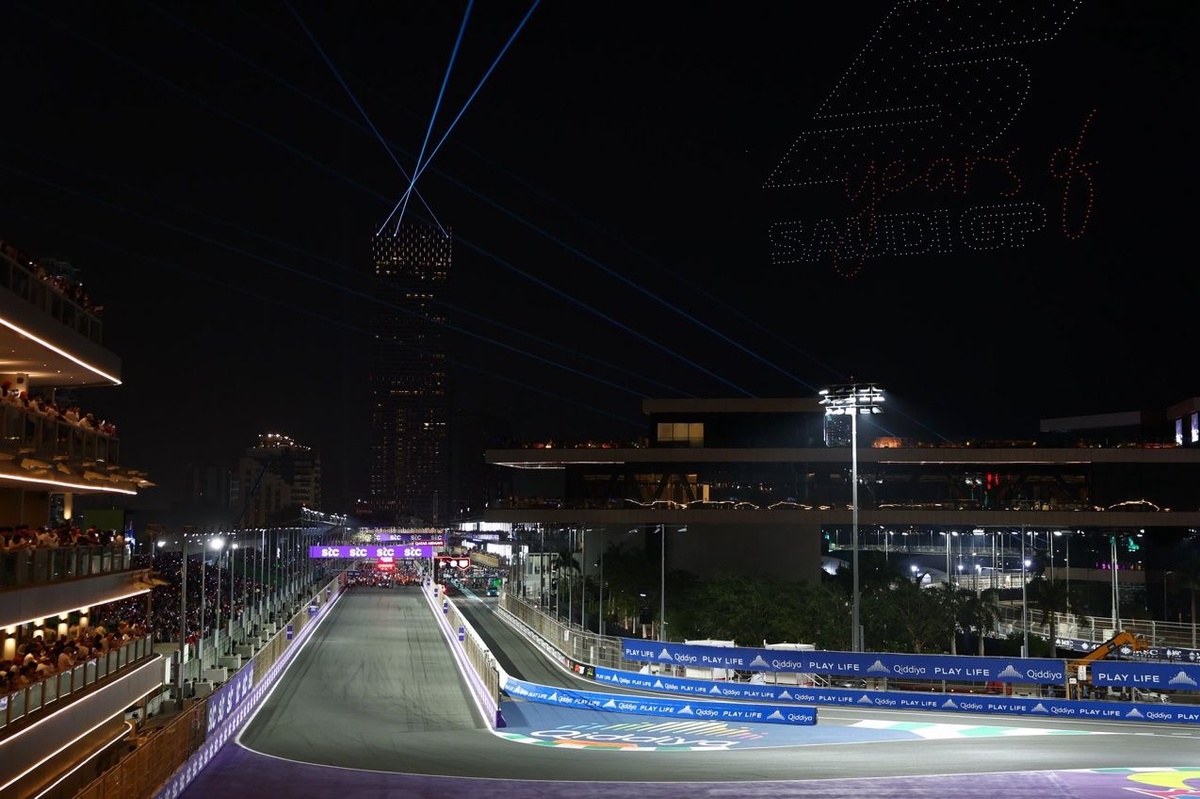
Liberty Media’s stock fell approximately seven percent when Bahrain and Saudi Arabia were removed from the 2026 Formula 1 calendar, pricing the cancellations as lost growth rather than contained exposure.
So F1 did not lose two races, it lost two hosting fees. The distinction is not semantic, it is structural, and it explains why the championship’s most valuable revenue streams continued undisturbed while the calendar contracted around them.
Broadcasters are not buying individual race weekends. They are buying a season: packaged, continuous, and commercially predictable. Sponsors are not activating around a single venue. They are buying exposure sustained across a global championship, across every session, every podium, every post-race moment that extends well beyond the circuit itself.
The event is visible. The revenue is not. That gap is the business model.
Why F1 changed its revenue structure
The architecture that makes this possible was not accidental. Over the past decade, F1 deliberately restructured its most valuable revenue streams away from individual events and towards the championship itself: broadcast rights contracted for a campaign, global sponsorship frameworks measured in years, prize money distributed at season close.
Remove two races and none of those contracts reset. The championship continues uninterrupted and so does the revenue.
Stefano Domenicali, CEO of the Formula One Group and Mohammed ben Sulayem, FIA President on the grid
Photo by: Lars Baron – Motorsport Images
For teams, the cost cap reflects the same logic in reverse. The baseline cap covers a 21-race calendar; each additional race adds $1.8 million in allowance. Remove two races and that allowance contracts, but so do the costs. The financial floor holds. The calendar sits above it.
The impact of the cost cap
For teams, fewer grands prix can mean less cost.
Early-season flyaways like Bahrain and Saudi Arabia are among the most expensive on the calendar: long-haul freight, back-to-back travel, and full operational deployment across two continents in as many weeks. The logistics burden of consecutive Gulf races is among the heaviest on the calendar.
Remove those races and those costs fall away. For teams, recovered capacity is the more precise description. In a regulation cycle defined by new aerodynamic architecture and revised power unit integration, that capacity has an immediate destination.
Under the cost cap, that distinction matters precisely because the cap does not reward spending, it rewards how effectively that spending is deployed. Every dollar not spent moving equipment across two continents is a dollar that can be redirected into performance.
The advantage accrues fastest to teams already operating efficiently at the cap ceiling. With aerodynamic allocation fixed, efficiency becomes performance.
Grand prix hosting fees

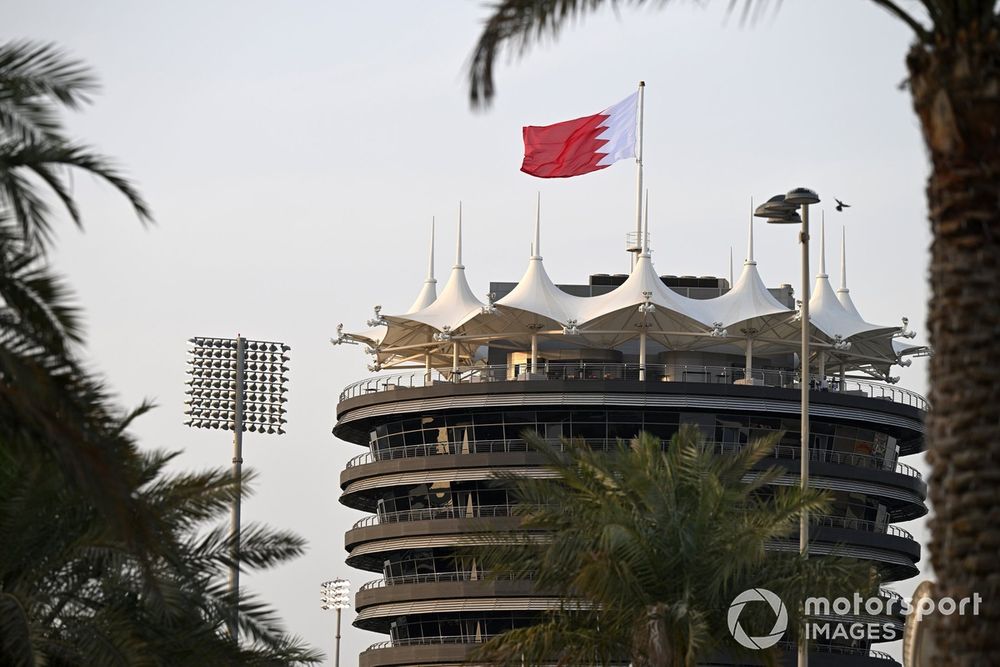
The Bahrain flag flies over the Sakhir Tower
Photo by: Sam Bagnall / Motorsport Images
The financial impact of a cancelled race is unevenly distributed, and the fault lines follow ownership structure.
Promoters lose hosting fees and the local economic activity built around a race weekend: hospitality, logistics, temporary infrastructure. For privately run events, that loss is immediate.
Bahrain and Saudi Arabia were both state-backed events, their hosting fees underwritten by government entities; most hosting agreements also include force majeure clauses that reduce or eliminate payments when cancellation results from conflict or other circumstances beyond a promoter’s control. The economics of cancellation differ depending on which side of that distinction one sits.
For teams, costs fall away with each removed event while revenues tied to the championship remain largely intact. Under the cost cap, reduced operational burden creates room to deploy resources where performance is actually built – a shift that registers differently depending on how tightly a team is running against its cap ceiling.
For F1 itself, the core commercial structure holds. The revenue that underpins valuation does not depend on any single race taking place. Broadcast rights, sponsorship agreements, prize distribution: none of those contracts reset when a race is cancelled.
According to Guggenheim Partners, Bahrain and Saudi Arabia contribute approximately $115m in combined annual hosting fees; a figure that represents roughly 14 percent of F1’s $824m calendar-wide hosting income. The championship’s core commercial structure will absorb that loss. The promoters underwriting those events carry the primary exposure.
The F1 calendar as a financial instrument
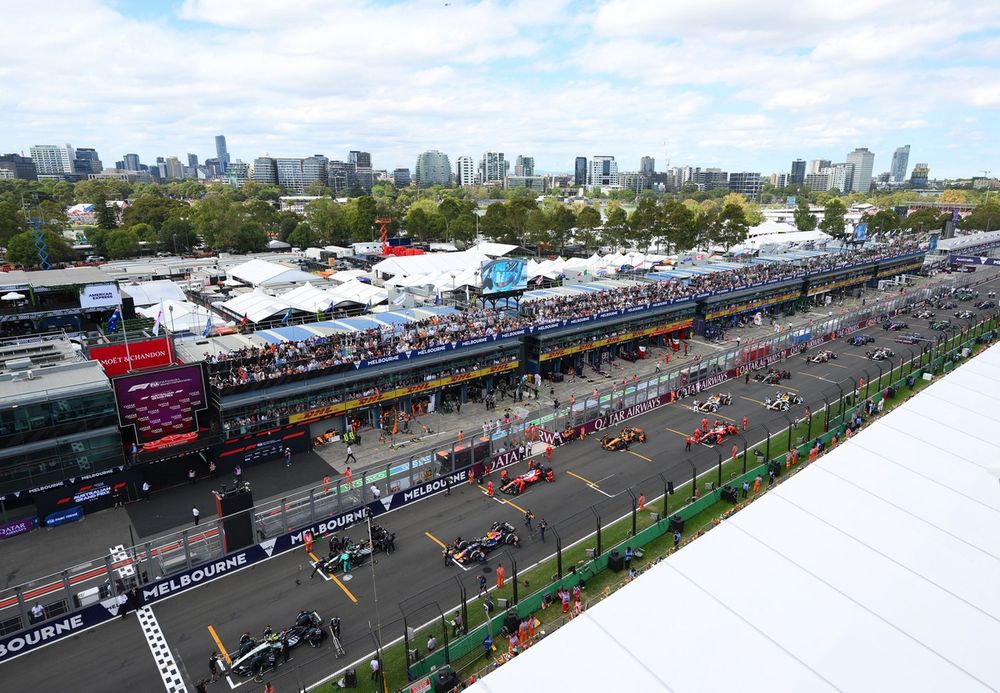
Starting Grid
Photo by: Simon Galloway / LAT Images via Getty Images
For years, F1 treated calendar expansion as a direct proxy for commercial growth. More races meant more hosting fees, more broadcast inventory, more activation opportunities for global sponsors. The logic was straightforward, and for most of the Liberty Media era it held.
The cancellations expose the limit of that logic.
Once broadcast rights, sponsorship frameworks and prize distribution are secured at the championship level, additional races stop being essential and start being selective. Some events generate meaningful incremental revenue. Others primarily add cost: freight, logistics and operational deployment, against a cost cap that rewards efficiency of spending, not volume of it.
What the test revealed is the distinction F1 has engineered over a decade: the championship is the financial instrument. The calendar is how it manifests.
We want to hear from you!
Let us know what you would like to see from us in the future.
Take our survey
– The Autosport.com Team
Read the full article here


