






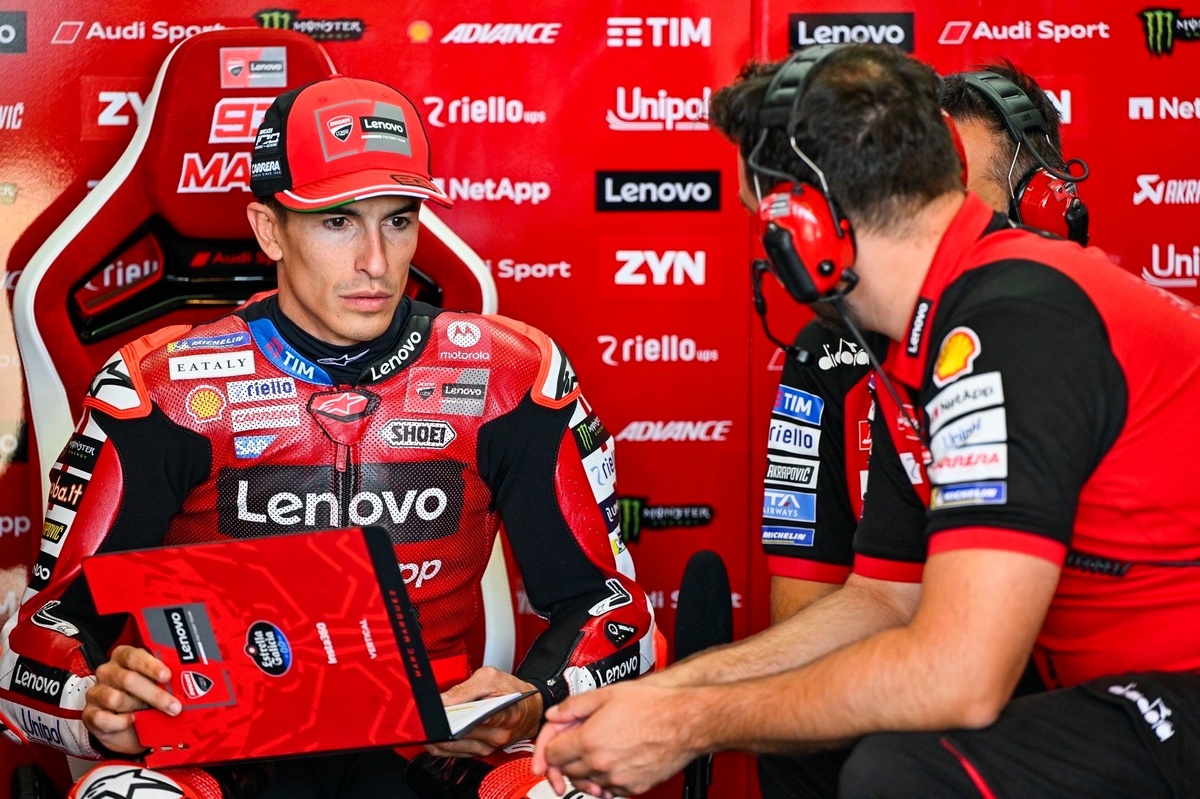
It’s common to see fans credit a manufacturer’s progress – or struggles – to the quality of its riders. Some are considered exceptional development riders, while others are accused of leading engineers in the wrong direction. But how much influence does a MotoGP rider actually have over the technical evolution of a bike?
Joan Mir has experienced both ends of the spectrum, winning the 2020 world championship with Suzuki before becoming a factory Honda rider and testing countless upgrades over the years. In his view, a rider’s job is to provide accurate feedback, while leaving the engineering solutions to those responsible for designing the bike.
“Normally, every rider wants to go faster,” Mir explained in an interview with Autosport. “We can explain what we feel on the bike, but we’re not engineers. Maybe some riders think they are engineers, but we’re not! We’re riders, and our job is to explain our sensations as clearly as possible, not to provide solutions. Finding a way to make the bike faster isn’t in our hands.”
Engineers, not riders, develop MotoGP bikes
Now team manager at Tech3, Nicolas Goyon previously spent years analysing data and working as a crew chief, giving him a front-row seat to the process of evaluating new parts. He agrees that while riders play a crucial role, the ideas themselves come from the engineers.
“The engineers create the upgrades and develop the bike,” Goyon told Autosport. “The rider’s role is fundamental because, in the end, he’s the one who chooses which parts to use and which package to race with. But it’s the creativity of the engineers and the factory teams that determines whether a bike becomes competitive or not.”
That doesn’t mean riders have no influence. Every time they return to the garage, they describe how the bike behaves and what characteristics they would like improved. What they rarely do is prescribe a specific technical solution.
Nicolas Goyon, Team Manager, Red Bull KTM Tech 3
Photo by: Gold and Goose Photography / Getty Images
“We can say, ‘I want the bike to rotate more on the rear, I want better front-end feeling, I feel the front is too light and I’d like more weight there’,” Mir explained. “But we can’t say, ‘I want a shorter swingarm’ or ‘I want a different chassis’. That’s the team’s job.”
He added: “We can say, ‘I want a shorter bike’, but I don’t know how to achieve that. The team has to translate those requests into development. That’s what the rider can do. And normally, when something works, we can feel it.”
To illustrate the point, Goyon highlighted one of MotoGP’s most famous stories: Valentino Rossi’s move from Honda to Yamaha.
Goyon joined Tech3 in 2003, when Yamaha endured what he described as a “disastrous season”. Tech3 delivered the manufacturer’s only podium of the year through Alex Barros.
The following winter, Yamaha signed Rossi, who immediately won the 2004 world championship. While Rossi arrived with crew chief Jeremy Burgess and key members of his technical staff, Goyon believes the Italian’s greatest contribution was his riding talent rather than transforming the M1 through development.
“For me, you can’t go from having a terrible bike in 2003 that wins nothing to a championship-winning bike in 2004 simply because of one rider,” he said. “Of course, Valentino Rossi brought his speed, his set-up knowledge and his riding style. Today, maybe Marc Marquez would win on a KTM and people would suddenly say the bike is good. But that would simply be because Marquez is exceptional. The engineers already had the solutions. Valentino Rossi didn’t develop the M1 into a winning bike by himself.”

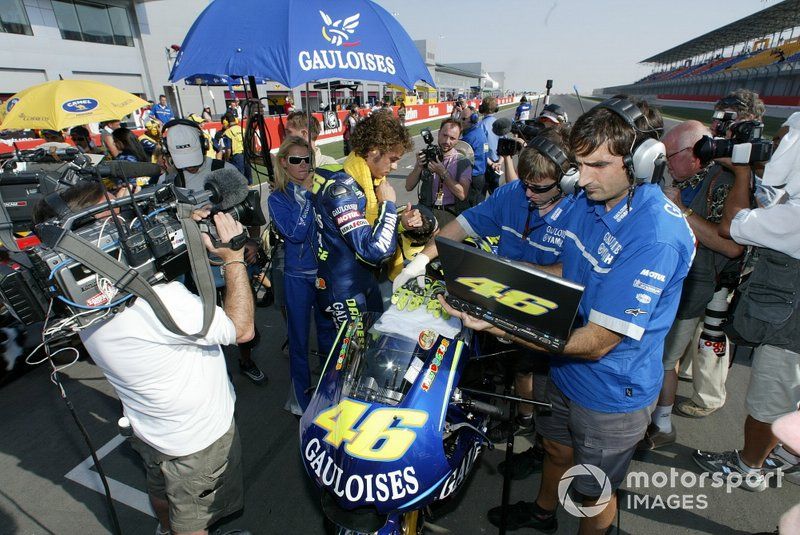
Valentino Rossi, Yamaha Factory Racing
Photo by: Gold and Goose Photography / LAT Images / via Getty Images
Instead, Goyon believes Rossi inherited a fundamentally sound package that had been underperforming: “He took a bike that certainly wasn’t as bad as people thought, rode it properly and won immediately. After that, the bike remained at the front because he was excellent at choosing the right parts. But once again, he wasn’t drawing those parts. The engineers develop the motorcycle and propose solutions. The rider simply selects the parts that work best.”
Pointing to Yamaha’s later decline and Ducati’s rise, Goyon argued that development is always the product of engineering expertise rather than a single rider: “You can’t have a bike that’s genuinely terrible one year and then magically becomes a winner the next.”
Why rider feedback matters more than ever
The development process has become especially important ahead of MotoGP’s sweeping 2027 technical regulations. Manufacturers are simultaneously designing entirely new motorcycles featuring smaller 850cc engines, reduced aerodynamics, the removal of ride-height devices and new Pirelli tyres replacing Michelin.
For Marco De Luca, Aprilia’s head of vehicle dynamics, rider feedback is therefore invaluable alongside simulation tools.
“When you have a very good rider, especially one who has never ridden with the new tyres before, he needs to be extremely clear about what he feels, what he wants and what he likes,” De Luca said. “The rider’s impressions are very important.
“I expect much more detailed and complex feedback because they’ll be riding a completely new motorcycle, especially with the tyres. But simulations remain fundamental, we simply can’t do without them.”
If simulations and data alone were enough, every manufacturer would eventually build the perfect motorcycle. In reality, riders remain essential because they’re the ones who decide whether a theoretically faster part is actually usable.
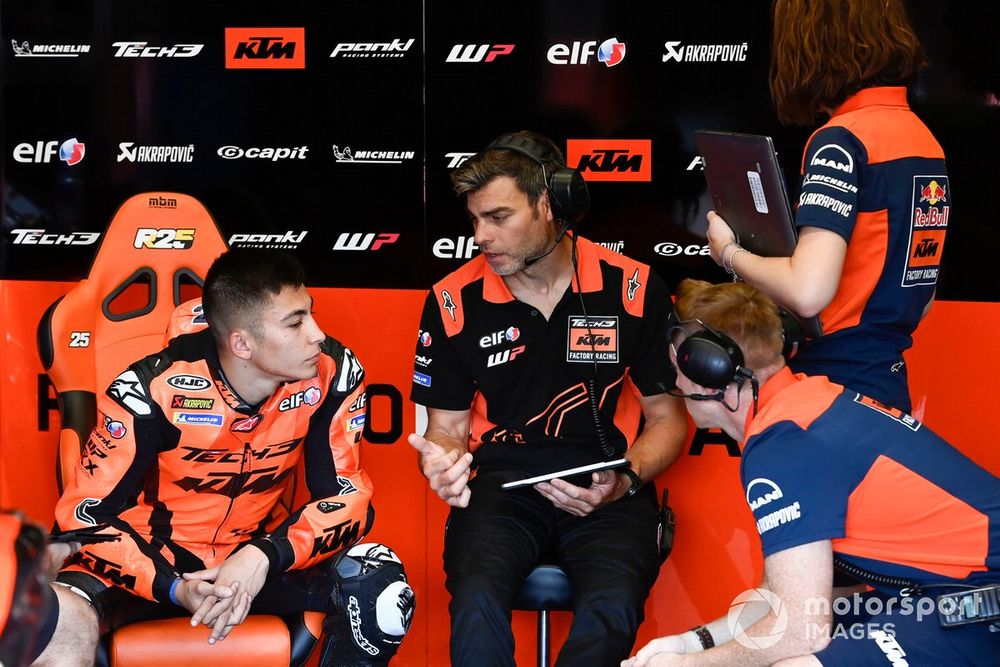
Nicolas Goyon
Photo by: Gold and Goose Photography / LAT Images / via Getty Images
“There are things we can see in the data,” Goyon explained. “If we’re talking about aerodynamics, we have wind tunnel data and track data. But on a motorcycle, rider feeling is probably even more important than it is in a car.
“You might have a fairing that produces outstanding wind tunnel results, but if the rider comes back and says the bike has become difficult to handle – and there’s no sensor that measures that – that feedback becomes incredibly important.”
Development, he says, is therefore a joint effort: “We analyse a huge amount of data, which tells us many things. But on a motorcycle, the rider remains the key variable. He’s the one who tells you whether you’ve actually gained something or not. He gives you the direction.”
Sensitivity versus outright speed
Goyon also believes that the best development riders aren’t necessarily the fastest racers.
During Marquez’s dominant years at Honda, there was a widespread belief inside the paddock that Dani Pedrosa was actually the rider driving development because of his exceptional technical sensitivity.
“When Marquez was winning everything at Honda, people said – and I think there was some truth to it – that he was so talented he could win on almost anything,” Goyon said. “The idea was that Dani Pedrosa developed the bike because he had the sensitivity to choose the right parts, and Marquez simply won with them. I don’t think that was far from the truth.”
He points to Honda’s decline after Pedrosa retired as evidence: “History showed that after Dani left, the bike became more and more difficult. Even someone as talented as Marquez eventually couldn’t make it work.
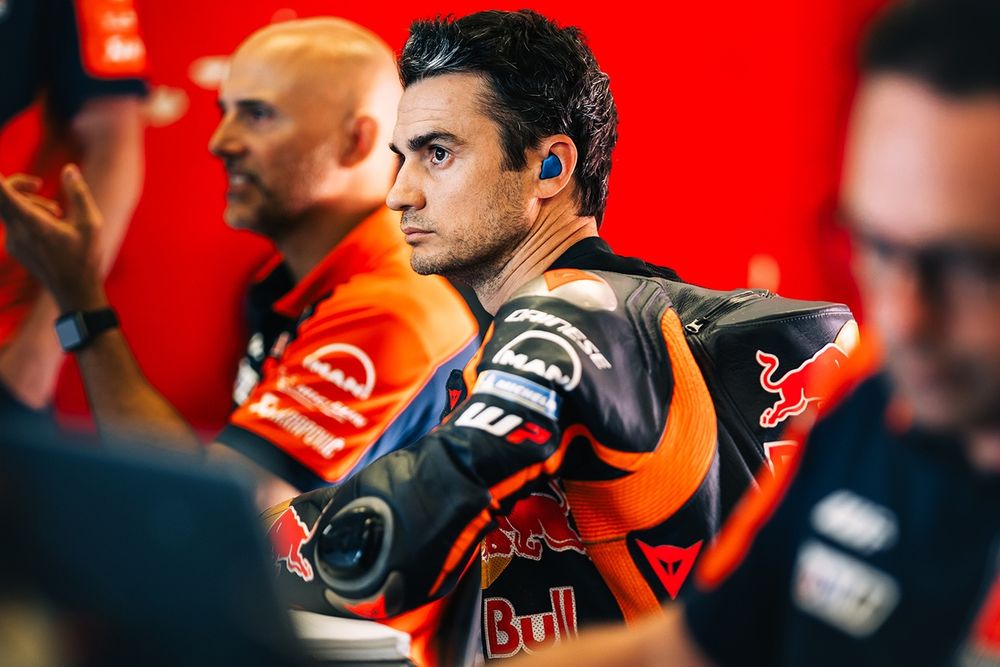
Dani Pedrosa, Red Bull KTM Tech 3
Photo by: KTM Images
“I don’t know for certain, but from the outside perhaps Marquez isn’t the strongest development rider – or, more accurately, he’s simply so talented that he can ride around many of the bike’s problems.”
For Goyon, development ability is determined far more by technical sensitivity than outright pace.
One rider who particularly impressed him was Andrea Dovizioso, whom he worked with at Tech3 in 2012. He believes Dovizioso played a major role in laying the foundations for Ducati’s current success.
“For me, there was one rider who took a bike that wasn’t very good and helped turn it into a winning motorcycle: Dovizioso,” Goyon said. “He was an outstanding development rider. We worked with him at Tech3 and know exactly how detailed his feedback was.
“He gave Ducati the direction it needed. But without the engineers behind him, Ducati wouldn’t be where it is today.”
Ultimately, Goyon believes the distinction is clear.
“The rider pushes development in one direction or another,” he concluded. “But it’s still the engineers who come up with the ideas. Yes, the rider is a key part of development – but he isn’t the one who develops the motorcycle.”
We want to hear from you!
Let us know what you would like to see from us in the future.
Take our survey
– The Autosport.com Team
Read the full article here


