




The 2026 Formula 1 championship finds itself at a curious intersection where nobody is willing to entertain the idea that they have the best car.
Championship leader Kimi Antonelli said after finishing second to Lando Norris in the Dutch Grand Prix that Mercedes no longer has the best car – indeed, that it may only be the third best.
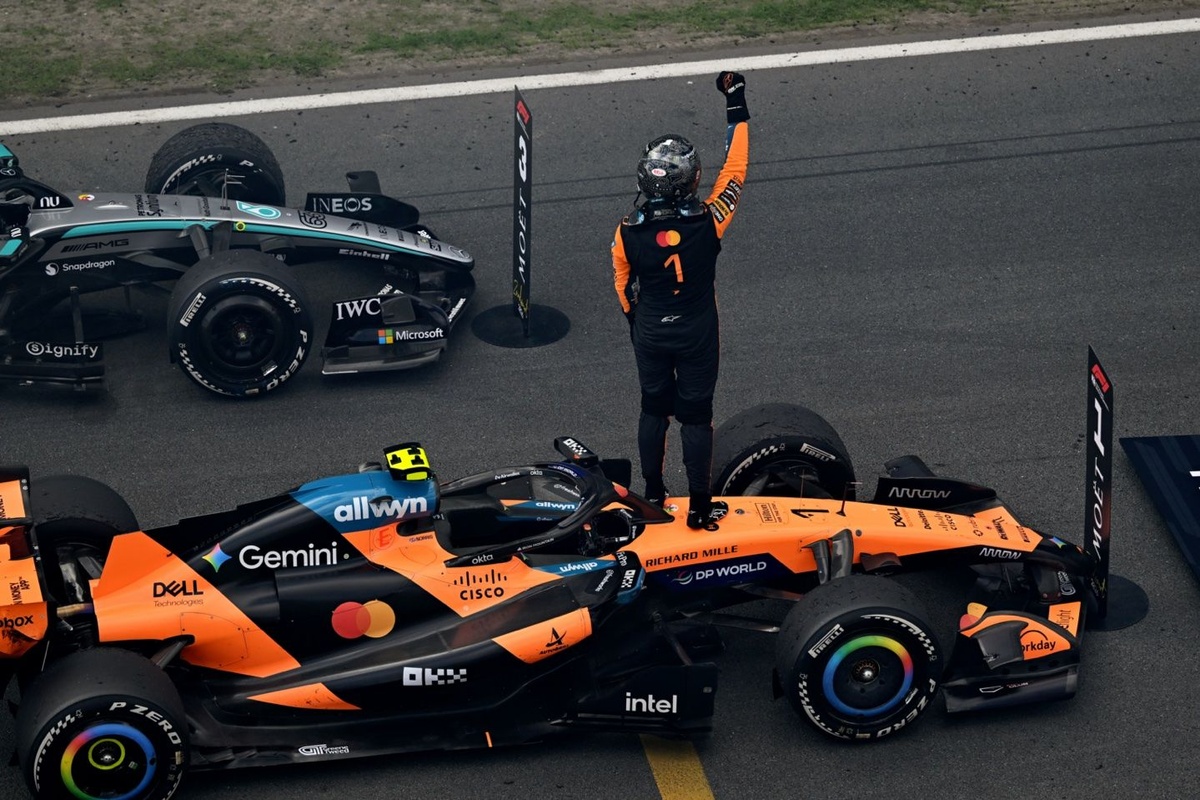
But Norris, now fourth in the standings with 159 points to Antonelli’s 242, was determined to play down talk of him staging a comeback in the final half of the season, despite winning two consecutive grands prix. “I don’t have the car I need to fight for a championship,” he said after his Dutch GP victory.
Many readers would be tempted to cite the so-called Mandy Rice-Davies principle – “Well they would say that, wouldn’t they?”
What’s clear, though, is that under the latest technical regulations there is still a difference in relative strengths between cars which complicates the competitive picture. In broad-brush terms the McLaren MCL40 thrives in fast corners, Ferrari’s SF-26 is strong in terms of carrying good speed into slow corners, while the Mercedes W17 is somewhere between the two. That makes the competitive balance heavily dependent on circuit layout.
Norris’s contention is that his car is insufficiently rounded to be dominant across the remaining rounds in the way last year’s McLaren was the car to beat at most tracks.
Norris played down the significance of his Dutch GP victory
Photo by: Alastair Staley / LAT Images via Getty Images
“We have a strong car in certain areas,” he said. “It’s not like last year where we were pretty good everywhere. We’re very, very strong in high speed. The place we’ve improved the car the most is high-speed performance.
“No one matches us in high speed. And that’s a good thing. My pace advantage to Mercedes in Turn 7, Turn 8 was crazy.
“But their advantage that they have to us in slow speed is also crazy. And therefore I don’t have the confidence to say, yeah, I can easily fight for a championship for the rest of the season. I know I’ve just won two races in a row and two poles in a row, but at the minute I don’t have the car I need to fight for a championship.
“And I know that’s quite a big comment, but I think last year I understood what is needed from a car and what was needed from me. And I know the level that I am now and what I can perform at. And I know just what I need from the car – and what tracks we have coming up where we’re going to certainly struggle more.”
The issue is more complex than simply saying a particular car is fast around a certain type of corner. This year’s cars are shorter, narrower and slightly lighter – and the chassis characteristics are more interconnected with power unit performance than ever before, given the influence of corner-entry speeds on energy harvesting.
McLaren’s decision to run a short wheelbase, helping it save weight at the start of the season, has baked in certain shortcomings in terms of how much aerodynamic load the team can squeeze from the floor.
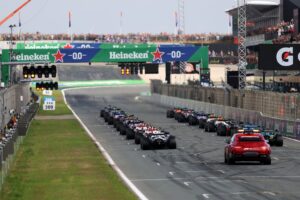
Performance is often hugely variable between tyre compounds. In Saturday’s sprint race, running mediums, Norris struggled with rear degradation and was overtaken by Ferrari’s Charles Leclerc in the closing stages. In the grand prix he took the restart on used softs, was passed by Antonelli at the start, and didn’t really get into the race until the hard-compound tyres went on.

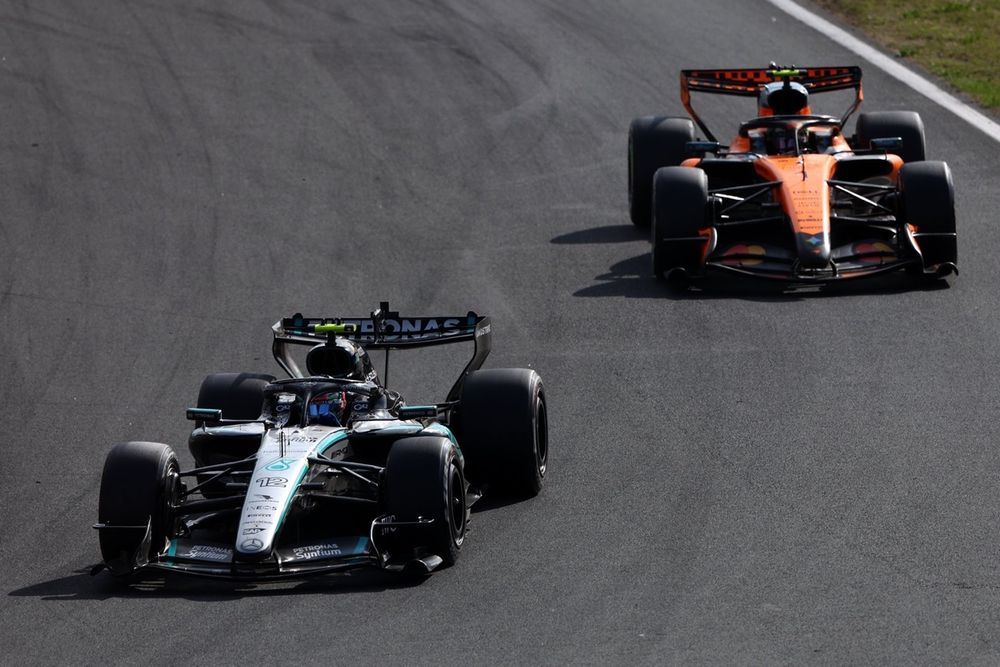
Norris was able to pressure championship leader Antonelli later in the Zandvoort race
Photo by: Andy Hone/ LAT Images via Getty Images
“We put on the hard tyres,” he said. “We were a bit more aggressive with how we wanted to approach the stint. And we turned things around. I had that feeling in the car that I wanted. I went from just not feeling like I was going to win a race to at least we can force him [Antonelli] to make mistakes.
“When I get what I need from a car, when I have the front I want, when I get the confidence with the rear on entries – just when I get what I need to be able to know and predict every single corner, I’m going to win a race.”
Norris has a driving style slightly more aligned to Max Verstappen than the likes of George Russell or even his own team-mate, Oscar Piastri. Rather than separating the throttle off/brake on and turning phases, he likes to blend the throttle and brakes and take a shallower approach angle. Essentially he is feeling for the point in the overlap where the front tyres begin to exert more lateral grip, which helps rotate the car and carry more speed into the corner, towards the apex.
This requires the car not only to have a ‘strong’ front end, but also to communicate what the front tyres are doing, which represents a tough engineering challenge. Modern F1 cars require a consistent ride height for the aerodynamics to function optimally, so the suspension geometry is designed to minimise dive and squat. A side of this is that it saps driver ‘feel’.
Some can live with that, some can’t, which is why McLaren designed an alternate front suspension geometry with a revised kingpin angle for Norris when he was floundering at the beginning of last season. Once he has that feel he can be very adaptable in terms of his lines and the degree of overlap between throttle and brake, which is why he thrives in low-grip conditions.
But although he has a huge amount of adaptability within this range, he still needs that strong front end, good transmission of feel, and confidence that the rear axle will rotate predictably on cue.
“It’s clear where our weaknesses are,” Norris concluded. “Therefore we need to attack those things. And until we do that, it’s still going to be a very tough end of the season.”
We want to hear from you!
Let us know what you would like to see from us in the future.
Take our survey
– The Autosport.com Team
Read the full article here


