



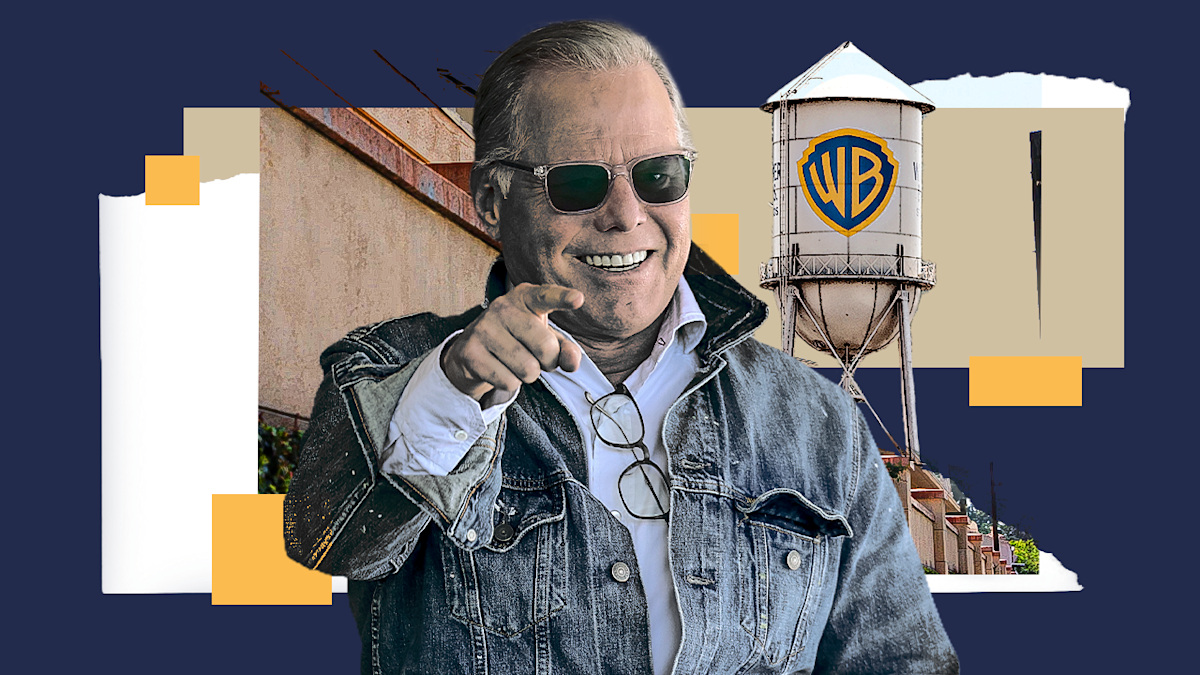
A federal judge this week dismissed a securities fraud lawsuit brought by two men who claim they purchased Warner Bros. Discovery common stock “at artificially inflated prices” and who insist they were duped by allegedly false or misleading statements made by WBD chief executive officer David Zaslav as his company unsuccessfully tried to renew NBA media rights in 2024.
During WBD’s negotiations with the NBA, Zaslav offered remarks that the plaintiffs allege downplayed the importance of NBA rights to WBD or suggested he was confident a deal would be struck.
More from Sportico.com
For example, as part of an earnings call held in February 2024, Zaslav optimistically spoke of WBD’s financial future due to a “global sports portfolio” and the company’s plan to “drive increased shareholder value.”
The lawsuit, filed by Anthony Yuson and Michael Steinberg, criticized Zaslav for these remarks. He allegedly omitted mention of how “NBA Rights were crucial to support the high carriage rates that WBD was able to command, produce significant advertising dollars, provide a ‘halo effect’ that boosted all of WBD’s other properties, and negotiate more favorable terms with other sports leagues.” From that same lens, the lawsuit maintains that Zaslav should have acknowledged that “WBD internally viewed the NBA Rights as a unique irreparable asset.”
Zaslav’s remarks during an earnings call in May 2024 were also slammed in the lawsuit. At the time, Zaslav emphasized how WBD had “matching rights that allow us to match third-party offers before the NBA enters into an agreement with them.” He added, “we’re hopeful that we’ll be able to reach an agreement that makes sense for both sides.”
The plaintiffs maintain Zaslav was disingenuous since, they claim, he knew WBD “could not in fact match NBCUniversal’s and Amazon’s bids.” For instance, Zaslav was aware NBCUniversal and Amazon “offered the NBA cross-promotion alongside their pre-existing NFL media rights, which WBD did not have.”
Also, WBD allegedly could not match Amazon’s ability to offer an internet streaming audience and infrastructure. To further this critique, the plaintiffs point out that while WBD submitted a bid that “equaled Amazon’s monetary offer,” the so-called “match” revised Amazon’s terms “so significantly” that it could not be understood as a match of Amazon’s offer.
U.S. District Judge Katherine Polk Failla disagreed that anything Zaslav said could be construed as fraudulent.
In siding with arguments raised by Jonathan Polkes, Stacy Nettleton and other attorneys from White & Case who represented WBD and Zaslav, Failla reasoned Zaslav’s statements were, “at worst,” puffery. That term encompasses exaggerated, subjective assertions of optimism that are not intended to be taken as factual, are too general to cause a reasonable investor to rely upon them and are not actionable in securities law.
Along those lines, the judge underscored that Zaslav, as an executive engaged in business negotiations, didn’t break any laws when he described negotiations in a positive light—“even if,” Failla noted, “those negotiations later fail.”
She also emphasized that Zaslav and other WBD executives “repeatedly communicated to the public the importance to WBD of the NBA rights.” Those communications were made in various statements to the public, including WBD’s filings to the U.S. Securities and Exchange Commission. To illustrate, the company’s 2023 Form 10-K bluntly acknowledged “failure to renew, renewal with less favorable terms, or termination of our content licenses and similar distribution agreements may cause a decline in our revenue.”
Failla also noted that “widely disseminated media reports” about the importance of NBA rights to WBD and the status of the negotiation informed investors and would-be investors about the situation. She pointed out that the plaintiffs’ complaint “itself proves the point” by citing media reports that offered specifics about the likely economic impact on WBD if it lost NBA games.
“To the extent” WBD’s disclosures “fell short,” Failla wrote (while emphasizing those disclosures did not fall short in her estimation), “media reporting filled in the gaps.”
The WBD-NBA saga ended up in court during the second half of 2024. WBD invoked the matching provision, but the NBA rejected it, claiming the revisions outlined by WBD rendered a non-match, and the NBA questioned WBD’s technological capacity to stream games in the same manner as Amazon. WBD sued the NBA in July 2025 for alleged breach of its matching right, with the parties reaching a settlement and hatching a new partnership four months later.
Yuson and Steinberg can appeal Failla’s ruling to the U.S. Court of Appeals for the Second Circuit.
Best of Sportico.com
Sign up for Sportico’s Newsletter. For the latest news, follow us on Facebook, Twitter, and Instagram.
Read the full article here


