






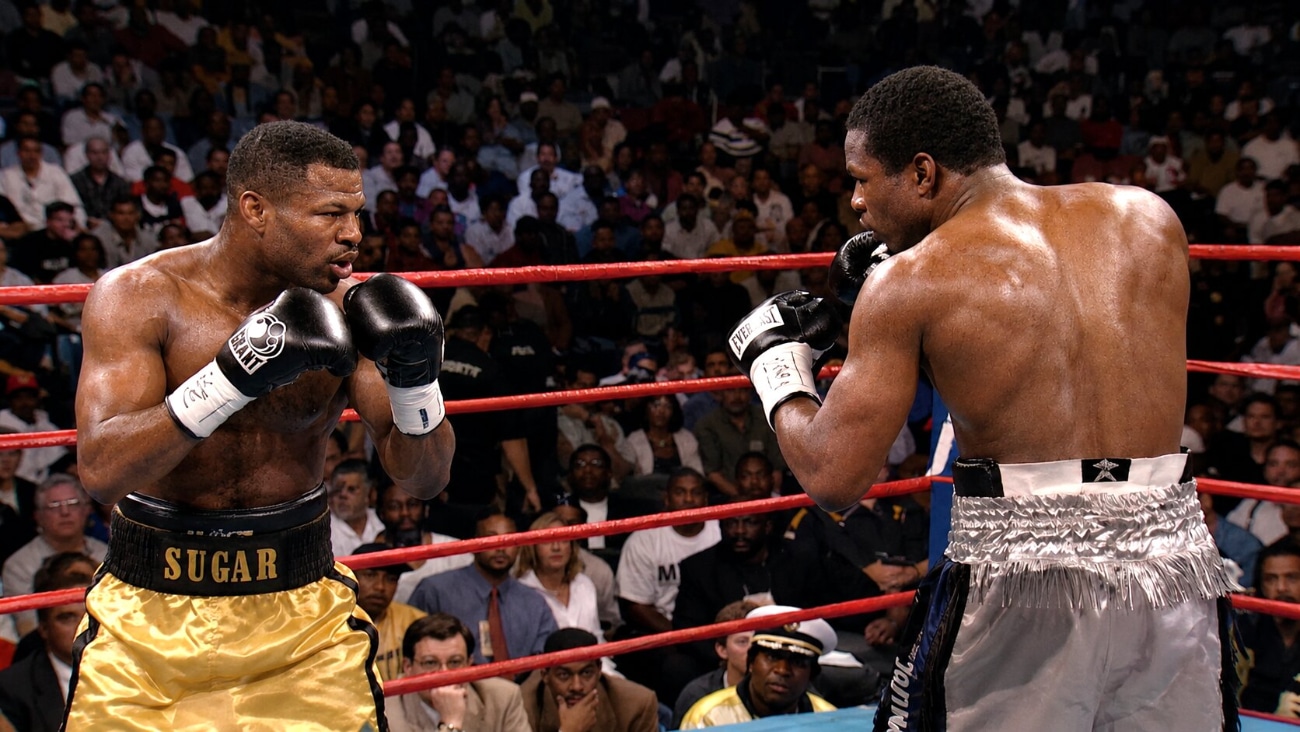


The rematch carried enormous significance. Forrest defended both the WBC and Ring Magazine welterweight championships after taking them from Mosley in their first meeting earlier in the year in January 2002. Many believed Mosley would make the necessary adjustments and reclaim the titles, while Forrest had the opportunity to prove the upset had not been a one-night performance.
The event attracted 15,775 fans, the largest crowd to attend a boxing card in Indiana history at the time. HBO televised the championship bout nationally, and both fighters earned career-high paydays. Forrest received $3.42 million, while Mosley collected $2.8 million. Veteran referee Laurence Cole officiated the 12-round title fight.
Mosley came out aggressively, looking to erase the disappointment of the first bout by forcing exchanges from the opening bell. Forrest refused to be drawn into a firefight. Standing three inches taller with the longer reach, he established his jab early, circled effectively and answered Mosley’s rushes with sharp counters before tying him up whenever the action moved inside.
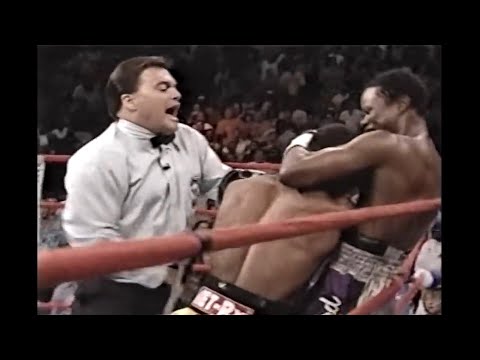
As the rounds progressed, Forrest steadily took control. Forrest repeatedly stabbed Mosley with the jab before tying him up whenever the challenger got close, forcing Mosley to reset his offense over and over. Referee Laurence Cole was forced to separate the fighters throughout the contest as the tactical battle became increasingly physical.
The middle rounds lacked sustained action, drawing boos from portions of the crowd, but Forrest remained committed to the game plan. One report even noted that a fight in the stands during the sixth round briefly attracted as much attention as the action inside the ring.
Mosley increased the pressure during the championship rounds, finally producing several spirited exchanges in the tenth. Forrest answered with crisp counterpunching and finished strongly, landing several hard right hands late in the eleventh before boxing confidently through the final round. There were no knockdowns, but Forrest consistently landed the cleaner, more effective punches.
CompuBox statistics reflected the tactical nature of the contest. Forrest landed 120 of 446 punches, while Mosley connected on 114 of 259, with Forrest’s jab, timing and ring control outweighing Mosley’s higher connect percentage.
Judges Gary Merritt (117-111), Tony Castellano (116-112) and Jerry Roth (115-113) all favored Forrest. HBO unofficial scorer Harold Lederman and several media scorecards also had Forrest winning, confirming that his first victory had been no accident.
The rematch closed the book on one of the era’s most compelling rivalries. Forrest had defeated Mosley twice as a professional after also beating him during the 1992 U.S. Olympic Trials, establishing a rare mastery over one of boxing’s greatest fighters.
Mosley later captured world titles in higher weight classes, while Forrest continued his championship run before unifying the welterweight division. More than two decades later, the rematch remains one of the signature victories of Forrest’s Hall of Fame career, removing any doubt that his success against Mosley was built on superior technique rather than surprise.

Read the full article here


