






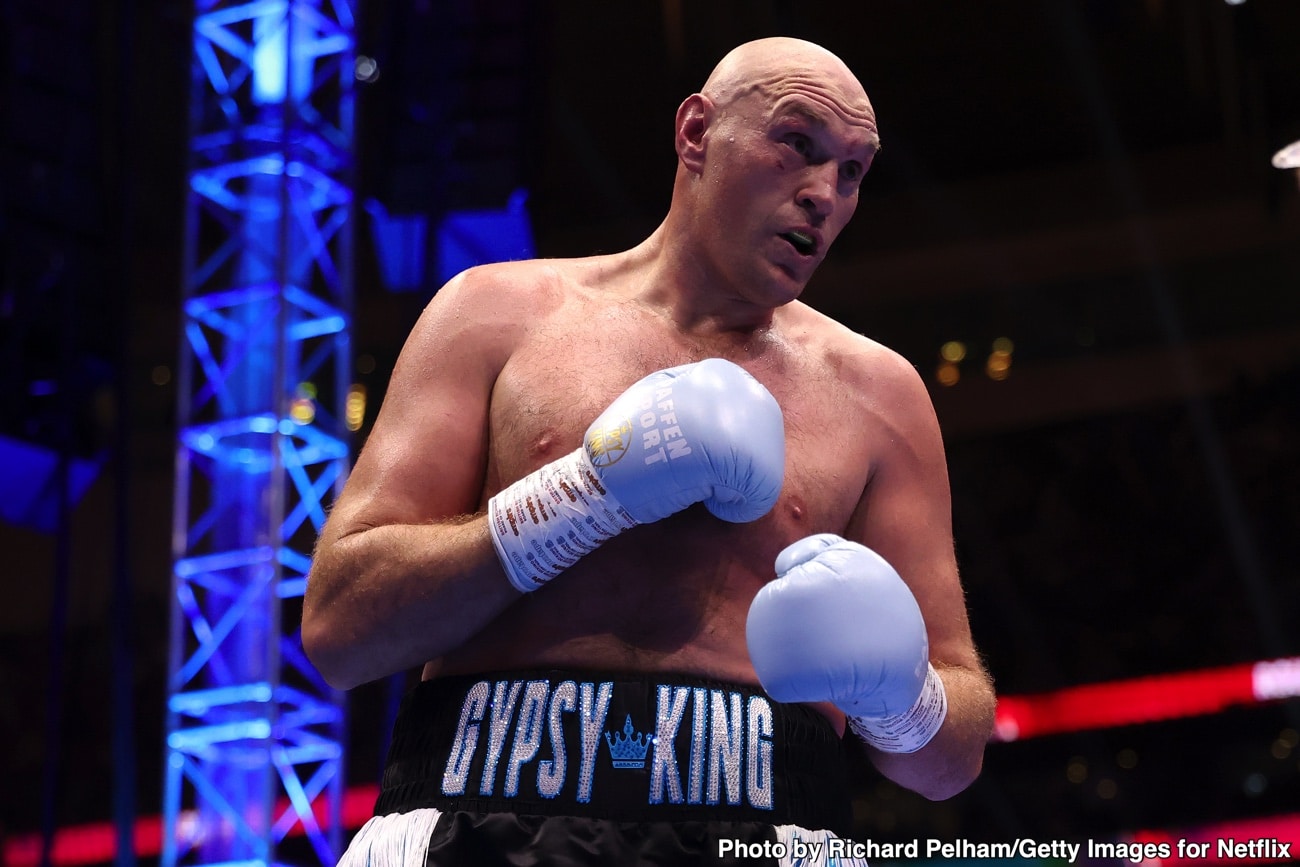


“Let’s go, August 1, Dublin, Ireland,” said Fury on Instagram.
When there is a mountain of cash waiting at the end of the year for the Anthony Joshua fight, matching Tyson Fury with a live body is the last thing Queensberry will do.
Fury looked shockingly slow, stiff, and vulnerable against Arslanbek Makhmudov in April. The reflexes that used to bail him out are clearly fading, and at this stage, the combination of age and a grueling career means even a borderline top-15 fighter with an ounce of ambition could ruin the entire script.
A few directions they could go to find a safe opponent include: They could look for a durable, aging fringe contender from the European circuit who has a recognizable name but lacks the athleticism or punch output to exploit Fury’s defensive decline. Think along the lines of a Derek Chisora style of matchup, someone who can generate attention at the press conferences but won’t pull the trigger in the ring.
Another route is pulling out a former belt-holder who is well past his best days, hasn’t fought at a high level recently, and is content to pick up a massive payday. An opponent who relies on survival tactics rather than offense would give Fury the rounds he needs to shake off the rust without forcing him to exert himself or take heavy shots.
They might choose a heavyweight whose primary attribute is a solid chin and a low work rate. This type of fighter would travel to Dublin to absorb a decision loss, providing Fury with a showcase performance where he can look sharp, throwing combinations without any real risk of a counter-attack.
There are even bizarre, viral rumors circulating on social media involving non-boxers like Zlatan Ibrahimović, which shows just how much this date is being treated as a circus-level exhibition rather than a strict competitive sporting event.
No matter whose name is on the contract, the goal for August 1 is simple: get Fury in and out of the ring with a victory, make him look as good as possible, and protect the massive payday against Joshua in November.
When an elite athlete has already secured generational wealth, pushing a compromised, aging body back into the ring usually comes down to two powerful motivators: ego and sheer economic greed.
For Fury, the financial reality makes the comeback look entirely mercenary. Estimates place his net worth well north of $150 million, especially after scooping up another massive bag for the Makhmudov fight in April. He does not need another dime to live like royalty for the rest of his days, nor do his children or grandchildren.
The desire for these specific paydays can be traced to a few distinct factors:
Despite his massive wealth, Fury actually lags behind Anthony Joshua in total net worth. Reports from the recent rich lists show Joshua sitting comfortably ahead of him financially, partly due to AJ’s corporate branding and massive event history.
For someone with an ego as massive as Fury’s, knowing his domestic rival is wealthier is likely a bitter pill to swallow. The two planned fights against Joshua and Usyk represent the ultimate equalizer to bridge that financial gap.
It is incredibly rare for a fighter of Fury’s stature to walk away cleanly when hundreds of millions of dollars are still being left on the table. The boxing business is designed to squeeze every last drop of revenue out of a big name, and promoters are masterful at dangling historic, unprecedented sums to convince an athlete to mount one last run.
When Saudi organizers and global streaming platforms are willing to construct entire financial ecosystems around a single match, the temptation to grab the money and run proves almost impossible to resist.
Ultimately, Fury is prioritizing the business of boxing over the sport itself. He is fully aware that his physical skills are in steep decline, but as long as the public and major platforms are willing to pay astronomical prices to see the conclusion of his rivalry with Joshua, he will gladly coast through safe assignments to collect the checks.
Read the full article here


