

This offseason has been full of surprises, and with LeBron James still keeping everyone guessing about his next destination, the drama is far from over. From the moment the NBA Finals wrapped, through the 2026 NBA Draft and into free agency, the league hasn’t stood still. An NBA Finals MVP was traded to a division rival, a two-time Finals MVP returned to his original championship team and veterans across the league are searching for fresh starts.
So which players have boosted their stock and whose fantasy basketball value might take a hit as we head into next season? Let’s talk about it.
Walker Kessler — Los Angeles Lakers
The Lakers acquired Kessler in a pricey sign-and-trade to fill the center spot left by the Anthony Davis deal. With no real competition behind him, Kessler is positioned to thrive as a shot-blocking, elite-rebounding big and efficient scorer off pick-and-rolls and putbacks.
Next to Luka Dončić and Austin Reaves, expect Kessler to deliver a top-50 fantasy season, with averages north of 15 points, 10 rebounds and a couple of blocks on high efficiency.
Derrick White — Boston Celtics
The obvious Celtics beneficiary of the Jaylen Brown trade is Jayson Tatum — he’s an easy first-round selection. The more interesting benefactor is Derrick White. In the 50 games White has played without Brown since 2021-22, he’s averaged 18.1 points, 4.2 rebounds, 5.5 assists, 3.2 3s and 1.6 stocks on 43/38/87 shooting.
Without Brown, White’s usage jumps by 4.0 percentage points to 23.5%. As Boston’s likely second option and secondary playmaker, White’s set for a more prominent role. I’d draft him by the fourth round.
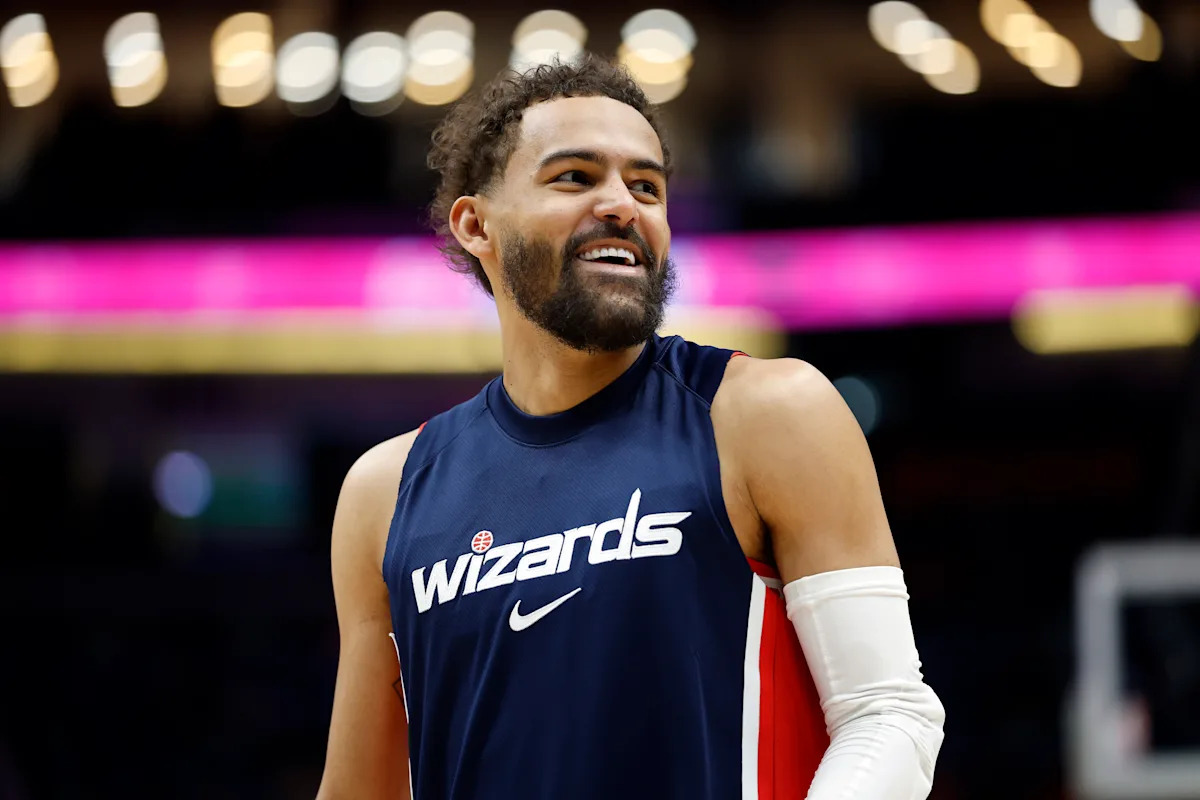
Trae Young — Washington Wizards
Signing a four-year, $212 million deal is about as much job security as a player can ask for. Young is the unquestioned primary facilitator for a young, ascending Wizards core. After being sidetracked by injuries following his midseason trade from Atlanta, Young is back to full health and back to a role that lets him operate as a true table-setter.
With an exciting group surrounding him featuring Alex Sarr, AJ Dybantsa, Kyshawn George, Tre Johnson and presumably Anthony Davis, Young should return to 20-and-10 territory as one of the best assist generators in the game.
Naz Reid — Charlotte Hornets
The Hornets overhauled their roster by trading away LaMelo Ball and Miles Bridges. While Brandon Miller, Kon Knueppel and Coby White will level up this year, it’s Reid whose situation has improved the most. He goes from a top reserve in Minnesota to a starting lineup that’s shifting both its makeup and its offensive approach. He’ll be playing alongside more willing passers, which should improve his shot diet.
Across the 77 games he’s started in his career, Reid has averaged roughly 16 points, 7 rebounds and 2 assists. More telling, when he plays at least 30 minutes, he averages 18.5 points, 8.5 rebounds and 2.8 assists per game. He projects as an ideal floor-spacing power forward, with a ceiling as a rebounder and defender we genuinely haven’t seen yet.
Day’Ron Sharpe — Brooklyn Nets
Brooklyn shipped Nic Claxton to Chicago as part of the three-team deal that brought Julius Randle to the Nets, clearing the way for Sharpe to finally take over as Brooklyn’s starting center. After spending his first five seasons buried behind Claxton and mostly playing a reserve role, Sharpe posted modest career highs across the board — 8.7 points, 6.7 rebounds, 2.3 assists and 1.1 steals in 18.7 minutes per game.
More impressive, he averaged over 1.23 fantasy points per minute (FPPM), which ranked 38th overall — ahead of James Harden, Jamal Murray and Pascal Siakam, to name a few (minimum 500 minutes played). A starter’s workload instead of scattered bench minutes puts Sharpe squarely on sleeper radar as an undervalued pick come draft season.
Keegan Murray — Sacramento Kings
Waiving DeMar DeRozan boosts every starter left in Sacramento, but Murray stands to gain the most from finally not having to cede touches to a ball-dominant scorer. Zach LaVine is still around (for now), but the Kings handed Murray a lofty extension last October that runs through 2031. The time is now for him to show what he can do with the ball moving more freely.
Coming off an injury-plagued season and two straight underwhelming years, this is a legitimate bounce-back opportunity, with touches to be had. Murray is better for 9-cat leagues than for points formats and I’m anticipating his ADP to fall around the 110-120 range in drafts.
Brandon Ingram — Los Angeles Clippers
Ingram landed with the Clippers as part of the Kawhi Leonard trade back to Toronto and steps into Leonard’s old role as the likely leading scorer and primary option next to Darius Garland. Ingram was dependable last season, playing 77 games and averaging over 20 points for the seventh straight year, along with efficient shooting, 5+ rebounds and nearly 4 assists per game. While he doesn’t generate many stocks, his counting stats remain strong — a good sign for points leagues.
Ingram goes from a Toronto system that spread touches among several scorers to a Clippers roster lacking offensive firepower beyond him and Garland. That means more usage and volume, and with more opportunities as the focal point, he could easily outperform his likely 60-70 draft slot.
Losers
DeMar DeRozan — Free Agent
DeRozan was waived by Sacramento after the Kings unsurprisingly failed to find a trade partner. He’s a declining bucket-getter capable of putting up solid counting stats, but heading into free agency at 36 years old (he turns 37 in August) and wanting to join a contender is not a good look for his fantasy value. With his role less secure, he’s no longer a safe mid-round selection.
VJ Edgecombe — Philadelphia 76ers
Edgecombe was set up to take a real second-year leap in Philadelphia, but the offseason addition of Jaylen Brown muddies his short-term potential. With Brown, Tyrese Maxey and Joel Embiid all vying for touches, Edgecombe’s runway for the usage bump fantasy managers were hoping for looks a lot narrower than it did a month ago. I still think he’ll be worth drafting for points, steals and 3s. It’s just hard to project where he’ll rank in the pecking order if (a big if) Embiid is healthy.
Kevin Porter Jr. — Milwaukee Bucks
After the Giannis Antetokounmpo trade, Milwaukee brought in Tyler Herro and Kasparas Jakučionis, then used a lottery pick on Brayden Burries, turning the backcourt into a crowded competition. KPJ impressed in 37 appearances last season, but with Ryan Rollins likely handling point guard duties, Porter could be headed for a reserve role. Don’t overdraft him based on last year’s inflated per-game numbers.
Deandre Ayton — Washington Wizards
Ayton was traded out of Los Angeles once the Lakers landed Kessler. The Wizards continue to buy low on former top picks, bringing in Ayton as their next reclamation project. Ayton is in the final year of his contract, but playing behind AD and Alex Sarr is a good reason for fantasy managers to ignore him.
Anfernee Simons — Philadelphia 76ers
Simons signed with Philadelphia to anchor the second unit, but that reserve role limits his fantasy appeal — especially after bouncing between Boston and Chicago last season. While he’s a capable scorer when given minutes, coming off the bench with rookie combo guard Labaron Philon Jr. will cap both his playing time and opportunities.
Tobias Harris — San Antonio Spurs
Harris was an efficient third option in Detroit, but he’s landed in an even lower spot in San Antonio. Even as the presumptive starting power forward for one of the best teams in the West, he’s stepping into a lineup where Victor Wembanyama, Stephon Castle, Dylan Harper and De’Aaron Fox are already commanding the touches. Harris’ contract was handsome enough that he’ll have a consistent role, but his fantasy value continues to decline.
Read the full article here