



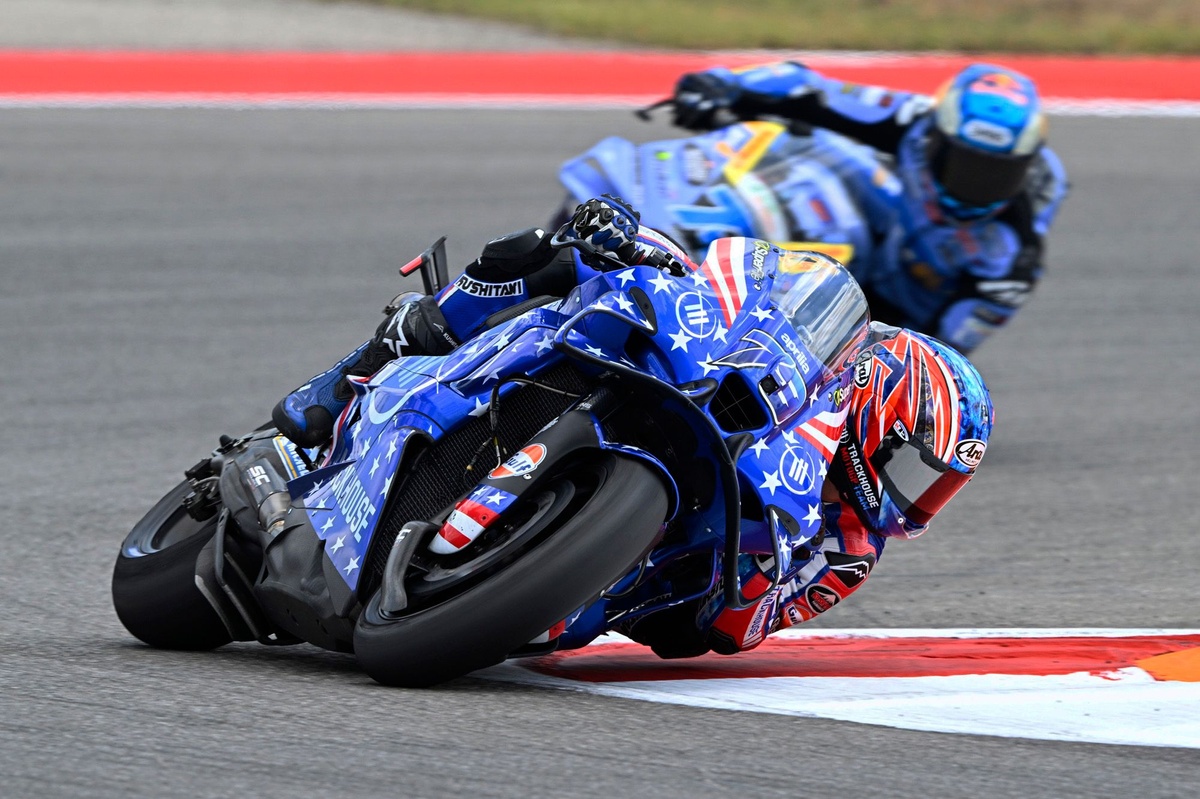
Now in his third season in MotoGP as owner of the Trackhouse team, Justin Marks is one of the most recognisable faces in NASCAR and believes the time has come for Liberty Media to step up and help MotoGP unlock the level of popularity and business potential many believe it can reach.
Motorsport.com sat down with the team owner to discuss Trackhouse’s place in MotoGP, what he hopes Liberty Media can do to help the series grow and its plans on both the rider and manufacturer front.
How has your perception of MotoGP – both as a spectacle and as a business – changed since taking over the team?
Justin Marks: “I wouldn’t say it’s changed that much, mainly because I didn’t have a preconceived idea when I arrived. I came in with a completely open mind, ready to learn from scratch. Where my perspective has evolved is in understanding the global potential of the championship – how it can grow and what the key drivers of that growth are.
“MotoGP is an incredible spectacle, something truly amazing to witness in person. The key is putting it in front of as many people as possible and bringing in new fans. Over the past couple of years, I’ve focused on understanding how the sport is structured, what Dorna’s vision is, and how Liberty Media fits into that. Our goal is to position ourselves as strategic partners in the championship’s future growth.”
Trackhouse is the only American team in MotoGP. What does the series need to penetrate the US market more deeply and quickly?
JM: “I consider myself an aggressive person when I see opportunities. I believe you have to go after them without being afraid to fail. Historically, many racing series have been slow to make big changes or try new things. We try to encourage risk-taking and investment. If you identify an opportunity to bring MotoGP to a new audience or region, you have to act decisively and go for it.”
Do you expect that growth to accelerate now that Liberty Media is involved?
JM: “Yes , I do think expansion will accelerate. Liberty is made up of very smart people, and they’ve invested a lot of money in the championship for a reason. They’ve spent the last year observing, learning, and defining a three-, five-, and 10-year strategy. In the next 12 to 16 months, we’ll start to see more involvement from them as they begin executing that growth plan.”
Justin Marks
Photo by: Gold and Goose Photography / LAT Images / via Getty Images
Teams and manufacturers are currently negotiating a new commercial agreement with Dorna and Liberty. How does this compare to NASCAR?
JM: “It’s actually very similar to what we experienced in NASCAR when we renegotiated there. The most important thing is that the relationship between teams and the governing body encourages cooperation to grow the sport. There’s always negotiation, because teams need financial stability and long-term viability. The stronger they are, the more resources they can dedicate to helping grow the championship – marketing, rider availability, activations, and so on. What we’re going through now in MotoGP is something I’ve already experienced in NASCAR. It’s about securing long-term financial stability and value for the teams, which ultimately benefits the championship as well.”
However, there seems to be a significant gap between what Dorna is offering and what teams are asking for?
JM: “Liberty’s involvement introduces a new element – a global media company that understands how to increase the value of a sports property. That changes the context.”
Are independent teams sustainable under the current conditions?
JM: “There’s still work to be done in that area. One of the challenges is that too many sponsors are tied specifically to the motorcycle industry. The championship needs to attract global lifestyle and technology brands. In my view, MotoGP is one of the greatest value opportunities in all of motorsport: it has a huge fan base, the racing is incredible, and the cost is relatively low compared to other series like Formula 1 or the World Endurance Championship. The key is positioning the sport so more companies understand its potential as a marketing platform. That’s what will ultimately make teams sustainable.”
Several teams lack a title sponsor, including Aprilia. What is MotoGP’s biggest limitation in attracting non-endemic brands?
JM: “A lot of it comes down to awareness. When we talk to major companies about NASCAR or Formula 1, they know exactly what those are. But with MotoGP, they often say: “Explain it to me.” The issue is that major corporations still don’t fully understand how compelling and inspiring this sport is. It’s about building awareness in the corporate world. We already have brands like Red Bull and Monster, but there’s room for many more. The difference with Formula 1 is that companies simply aren’t as familiar with MotoGP yet.”
Are you considering bringing in a new partner or investor for the team?
JM: “We’re always considering it. There are investment groups and sports funds that can be very strategic for our growth. For example, selling a minority stake to a company that’s well connected with global brands can open a lot of doors – sponsorship, marketing, global expansion. If they can add value in that sense, it’s a positive.”
Are you close to finalising any deal?
JM: “We’re having conversations. Since Liberty announced the acquisition, interest has increased significantly. We’ve received a lot of calls from investors looking to get involved. I have no intention of selling the team or giving up control, but we are in meaningful discussions with groups that can help us grow – whether that’s through sponsorship, marketing, brand positioning, or fan engagement.”

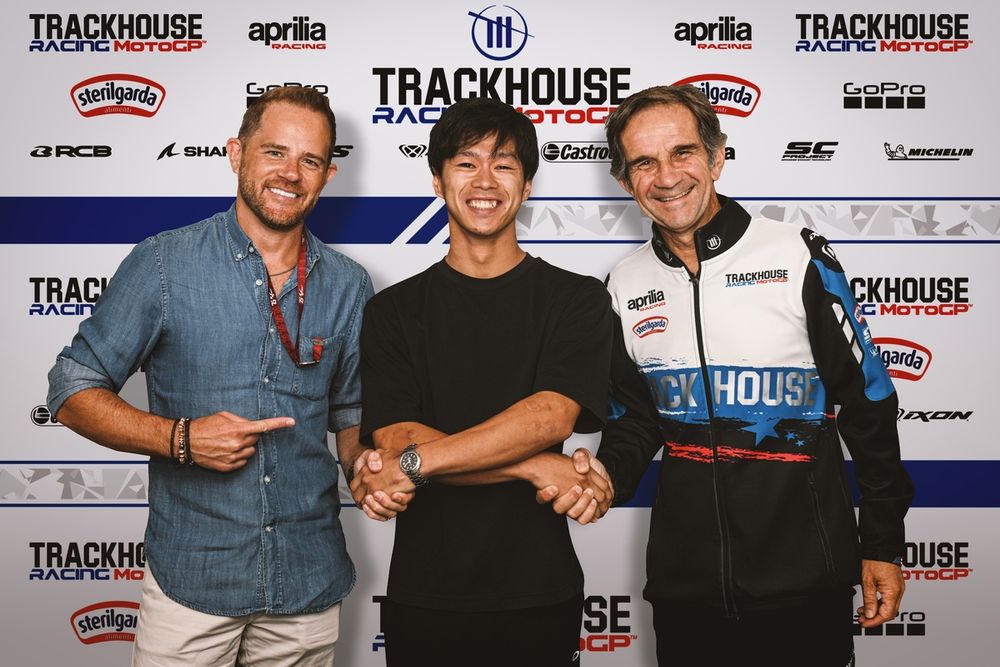
Ai Ogura, Trackhouse Racing, Justin Marks, Trackhouse Racing Team Owner, Davide Brivio Trackhouse Racing Team Principal
Photo by: Trackhouse Racing Team
How would you describe your relationship with Aprilia? Have you considered listening to offers from other manufacturers?
JM: “We’re very happy with Aprilia. From the beginning, we wanted to be a true factory partner – running the same equipment and contributing data and development. That’s exactly what the relationship has been. The bike is competitive, and the brand has a strong long-term strategy. MotoGP is important to Aprilia and to the Piaggio Group. Of course, everyone talks to everyone in the paddock, that’s normal, but we’re happy where we are. We don’t want to introduce instability, because stability is key to growth.”
What criteria will you prioritise when selecting your 2027 riders?
JM: “We’re happy with our current riders. When it comes to selection, there are two key aspects. First, performance: talented, prepared, focused, and dedicated riders. Second, the business side. We look for profiles with compelling stories that connect with fans. For example, I like that we have a European rider and an Asian rider. Ai Ogura is the only Asian rider on the grid and has taken a relatively unconventional path to MotoGP. That brings value. We do the same in NASCAR – we look for stories that resonate with people. It helps with engagement, sponsorship, and partnerships. So it’s about great athletes, but also personalities with unique stories who understand their role within the broader business.”
We want to hear from you!
Let us know what you would like to see from us in the future.
Take our survey
– The Autosport.com Team
Read the full article here


