




The Daytona 24 Hours is easily one of the highlights of the sportscar racing calendar, and its twice-round-the-clock format is a huge part of the charm. Modelled after the Le Mans 24 Hours, it was originally conceived as a three-hour race, before switching to the same format as the French endurance classic in 1966.
Since then, every single Daytona endurance event was scheduled for 24 hours. Except one.
The year was 1972. This was the time that the Daytona ‘24 Hours’ was part of the FIA World Championship of Makes, the precursor to the present-day World Endurance Championship.
Heading into the year, the FIA had slashed the maximum engine displacement to three litres, triggering a major shift in sportscar racing and forcing manufacturers to switch to smaller power units.
Amid concerns over the durability of the new three-litres prototype, the FIA reduced all races to six hours or 1000km, with Le Mans being the only exception. The other Florida classic, Sebring, successfully lobbied to retain its 12-hour format, but Daytona agreed to cut short its race to one-fourth the original duration.
With the ‘Daytona 6 Hours’ scheduled early in the year as usual, and less than a month after the Buenos Aires season opener, the race was set to be a major test for the new formula.
Over 50 cars were entered for the event, but only a small fraction were considered serious factors for victory. Porsche’s factory withdrawal from the championship, triggered by the increase in minimum car weight under the new engine regulations, had left Ferrari, Lola and Alfa Romeo as the only realistic challengers.
Mario Andretti, Jacky Ickx, Ferrari 312 PB
Photo by: David Phipps / Sutton Images via Getty Images
Ferrari entered three examples of the 312 PB, the latest development of the car it had begun racing experimentally in 1971. Running a Formula 1-derived flat-12 engine, the Group 6 challenger had already showcased its potential with victory in Argentina
The Prancing Horse was up against Alfa Romeo and Lola, both of which had debuted clean-sheet chassis to tackle the new regulations. However, like Ferrari, neither built a new engine from scratch. Alfa Romeo retained its three-litre V8, albeit with further development for 1972, while Lola turned to the trusted Cosworth DFV to power the new T280.
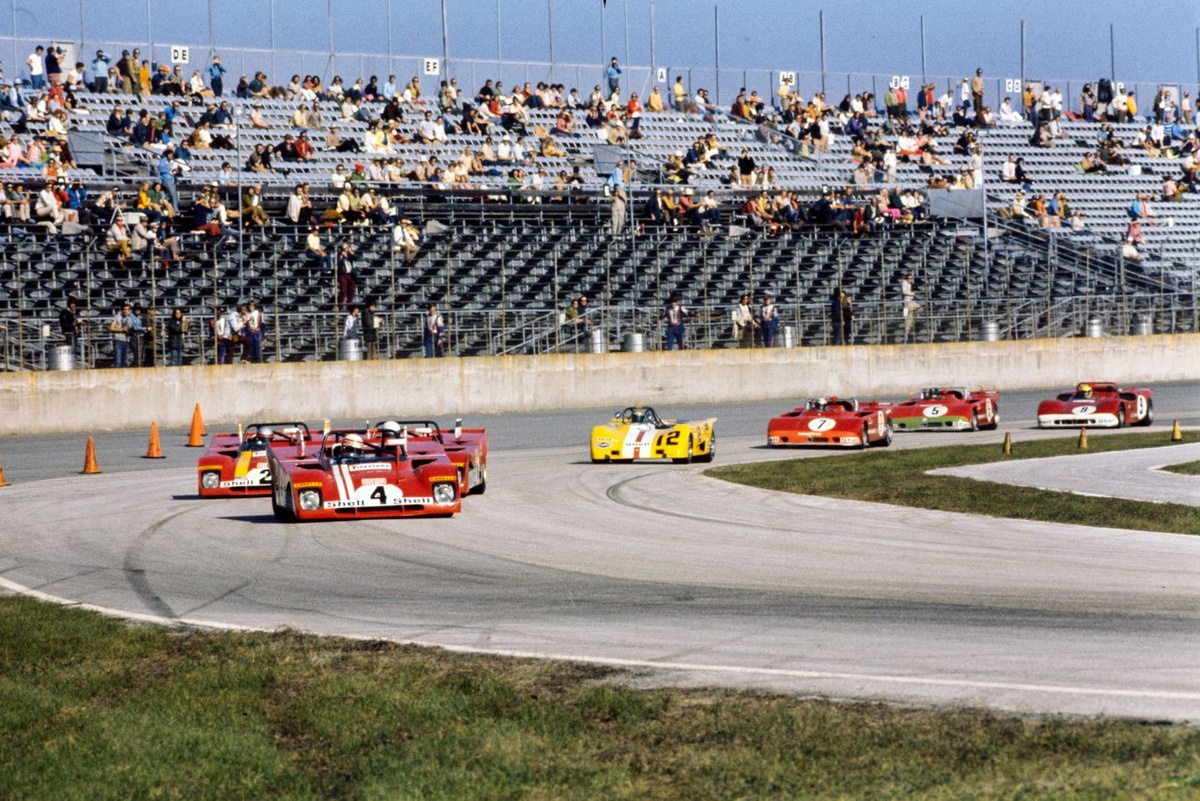
Much of the race week took place in wet conditions, but the track was bone dry by lights out. Mario Andretti took the start in the #2 Ferrari he qualified on pole position, with Clay Regazzoni hot on his heels in the sister #4 entry.
But very early into the race, Andretti’s Ferrari lost a cylinder, leaving him with a ‘flat-11’ engine for the remainder of the day. Over a 24-hour race, such a major technical gremlin might have proved terminal, but Andretti and team-mate Jacky Ickx still stood a chance in the equivalent of a modern-day WEC round.
And as Andretti and Ickx persevered, their rivals fell by the wayside after the other. The #4 Ferrari that had taken the lead amid Andretti and Ickx’s mechanical troubles was the first casualty, with a tyre blow out at the banked Turn 4 leaving it with significant damage. Its rear bodywork also struck the highest-placed Lola, effectively taking another contender out of the battle.
This left the #7 Alfa Romeo T33/3 as the leader, but Peter Revson was soon forced to bring the car he shared with Rolf Stomellen to the pits due to issues with the alternator. At the same time, Alfa Romeo’s other two contenders ran into trouble, dealing a big blow to the Italian brand.
What had effectively seemed like a three-way manufacturer fight effectively came down to an intra-Ferrari fight approaching the final stages of the race. Ickx was now at the wheel of the #2 Ferrari, battling the #6 car of Ronnie Peterson and Tim Schenken.
Ickx’s brilliant late-race speed and a puncture for Schenken combined to tilt the race in the favour of the #2 Ferrari, which ultimately took the chequered flag two laps ahead of the sister car.

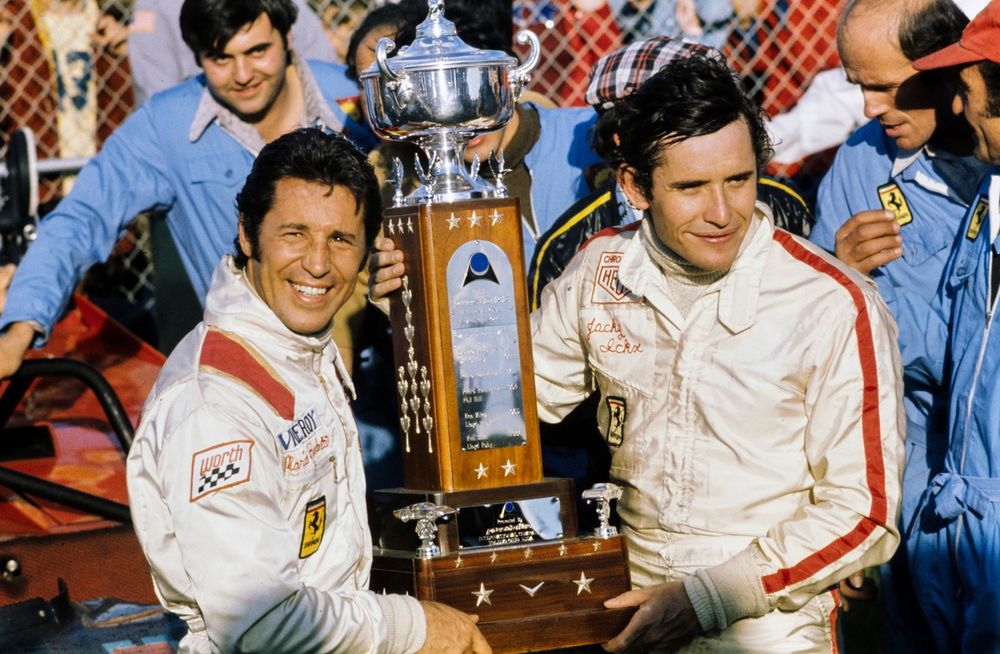
Winners Mario Andretti and Jacky Ickx
Photo by: David Phipps / Sutton Images via Getty Images
For Andretti, this was his second major success at Daytona International Speedway, following his brilliant win at NASCAR’s Daytona 500 in 1967. Ickx, meanwhile, added another major sportscar victory to his CV following his triumph at Le Mans with Ford just three years prior.
Considering the engine troubles had left them significantly down on power on Daytona’s long straights, the result was no short of a miracle. Over five decades on, even the duo admit to surprise over the incredible feat they pulled off.
“Well, that’s one race that I had no idea that we could win because we lost a cylinder early,” Andretti recalled in an interview with Autosport. “We were running with 11 cylinders.”
“We were beaten at the start and we made it to the finish,” Ickx added in the same interview. ”There are races you’re not supposed to win and you win, and other ones….
“You, Mario, drove fantastically well, I must admit, in that particular race.”
“We were qualifying every lap,” Andretti continued. “We never gave up. We won with a deficit that we had in our hands for a long time. Luckily, the race was only six hours instead of 24 hours. Otherwise, there’s no way we could have done it.
“Early on, it seemed like, ‘oh no, we’re done’. No, we’re not. We never gave up. Yes. Maximum, and then here we went.”
Ferrari went on to win 10 of the 11 races in the 1972 World Championship for Makes, with Ickx and Andretti winning four of those as a duo. Ironically, the only race the Ferrari didn’t win was Le Mans, which it didn’t enter that year. The 312 PB’s F1-derived engine was simply not ready for such a long endurance race.
Daytona itself went back to a 24-hour race in 1973, with the six-hour format having failed to capture the public imagination. Ickx and Andretti never won at the Florida again, but went on to achieve virtually every major accolade in motorsport.
Their friendship, forged during their time together at Ferrari, continues to this day, even as they now represent rival brands – Cadillac and Genesis respectively – in global motorsport.
We want to hear from you!
Let us know what you would like to see from us in the future.
Take our survey
– The Autosport.com Team
Read the full article here


