






McLaren’s win in Zandvoort, their second in a row after Budapest, highlighted a key point: the updates introduced on either side of the summer break did more than restore the aerodynamic load the car had been missing. They also enabled the team to take a decisive step forward.
At the Barcelona Grand Prix, for instance, McLaren’s strengths had already begun to emerge, and the same was true at Spa, where the car appeared in its most convincing form. The faster and longer the corner, because absolute speed alone is not the sole factor, the more competitive the car becomes. The latest upgrades delivered the extra downforce required to turn the car into the benchmark through those sections.
The effectiveness of these developments surprised even McLaren, as the performance shown in the high‑speed sections exceeded internal expectations.
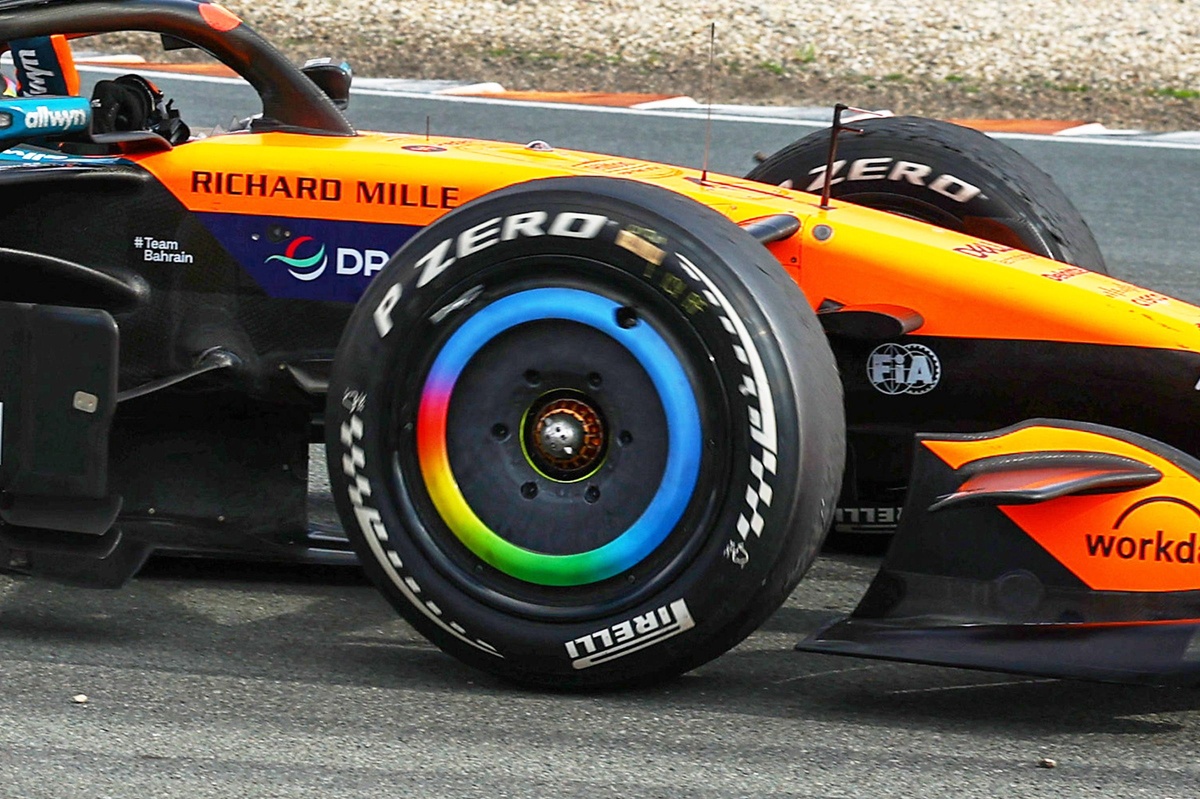
Yet another factor behind the Zandvoort victory went somewhat under the radar: the debut of the new front wheel rims, a detail that McLaren technical director of engineering Neil Houldey had already hinted at ahead of the weekend.
McLaren wheel cover comparison
Photo by: Clive Mason / Getty Images
“We introduced a small change to the rear section of the floor to generate a bit of extra load, along with some minor tweaks to the rear brake ducts. We also have new front wheel rims, which will help us build more temperature in the tyres. These updates are not significant in terms of lap time, but they do make us slightly more competitive”, Houldey said.
Why is this detail so interesting? After the race, team principal Andrea Stella noted that both Budapest and Zandvoort were high-downforce circuits that naturally suited the car’s characteristics better than other tracks. However, looking back at Monaco, where the team hoped to fight at the front and repeat previous successes of last year, McLaren and struggled ended outside the podium positions.
The reason for those struggles went beyond cornering speeds and circuit characteristics. While Monte Carlo gives teams greater set-up freedom with fewer compromises, the car suffered from a lack of downforce and from difficulty generating temperature in the front tyres, which reduced overall grip. This limitation had already emerged earlier in the season, most notably in Australia and China, where the car experienced pronounced graining, while in Japan, where graining was not an issue and the new asphalt improved the overall grip, the MCL40 gained its first podium of the season.
One of the concerns heading into the Zandvoort weekend was the possibility of front‑axle graining, although it ultimately proved to be minimal for everyone. The real challenge was getting the tyres into the right temperature window, even over a single lap. That became clear in the final Q3 attempt on Saturday, when Lando Norris secured pole position, while other teams, struggled to bring the tyres up to temperature and needed an additional lap.

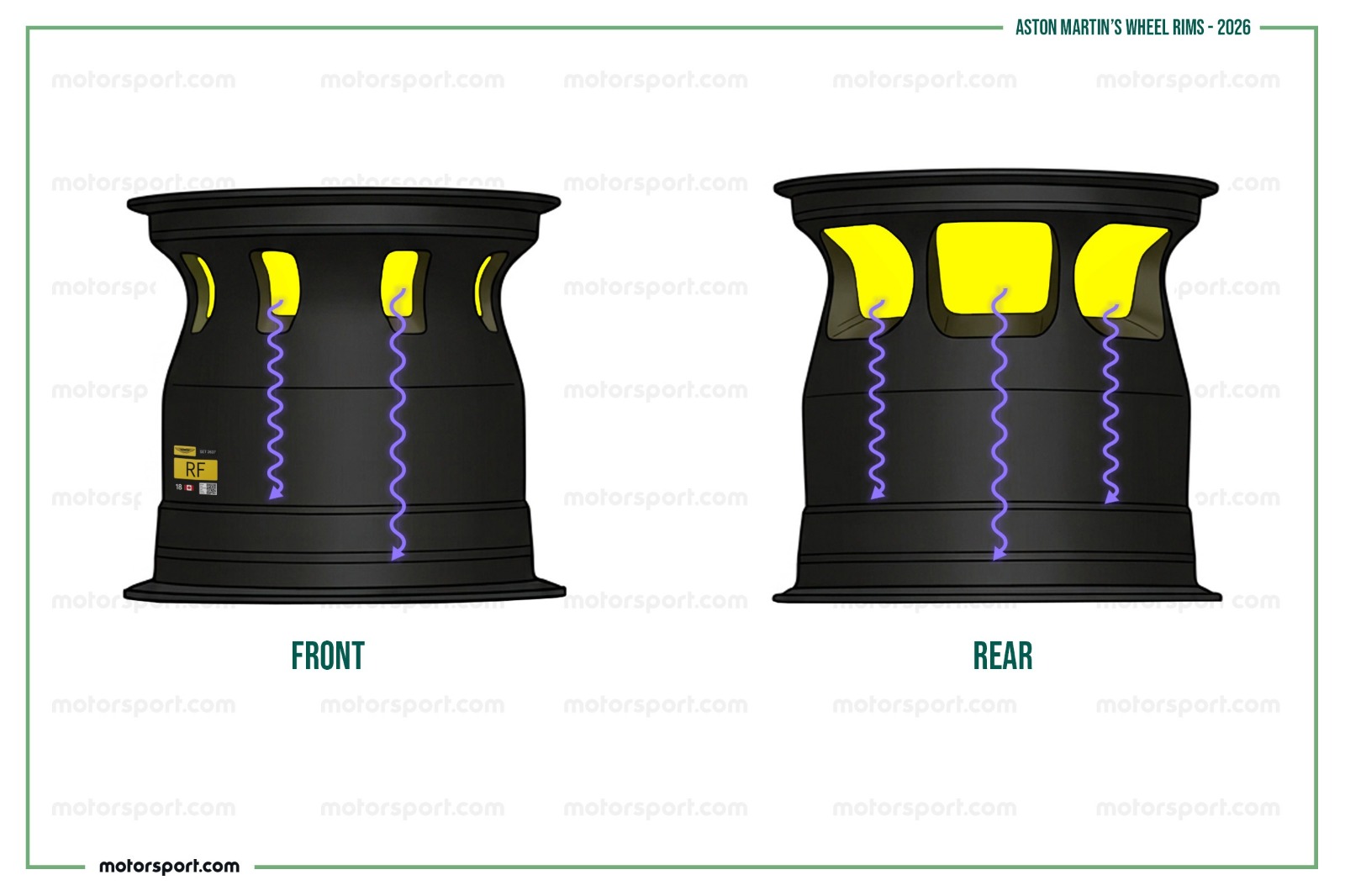
Aston Martin 2026 wheel comparison demonstrates a difference between the front and rear to manage temperatures
Photo by: Gianluca D’Alessandro
This is where the topic connects with the updates introduced in the Netherlands. With wheel rim development open once again this season as part of the rule changes, teams have gained a powerful tool for managing tyre temperatures and operating pressures. The internal cavities of a custom rim design, that some teams call “pockets”, allow engineers to passively control air exchange and thermal transfer to the tyre.
At Zandvoort, McLaren focused specifically on this area to retain higher temperatures within the rim structure and, in turn, transfer that heat more effectively to the tyre. This is why only the front rim, manufactured by long‑standing partner Enkei, was updated, accompanied by a more closed wheel cover designed to limit the cooling effect of ambient airflow as it strikes the assembly and to reduce drag.
The rear rim remained unchanged because rear‑tyre degradation was already a key factor throughout the weekend, as seen during the sprint and the race. In that area of the car, the priority was to keep temperatures under control in the traction phases and the high‑speed sections rather than adding more heat. Strong gusts caused the cars to slide through the high‑speed corners, where additional downforce becomes critical, as well as through the key traction zones on the exit of the slower corners.
We want to hear from you!
Let us know what you would like to see from us in the future.
Take our survey
– The Autosport.com Team
Read the full article here


