






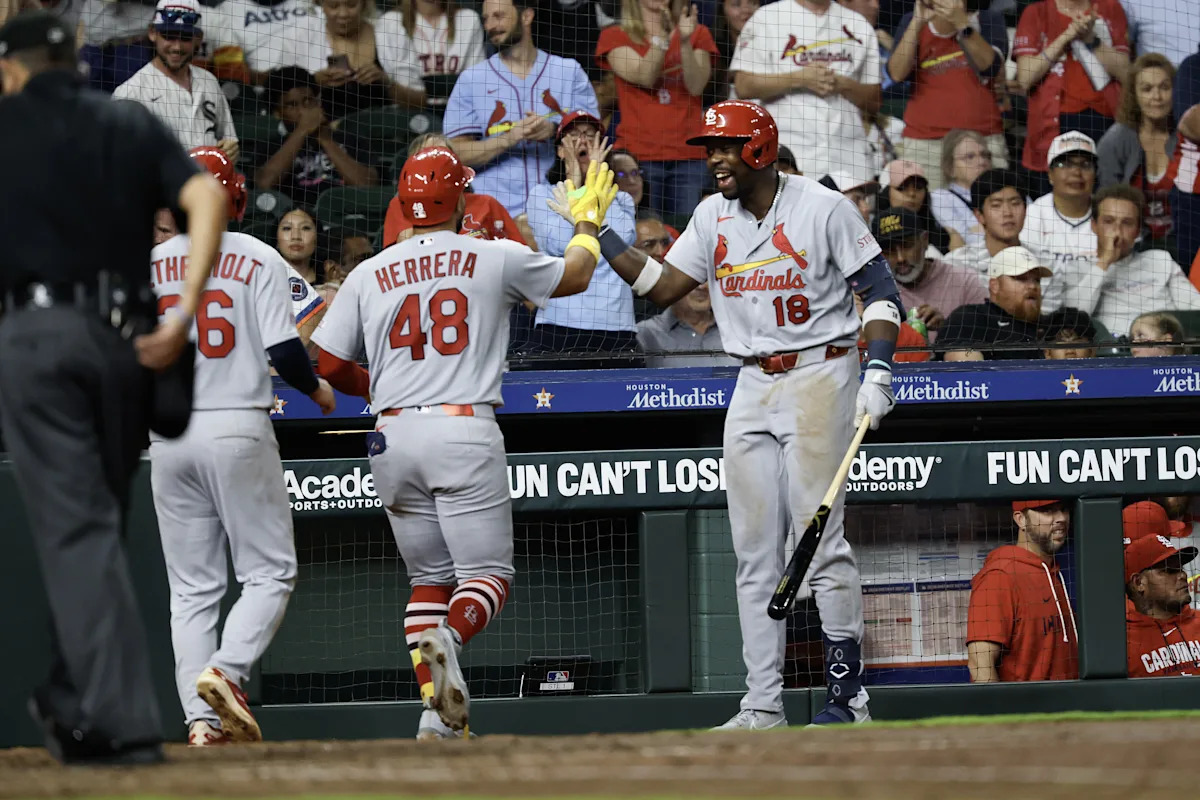
At 14-10, few (if any) saw this kind of start to the 2026 season. Pre-season predictions were somewhat gloomy. Many people feared a near-100 loss season. Few had the temerity to stretch beyond a prediction of 81-81, although the boldest thought 85 wins within reach. Personally, I was thinking just under .500 (say, 78 +/-), with the roughest part being the first third or perhaps first half of the season.
But 14-10 to start? What is with that? Let’s look a little bit at who they played.
The Strength of Schedule
I am admittedly not a strength of schedule proponent when it comes to forecasting future outcomes. I rarely care if there is a seemingly tough stretch of games coming up. There is always a tough stretch coming up. To me, off-days, long travel, day games after night games, pitching match-ups, trends, and health matter more than the reputation of the upcoming opponent. But in the backcast, it can pay to look at who they played and the context around those games and series.
At time of publication (I’m writing this as the Cardinals close out the Marlins series), the Cardinals will have completed 8 series. Right now, they have won five of those series, with one sweep in the mix. If my math is working tonight, that means they have lost three series.
The series’ wins have come against Tampa Bay, New York, Washington, Cleveland and Houston. The series losses have come at the hands of Detroit, Boston and now Miami (sigh). What can we see about these opponents in the aggregate?
If I rank all MLB teams by Win PCT, I can see that the Cardinals have not played a team in the top 10, and only 2 teams in the top half.
How about the pitching they have faced? Houston, Washington and Tampa are in the bottom 20th percentile in Runs Allowed (RA). In other words, we caught them at a time when they have serious pitching woes. On the other hand, the series’ losses were to teams in the top half of RA.
But how about the offenses they faced? Interestingly, of the teams they faced, only the Mets and Red Sox are really having trouble scoring. Houston and Washington are top 4 in MLB in Runs Scored (RS). Everyone else is in the top half of MLB offensively, thus far. I suppose one could say the Cardinals pitching helped them get there…
How’d they do against the better (ie. > .500 teams)? Cleveland and Tampa are over .500 (the Cardinals won those series). They have not lost a series to an over .500 team. So, 4-2 against over .500 teams, 10-8 against the .500 and under teams.
The pitching
On the Cardinals side of run prevention, the Cardinals RA is not so hot either, meaning even in the series they have won, their pitching got beat around a bit (particularly the bullpen). The Cardinals are 26th in MLB in the Runs Allowed (RA) department. Just ahead of such luminaries as Houston, Washington, Chicago (White Sox) and … Philadelphia(??). I would have though Philly’s pitching would be top 3, alongside LA and Pittsburgh. That goes to show you what I know.
The relatively young Cardinal pitching staff portended some ups-and-downs but I think most expected better than 26th in MLB. Given the offensive strength of the opponents thus far, some improvement may organically occur as the Cardinals face more offensively challenged opponents.
The Offense
The Cardinals themselves are 11th in MLB is Runs Scored. Who featured the Cardinals would be top half in baseball in HRs? Way beyond pre-season expectations, what with what appeared to be an offense distinctively lacking in power. The difference? The entirety of the improvement rests on Jordan Walker’s broad shoulders. 8 HR is probably 7 HR more than people expected. 7 less HR would put the Cardinals in the bottom third of MLB, where they projected. Suffice to say, this offense looks decidedly different with Jordan Walker hitting for power.
The brightest spot in this early season is the change of narrative. Jordan Walker hitting for power was something many didn’t think possible before the start of the season. Now the question has evolved from “possible?” to “sustainable?”. We shall see.
Given the relative lack of pitching strength their opponents have displayed to-date, the Redbirds would seem likely to regress to the bottom half over time as they encounter teams with stronger pitching. Looking at the line-up coming out of Spring Training, this would not be a shock.
The Defense
One thing stands out that isn’t necessarily all that related to catching the opponent at the right or wrong time. Defense would seem to be somewhat immune to how the other team is doing. Houston’s pitching problems didn’t really affect how the Cardinals defense played. Looking at DEF, the Cardinals are 6th in MLB with 6.8 DEF. The top team? The Cubs.
From an opponent standpoint, Tampa, Detroit, Houston and Washington have played poorly defensively, all coming in well below 0 DEF. The other four Cardinal opponents are top half, positive DEF teams, so a pretty even distribution. If you subscribe to the theory that defense doesn’t slump, it appears the Cardinals have an edge in this arena that will carry forward in almost any series they play.
Schedule Peculiarities
The Cardinals are scheduled to play almost 1/3 of their games against NL Central opponents. They will already have played 1/6 of their season before they get their first look at an NL Central team (they go to Pittsburgh for a four game set next week). Stated another way, 40% of their remaining games come against NL Central opponents. How they stack up against those teams at the time they play them will certainly steer the direction of the season.
The NL Central Opponents
Pittsburgh, Chicago and Milwaukee are ahead of the Cardinals in Runs Scored. More worrisome is that while the Cardinals are 25th in MLB in Runs Allowed, every other NL Central team is top 10 in same category. That is a pretty good gap to make up. Of course, how that pitching plays out when they actually meet might not reflect how it has played out in the early part of the season.
Overall
So, the Cardinals have played most of their games against teams that are struggling in the early going, but they have held their own against teams playing well. Some of the poor performers were expected (no one expected Washington to be good), some are surprises (who expected complete collapses for the Mets and Astros?). Overall, I’d say the Cardinal’s early season “strength of schedule” how shown to be weaker than would have been expected. Cause or effect?
Probably the key variable that the early season provides few clues on is … how well do they Cardinals stack up against the other NL Central teams. Going in, each seemed like they’d be better than the Cardinals, but flawed enough that rays of hope pierced the fog of rebuilding. Suffice to say that the Cubs rate higher in each of hitting (RS), pitching (RA) and defense (DEF) than the Cardinals do, so they clearly have an edge. The others? It may be a bit of a dog pile.
An oddity
Last year, it seemed like the Cardinals were vulnerable to lefty pitchers, with the bulk of their productive line-up being LH hitters. From that line-up, they lost Donovan and Contreras. The effect? So far this year, against LHP, the Cardinals enjoy a 113 wRC+. Against RHP, they lag at 95 wRC+.
Read the full article here


