


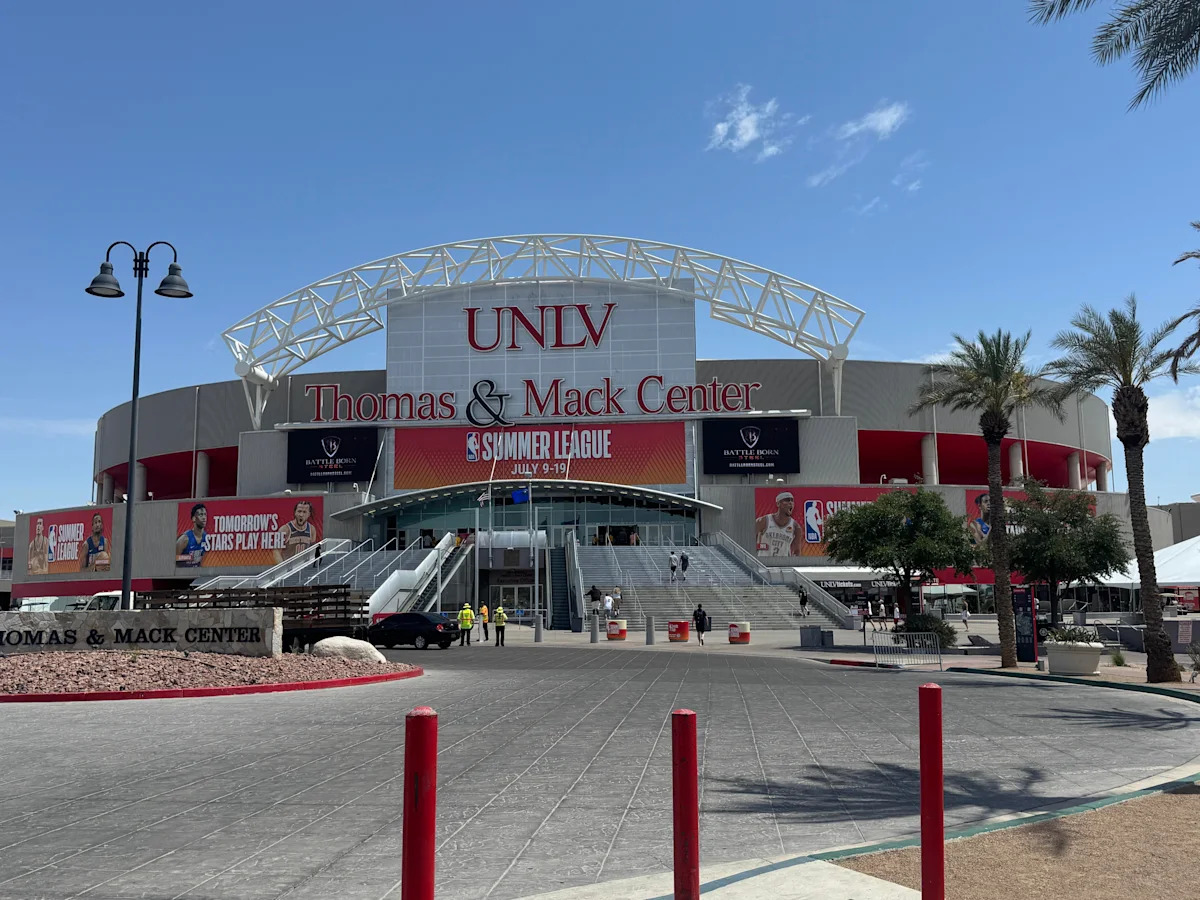
LAS VEGAS — The lights are bright, the stars are both on and off the court, and there are games being played by NBA players in both college- and high school-sized arenas. There’s nothing like the NBA Summer League. From seeing Buffalo Bills wide receiver Keon Coleman, walking past star NBA broadcasters Mark Jones and Michael Grady, to casually striking up conversations with DeMarcus Cousins and Jeff Van Gundy, it’s not only a spectacle but also a hodgepodge of some of the most important people in the hoops and media worlds.
Coming into the event, I didn’t know what to expect except for one thing: a lot of networking opportunities. With the games being of minimal consequence compared with regular-season and playoff games, and with all 30 teams playing, most reporters, agents, and members of NBA organizations view Summer League as an opportunity to grow their personal networks and build on already established relationships.
In my first two months since graduating from college, I’ve found that searching for full-time media positions is no fun, let alone easy, and the best way to do it is by building relationships with people, something I’ve been doing since I was a freshman at Syracuse University. I was excited and prepared for the chance to meet so many people I could learn from as I looked for ways to navigate an industry with no linear path.
In a career as competitive as sports media that continues to shrink by the day, connections are everything. In Vegas, I was told by an NBA executive who worked in media for nearly 20 years that if you want a chance to make it, you need to work hard, outlast people, and, most importantly, be someone people want to work with. In most industries, doing those three things would guarantee success, but not in media.
You have to get your name out there. ESPN NBA Insider Shams Charania hasn’t gotten the top scoops for years just because he’s a great writer and broadcaster; it’s because of the relationships he’s built, and the NBA Summer League is the perfect place to make more of them.
No matter who you are, people will most likely talk to you for at least a few minutes if you’re aware of the time and place. You can make an impression on anyone you meet.
Knowing the value proposition of going to Summer League when I had Southwest points and time at my disposal, I did not take this opportunity lightly. At the NBA Summer League, the games come second; meeting and building relationships with people come first. I didn’t just spend time dissecting Koby Brea’s three-point percentage or analyzing Khaman Maluach’s ability to be a force in the paint; I spent hours dissecting who the people were that I wanted to talk to at Summer League in preparation for making my interactions memorable. I even made a plan for how I wanted to introduce myself and the specific questions I wanted to ask certain people.
Sorry about the bad handwriting.
I tried to make every interaction I could have with people as intentional and specific as possible. A lot of people want to talk to a lot of people, especially NBA reporters.
Here’s a question I wanted to ask NBA Insider Chris Haynes that I thought could be really helpful for a young journalist to know. It ended up paying off, as he said I had an “unforgettable first impression.”


To have not only productive but also memorable brief conversations that can turn into relationships, you need to demonstrate to people that you know who you’re talking to and that you want to actually get to know them, not just get something out of them. This becomes especially important when you are starting your career and are not established in the industry.
Along with building new relationships, fortifying older ones is just as important. Getting to see people in person whom you’ve only spoken to on Zoom or FaceTime is a signal that you are eager to build on the connections you’ve made when you weren’t able to see them in person. The impression of approaching people and finally connecting with them after only meeting virtually is especially important and impactful when you are young, just getting started in the sports media industry, or both.
Getting in contact with, let alone making an impact on, executives, agents, or reporters who cover the NBA year-round is already a hard enough task, and being physically around the people who help tell the stories of the game can make you more memorable.
It’s one of the only times on the NBA calendar that the most important people for reporters to interact with aren’t the players. It may be the beginning of many relationships with players, but there isn’t another time when as many executives, agents, and other reporters are within the same mile radius.
While it may seem counterintuitive, you become a better writer by listening. You learn more stories when you introduce yourself to more people, and your coverage gets richer the more perspectives you have. At NBA Summer League, your next byline can improve by talking to other people who publish bylines, not just the athletes who play on the hardwood.
That’s the hidden value of Summer League. The games will end, the box scores will be forgotten, and the next NBA season will take over. But the conversations, relationships, and lessons learned away from the court can have a lasting impact. For someone trying to break into this industry, the biggest opportunities aren’t always found by watching the action. Sometimes, they come from being eager and willing to show up and listen.
Read the full article here