






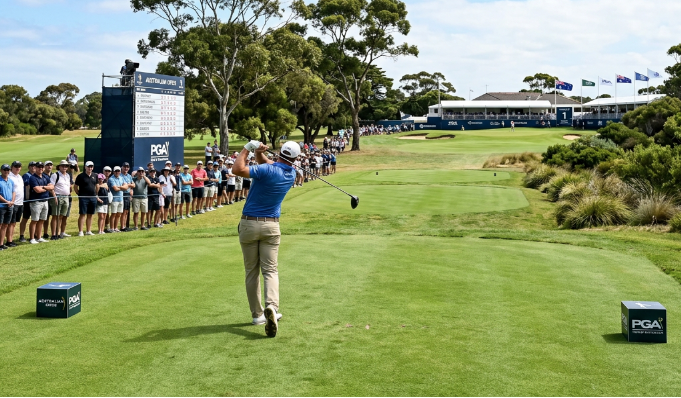
Golf Australia events span a competitive calendar that runs deeper than most casual fans realize, from a national Open that predates World War I to a state amateur championship older than the Open itself. Australia’s golf tournament structure reflects the same pattern seen in the country’s player development: a small population producing an outsized number of genuinely historic, well-run events. This article breaks down the tournaments that actually matter, backed by founding dates, prize money figures, and notable champions rather than marketing copy.
Understanding Australia’s Golf Tour Structure
Before ranking individual tournaments, it helps to understand how Australian golf events fit into the global calendar. Most professional events run under the PGA Tour of Australasia, which co-sanctions several tournaments with the PGA Tour, DP World Tour, Asian Tour, and even the LPGA and Ladies European Tour in specific cases. This co-sanctioning arrangement is unusually flexible compared to most countries, allowing certain Australian events to attract fields far stronger than the prize money alone would typically justify.
Amateur golf runs on a separate but equally established structure through Golf Australia, the sport’s national governing body, which oversees state opens, national amateur championships, and junior pathway events feeding directly into professional careers.
Top Professional Tournaments in Australia
The table below ranks Australia’s most significant professional tournaments by historical prestige, using founding year and typical field strength as primary criteria.
| Tournament | First Played | Tour Affiliation | Typical Prize Money | Notable Repeat Winners |
| Australian Open | 1904 | PGA Tour of Australasia, DP World Tour | AUD $1.5-2 million | Jack Nicklaus (6), Gary Player (7), Greg Norman (5) |
| Australian PGA Championship | 1905 | PGA Tour of Australasia, DP World Tour | AUD $1.75 million | Greg Norman (5), Peter Thomson (3) |
| Vic Open | 1957 | PGA Tour of Australasia, LPGA, LET | AUD $1 million (combined) | Min Woo Lee, Su Oh (women’s field) |
| Australian Masters | 1979 | PGA Tour of Australasia | AUD $1.5 million (historical) | Greg Norman (6), Robert Allenby (3) |
| Queensland Open | 1926 | PGA Tour of Australasia | AUD $250,000 | Peter Senior, Adam Scott |
The Australian Open stands clearly at the top, both by history and by the caliber of international winners it has attracted. Jack Nicklaus’s six victories between 1964 and 1978 remain a benchmark almost impossible to replicate given the current global tour schedule pulling top players in dozens of directions simultaneously.
Why the Australian PGA Championship Rivals the Open
Despite technically ranking as the “second” major domestic event, the Australian PGA Championship has arguably produced deeper fields in recent years, largely due to its position on the calendar immediately following the Australian Open, encouraging international players already in the country to stay for both events rather than travel twice.
Greg Norman’s five PGA Championship titles, spread across a fifteen-year span from 1985 to 2000, demonstrate the kind of sustained dominance that made him a defining figure in Australian golf history well beyond just his major championship résumé.
The Vic Open’s Unique Format
Among professional events, the Vic Open deserves specific attention for a structural reason rather than pure prestige: it’s one of the only tournaments globally where men and women compete simultaneously on the same course, in the same week, with equal prize money since 2018. Played at 13th Beach Golf Links near Geelong, the event has become a genuine talent showcase, with young Australians like Min Woo Lee using strong performances here as a springboard toward international recognition.
This format innovation has made the Vic Open a frequent talking point in golf media specifically because no comparable event exists on the PGA Tour or DP World Tour calendars.
The Australian Masters: A Complicated Recent History
The Australian Masters, historically played at Huntingdale Golf Club in Melbourne, built a reputation through the 1980s and 1990s as one of the most prestigious non-major events in world golf, at one point attracting Tiger Woods in 2009 for a reported appearance fee exceeding $3 million.
However, the tournament has suffered from inconsistent scheduling since 2012, disappearing entirely for several years before sporadic revivals. This inconsistency means that despite genuine historical prestige, the Masters currently ranks below events with more reliable annual scheduling like the Australian Open and PGA Championship.
Top Amateur Tournaments in Australia
Amateur golf in Australia carries surprising historical weight, with the Australian Amateur Championship predating the professional Open by an entire decade. The table below ranks the country’s leading amateur events.
| Tournament | First Played | Format | Notable Alumni |
| Australian Amateur Championship | 1894 | Match play (recent), stroke play (historical) | Peter Thomson, Kel Nagle, Jason Day |
| Australian Women’s Amateur | 1894 | Match play | Karrie Webb, Su Oh |
| Master of the Amateurs | 1985 | 72-hole stroke play | Adam Scott, Cameron Smith |
| Riversdale Cup | 1927 | 36-hole stroke play | Multiple future tour professionals |
| Australian Junior Championship | 1980s | Stroke play by age division | Cameron Smith, Min Woo Lee |
The Australian Amateur Championship’s 1894 founding makes it genuinely older than most of the country’s professional infrastructure, predating Australian federation itself by seven years. Its alumni list reads like a preview of future professional success, with both Jason Day and, decades earlier, Peter Thomson using early amateur success as clear indicators of what followed professionally.
The Master of the Amateurs and Modern Talent Identification
The Master of the Amateurs, held annually at Kooyonga Golf Club in Adelaide since 1985, has become one of the most reliable predictors of future professional success in Australian golf. Both Adam Scott and Cameron Smith won this event as amateurs before going on to claim major championships, giving the tournament a statistical track record that talent scouts and national selectors take seriously when evaluating junior pathway progress.
State Opens: The Overlooked Middle Tier
Beyond the marquee national events, Australia’s state opens, including the New South Wales Open, Queensland Open, and Western Australian Open, occupy an important middle tier in the competitive structure. These events typically offer smaller prize pools but provide crucial tournament reps for players transitioning from amateur ranks into full-time professional careers, functioning similarly to how minor league systems operate in other sports.
How These Events Connect to Wider Sports Interest
The depth and historical consistency of golf australia events has made the sport a consistent fixture in broader sports discussion throughout the Australian summer, particularly during the Open and PGA Championship weeks when scheduling often overlaps with cricket’s international summer season. This crossover period sees significant sports betting interest across multiple codes simultaneously, and platforms that let fans bet on sports events at Twin.com often feature golf tournament markets alongside cricket and Australian Rules Football during this exact window, reflecting how concentrated Australia’s major sporting calendar becomes during the November-to-February stretch.
What Makes an Australian Tournament Genuinely Significant
Looking across both tables, a few consistent factors separate tournaments with lasting prestige from those that have faded or struggled with scheduling consistency:
- Historical continuity matters more than prize money alone, as seen with the Australian Open’s unbroken relevance since 1904
- Co-sanctioning agreements with international tours directly correlate with stronger fields and higher profile
- Amateur events with clear alumni success stories, like the Master of the Amateurs, gain credibility regardless of prize money, which typically doesn’t exist at amateur level
- Scheduling consistency proves critical, as the Australian Masters’ inconsistent calendar placement has cost it relative standing despite genuine historical prestige
Frequently Asked Questions
What is the oldest golf tournament in Australia?
The Australian Amateur Championship, first played in 1894, predates the professional Australian Open by a full decade.
Why is the Vic Open considered unique globally?
It’s one of very few tournaments where men and women compete in the same week on the same course with equal prize money, a format adopted in 2018.
Which Australian tournament has the strongest historical winner list?
The Australian Open, with six wins from Jack Nicklaus and seven from Gary Player, arguably features the strongest international champion roster of any Australian event.
Is the Australian Masters still played annually?
No, the tournament has suffered from inconsistent scheduling since 2012, with sporadic revivals rather than a guaranteed annual slot.
What amateur tournament best predicts future professional success?
The Master of the Amateurs, whose alumni include Adam Scott and Cameron Smith, both of whom later won major championships as professionals.
Conclusion
Golf Australia events reveal a tournament ecosystem far richer than casual observers might expect, anchored by the Australian Open’s 1904 founding and supported by an amateur structure, led by the 1894 Australian Amateur Championship, that in some cases predates the professional game itself. From the Vic Open’s genuinely unique co-ed format to the Master of the Amateurs’ proven talent-identification track record, these tournaments collectively explain how a country with Australia’s relatively small population continues producing internationally competitive golfers year after year.
Read the full article here


