





The BLUF
The Diamondbacks find themselves in an unenviable position when they take to the podium to announce their selections in this year’s draft. While many teams have used various shenanigans to pump up and improve their draft day haul, the Arizona Diamondbacks are not really in such a fortunate position this year, despite the apparent depth of this year’s draft class.
The Challenge Facing Arizona
One of the biggest downsides to being a .500 club that has just narrowly missed the playoffs for the previous two seasons is that, the team misses out on a chance to make a magical run like they did in 2023, while simultaneously still being too good to select in the meaty portion of the draft. It’s on thing to pick 25th or even 29th or 30th if your team continues to make deep playoff runs. The Yankees and Dodgers have been successfully drafting in that range for years. It’s another thing to see one’s team go home in September and then, when the opportunity arises to inject talent via the draft, finding the team stuck in the middle somewhere, selecting a few slots below the meaty portion of the draft.
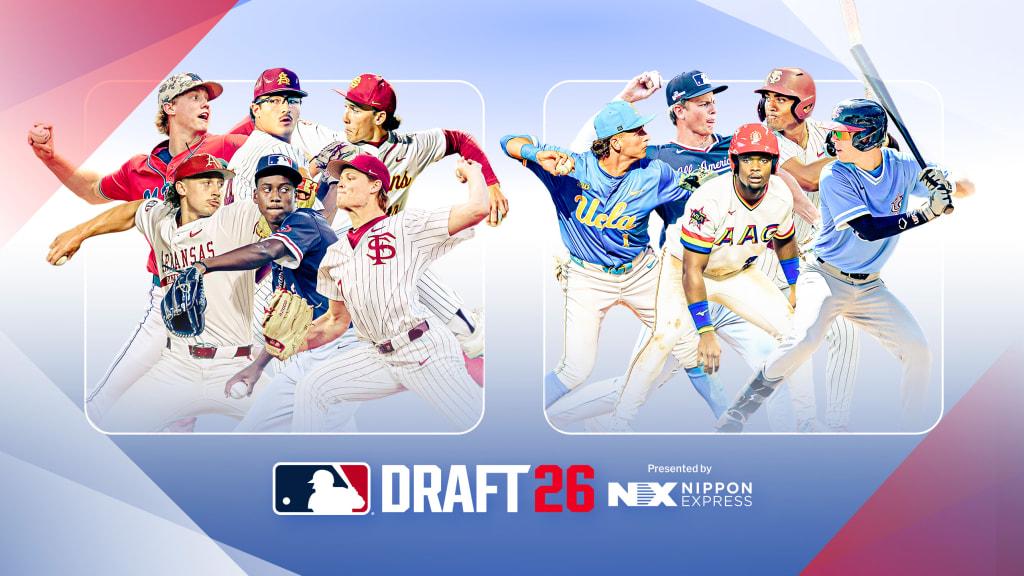
This year’s draft presents an interesting challenge. Obviously, picking 15th is not particularly grand, but it still means they get to select before half the other teams out there do. In a number of years, that would all but assure that Arizona is in a position to land some impact talent with the selection. This is not a typical draft class. For one thing, it is the first post-COVID draft class not directly impacted by changes brought on by the pandemic. Secondly, the stratification of prospect talent is ridiculously lopsided. If one opens up a random article about this season’s draft, especially the mock drafts, they are likely to be confronted with the notion that this is one of the deepest draft classes in recent memory. That is somewhat rue but also, a bit misleading. At the top of the pyramid are three players. The third, Georgia’s catcher, Vahn Lackey. In some other seasons, Lackey would be in the discussion as a legitimate 1:1 pick. Alas, this season, Lackey still trails behind two other premium prospects, one from the prep ranks and one from the collegiate ranks. Those are Grady Emerson and Roch Cholowsky, the cream that has risen to the top. The drop from the top two to Lackey is not terribly large, but it is significant. Then, there is another sizeable drop to the next tier. That’s probably where the #15 pick lands, though it will be borderline. Given that almost every season sees a team in the early-middle rounds take a somewhat surprising pick, the odds are skewed heavily to the Diamondbacks having a shot at one of the players in that tier. Then, there is the next tier. In many years, this is the tier where most players are a coin-toss as to whether or not they will bloom into 26-man roster regulars or not. This year, that tier is littered with talent that should eventually expect to start or to at least have a meaningful career. This is where the “deepest draft in years” moniker comes from. For me, this is more about an incredibly wide draft pool instead of a deep one. Draft day (especially the first round) is the day where fans get to dream on a future impact player joining the ranks. This season, the overwhelming majority of teams are going to have disappointed fans. Impact talent is scarce in this draft. Quiet quality capable of making the leap to the Majors is what is in massive supply this year.
As fans of the Diamondbacks will be able to attest to, this year has shown that Arizona’s minor league depth, the players looked to to help keep the team competitive, is in dire straits. This is not the draft that is going to help fix that problem – at least not right away. It will take savvy drafting and then additional work making even savvier trades of some of those prospects selected to truly turn this year’s draft crop into something the organization can rely on long-term.
Draft Strategy Conundrum
Every team has its own way of going about the draft, but there are a few basic draft selection principles that tend to guide most every team in some fashion or another. Some teams will focus solely on upside and draft for that at each selection, regardless of fit. Others look for specific player profiles and develop their draft board around maximizing that profile. There are a few clubs that have developed a reputation as pitching factories. The first step in becoming one of those is to prioritize pitching over position play. (For full disclosure, this author tends to weigh pitchers more heavily when evaluating a draft as high end pitching is so rare.) Then there is the group of clubs (of which the Diamondbacks are at least part-time members) that avoid pitching in the draft unless a particularly intriguing arm happens to be unexpectedly available when the team selects. These are the teams that end up spending prospects and cash to land pitching. Some organizations prioritize collegiate players over prepsters. Others reverse that trend. Finally, there are the teams that look to maximize the amount of higher value players they can land in the draft by signing multiple players from a skill tier to under slot deals, getting funny with the money.
IN the past, I have ocassionally advocated for the Diamondbacks to be one of the teams in that final category. This season in particular is a very, very god year for teams that want to adopt that strategy. After all, if there are enough players of the same general tier of talent to cover potentially 3-4 rounds of selections, why not take a few (or several) under slot gambles? This year in particular, makes that strategy a viable one that will almsot certainly be explored by multiple teams this year.
Arizona should not be one of them.
Pick #15
With the sort of season the Diamondbacks are having and the massive shifting of talent out of the organization’s minors and onto 26-man rosters, this team needs to start replenishing impact talent in the pipeline. The team is going to have a hard enough time finding impact talent in this year’s draft without sacrificing any amount of upside to turn one pile of draft bonus money into two players. As noted above, Arizona will have a chance to add a decently impactful player at #15. Because of the limited pool for such players, the team is probably best off this year if they stick to what they do best, which means continuing to draft based on their model and getting themselves yet another “Corbin Carroll type” like Slade Caldwell and Kayson Cunningham. As discussed in the installment on hitters, Trevor Condon fits this profile quite nicely. It also just so happens that Condon falls squarely into the tier of players just below Lackey. There is a non-zero chance Condon is already off the board by the time Arizona selects. However, if he is, that increases the likelihood of an even juicier prospect still being available to Mike Hazen. The odds of Condon reaching Arizona are still strongly in their favour, but far from it being a sure thing.
Arizona needs to narrow their focus of players to take with the 15th overall selection to this tier of players. Other names that could still be available if Condon is off the board at #15 are outfielder Drew Burress from Georgia Tech and Jared Grindlinger, a two-way player out of Huntington Beach HS in California.
While it is highly unlikely that Arizona finds themselves a perennial all-star at #15 in this year’s draft, it is not out of the question and they should at least expect to be able to find a regular starter for fou to five years down the road.
Pick #31
In this writer’s humble opinion, this is the pick where Mike Hazen and his scouts are going to make their bones this year. They need to get this one right. With the massive size of the pool of talent that represents this particular tier, missing entirely is simply not acceptable. No Pavin Smith’s will be accepted here. NO, they need to get this one right. This also happens to be a selection that comes with enough of a bonus that there shouldn’t be any signability issues. If Arizona is going to do any getting funny with the money this year, this is the pick to do it with. This is also the pick where they might be confronted with a real chance to add quality pitching to the pipeline. But if they choose that route, it will come with substantially higher risk. There will be a number of decent pitchers that come out of this draft – just not likely any aces. But there will also be a number of pitchers coming out of this draft that will flame out withing four years or so.
Arizona is readily identified as one of the worst organizations in baseball at developing pitchers. Not all of the deficiencies are the fault of the front office. Having a pipeline that runs the pitchers through Amarillo and Reno does nothing to help the pitchers develop confidence (much less off-speed braking pitches). This would tend to suggest the team should steer away from selecting pitchers until they can fix their issues. However, waiting too long to select pitching leaves a club where Arizona has now found itself for the last 18 months or so, devoid of enough pitching depth to support the parent club’s roster.
Last year, the Diamondbacks surprised many by selecting a pitcher at #29, Patrick Forbes. It would make a good deal of sense for Arizona to make a similar move again this year. Might they use a method the Dodgers, Yankees, and Rays have all made successful and take a high upside arm that is currently injured? They can do a much better job of rehabilitating such a pitcher than collegiate organizations can (or are willing to). Or, do they maybe go for a quick-to-advance sort of player that has a modest ceiling, but also a modest floor? Might they take Arizona State standout, Cole Carlon, a 6’5” flame-throwing southpaw? There are other intriguing pitchers that could be had here. This is place where Arizona should be looking for developed talent, avoiding the massive risk associated with prep arms. Instead, they should look for standout numbers that, if further developed, equate to difference-maker at higher levels This might mean taking an arm that is currently injured or just recently coming off of injury but has major eye-popping numbers when healthy. Or, maybe it is looking at a smaller school where the talent has just shown, even against higher division talent. Ole Miss has a couple of pitchers that might be appealing. The SEC, a powerhouse conference, also has a few arms that will be available that could be worth looking into.
Regardless of which path Mike Hazen decides to take, it is imperative that he get this pick right. There will simply be too much quality talent still available to excuse not hitting on the prospect. If Mike Hazen is a bit unsure about a player, or if he simply wants to avoid any organizational short-comings whatsoever, then he should probably turn away from pitching here this year and stick with using his model approach yet again at #31. On the flip-side, if Mike Hazen sees a diamond in the rough, maybe he combines some advice from above while discarding the rest and takes a high-upside (but currently injured) prepster like Brody Bumila, who won’t throw a pitch in 2027. This seems incredibly unlikely.
But hey, you cannot predict baseball.
Conclusion
In just a few hours, we will know what Arizona is going to do with the #15 overall selection in the draft. A while after that, we’ll know about the 31st pick. If Mike Hazen can hit on both these picks, the Arizona pipeline could stabilize drastically. Of course, if he swings and misses, that could contribute to Hazen exiting Arizona sooner rather than later. The upcoming CBA is looking at numerous drastic changes to future drafts. There are proposals to add international talent. There exists a proposal to eliminate prep players from the draft, forcing all talent to first go to college. The ability to trade picks is being discussed by both sides. Eliminating bonus pools caps has been discussed. As has allowing stauncher agent representation at the bargaining table, including for high schoolers still deciding between professional ball and college (a sticky point between MLB and the NCAA). All the uncertainty moving forward means that there is even less room for error than usual. Mike Hazen has his work cut out for himself today. But, by the end of the day, Arizona’s prospect pipeline may have a markedly brighter future.
Read the full article here


