




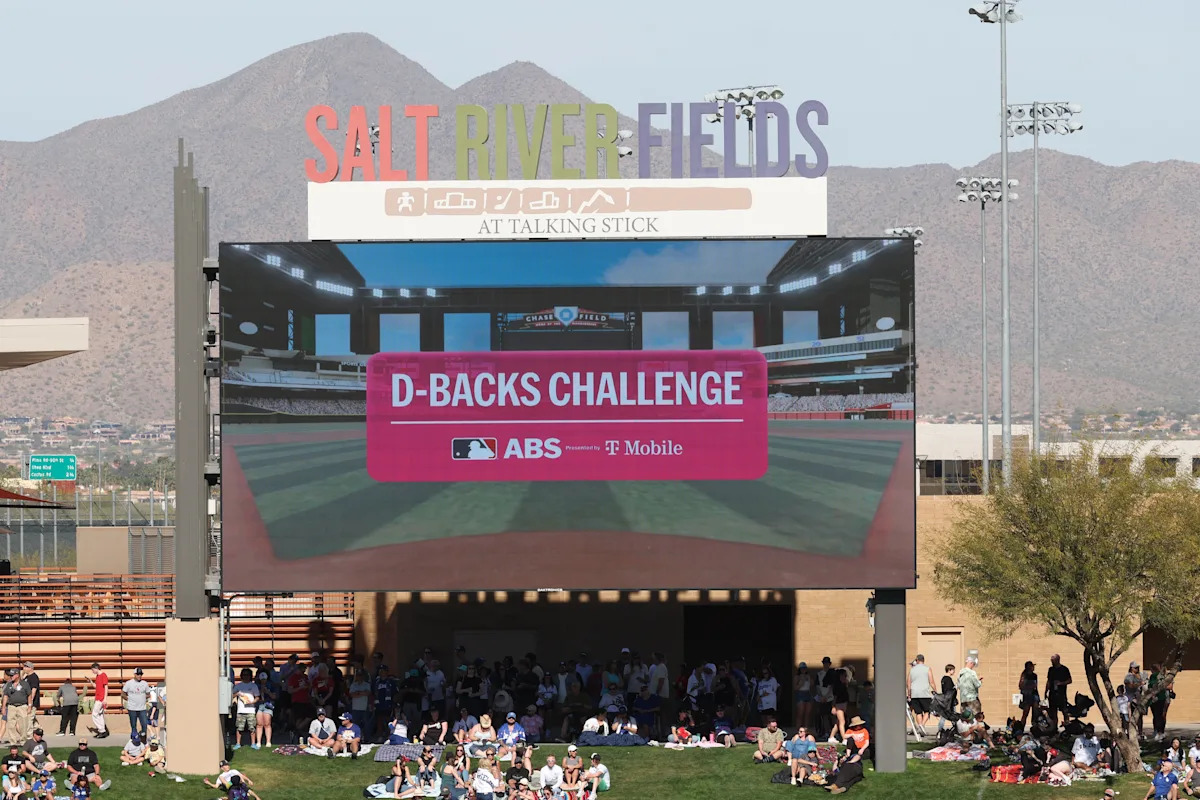
Every MLB season gives us something new, but 2026’s changes will be quite drastic. The automated ball-strike (ABS) challenge system will take center stage this year, as pitchers, catchers, and hitters will all have the ability to double-check whether or not a called strike was actually a strike. I’m a big fan of the challenge system over pure roboumps, in large part because it introduces a new tactic: who gets to challenge, how frequently does a team challenge, and how good are you at it?
In short, a team’s approach to ABS will fall somewhere inside this matrix:
For our definitions, we’ll use liberal and conservative to describe how many players on a given team are allowed to challenge at all. Some of the early returns in spring training have indicated that pitchers, because they’re naturally falling away from the plate, have poor angles of view and shouldn’t be allowed to challenge. Some hitters have excellent command of the strike zone and others are free swingers; Juan Soto should be allowed to ask for reviews on close pitches, but I’m not sure Javy Baez should.
How readily you challenge falls on that x-axis, rarely or frequently. Every team has a limited number of challenges, but some — or indeed even some individuals — will no doubt choose to keep a challenge in reserve for a hypothetical scenario later in the game. I’m not a fan of this personally. Yes, you may want to have a review in your pocket for a 50/50 call in the ninth inning when you’re down by a run, but if an overturned strike gives you a 3-1 count in the 5th and you break the frame open with a big hit, you never run into that close ninth inning. There’s no way of telling when the Big At Bat is in a game, so don’t let a possible moment go by and end the game with a challenge to give.
And then of course there’s the thing that matters most, our inclined axis, are you good at challenging? Your approach to the two above axes probably derives from where you are here. If your team consistently wins more challenges than it loses, you should probably allow more hitters and catchers to call for review, and you should probably be more ready to use those reviews earlier in the game. If your team consistently gets these reviews wrong, the opposite will happen — pare down who is allowed to challenge, and keep one in your pocket.
I think for April most teams will be pretty high on our x and y axis, to determine where on our inclined axis they fall. For the Yankees in particular, I expect them for most of the season to be pretty liberal in who is allowed to challenge, but in the midpoint in how readily they do it. Aaron Boone and Brian Cashman are far from the most aggressive people running MLB teams, and whether you like it or not the Yankee teams they’ve constructed have always had multiple redundancies — Paul Goldschmidt back again just in case Ben Rice can’t hit lefties, things like that. That kind of behavior indicates to me that they’ll prefer to keep a challenge in hand in case of that big ninth inning moment, even if just about anyone 1-through-9 will be allowed to use one review earlier in the game.
Since the last round of changes to the replay review system in 2015, Aaron Boone has been the fifth-most-successful manager, with just over 60 percent of his challenges being won, and he’s had far more games under his belt than anyone else in the top 10 except Alex Cora. Now this isn’t really credit to Boone himself but rather the group the Yankees have assembled that advise the manager on whether to challenge or not, but it should give us confidence that the ABS review will be a strength for the club in 2026. There’s also the small factor of them rostering the player who has had more incorrect strikes called against him than any other player since he debuted, and I’m holding out hope for a .600 OBP season from a challenge-enabled Aaron Judge.
Read the full article here


