








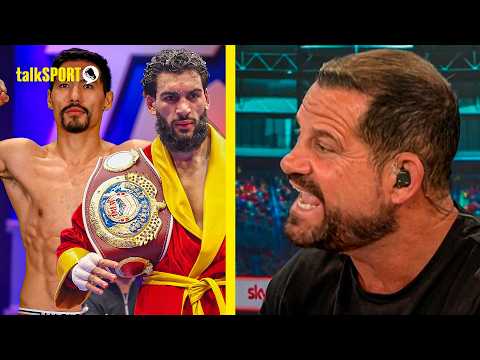
“He’s taking performance-enhancing drugs, gets stripped of his title, gets a ban, and then gets put by the same sanctioning body…in the weight division above as a mandatory challenger,” Spencer Oliver said during the discussion. “He’s getting rewarded for actually taking performance-enhancing drugs.”
The criticism of Janibek’s treatment is understandable. What’s amusing is the failure to apply anything resembling the same scrutiny to Sheeraz’s route to the WBO championship.
Hamzah Didn’t Exactly Take The Hard Road
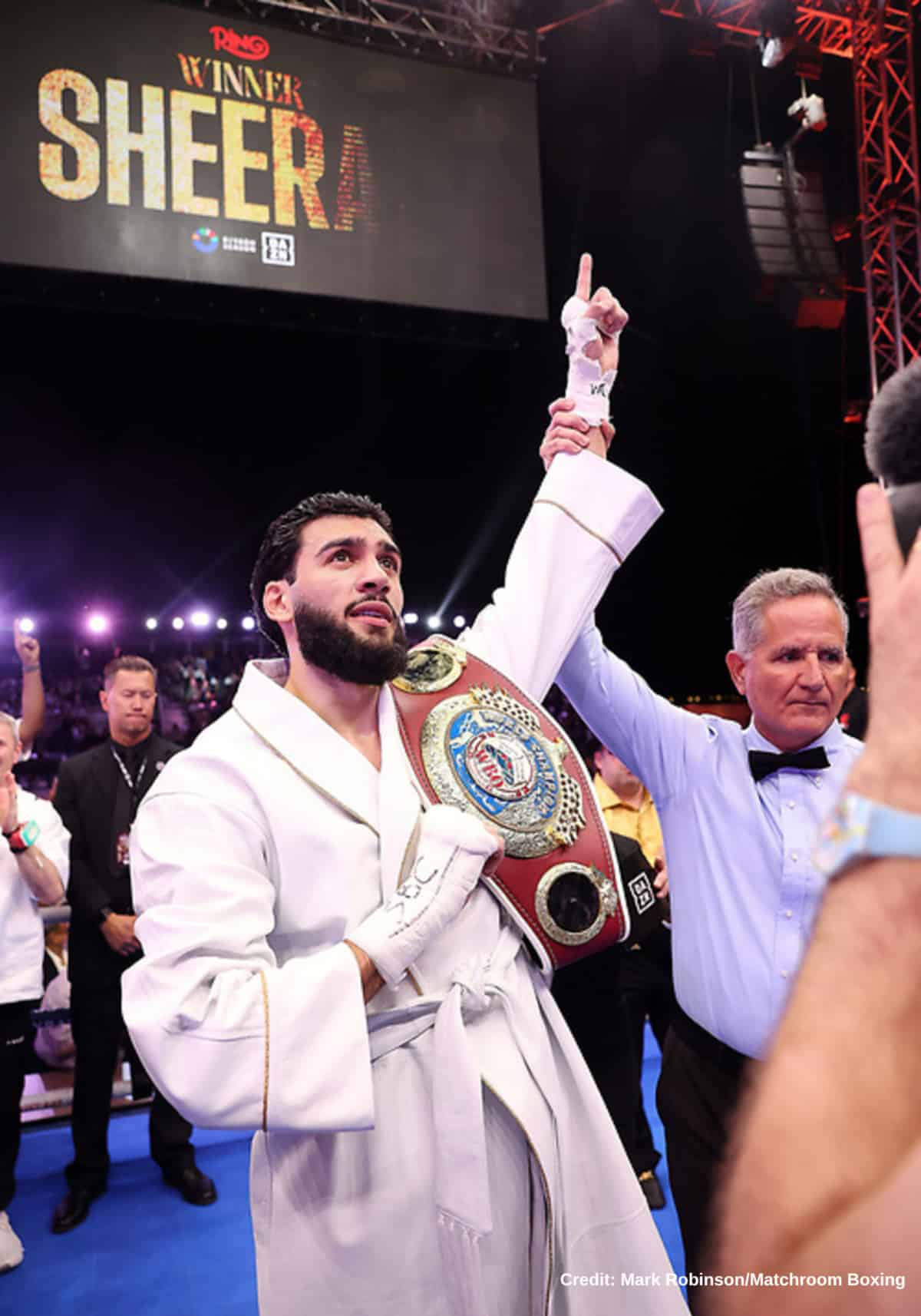
Sheeraz fought WBC middleweight champion Carlos Adames to a controversial 12-round draw in February 2025, a fight many observers believed Adames deserved to win. Rather than continuing against the best at middleweight, Sheeraz moved to 168.
He knocked out Edgar Berlanga in five rounds in July 2025. Berlanga brought name recognition and an impressive-looking record, but much of that record came from careful matchmaking during his years with Top Rank.
Sheeraz then received Alem Begic for the vacant WBO super middleweight title in only his second fight in the division.
That’s quite a climb for someone who had not established himself by working through the top contenders at 168.
The talkSPORT panel complained that Janibek should have dropped in the rankings and been forced to “work your way up like most people have to.” When exactly did Sheeraz do that?
Janibek and Sheeraz are two of a kind on that front. Both benefited from generous treatment by the WBO. Complaining about Janibek’s free ride while ignoring the one Sheeraz received is pure selective memory.
Janibek Is A Different Kind Of Mandatory
Perhaps some of the concern comes from the opponent Sheeraz drew. Janibek brings genuine danger. Whatever anyone thinks about his positive test and subsequent punishment, it does not erase his ability. He carries power in both hands, backed by sharp technical skills and an extensive amateur foundation.
Sheeraz has also shown a defensive habit that Janibek can exploit. When pressured and hit with sustained combinations, Sheeraz repeatedly retreats into a shell. Carlos Adames had success unloading on him that way. Austin Williams found periods of success before getting stopped, and Simon Zachenhuber exposed that exact same reaction.
Queensberry matched Sheeraz extremely well throughout his career. That is part of a promoter’s job. Had his development included fights against dangerous operators like Yoenli Hernandez, Osleys Iglesias or Lester Martinez, his record might look entirely different today.
Janibek represents the type of opponent Sheeraz rarely had to face. Even the talkSPORT panel conceded that this is a “tough fight” while discussing the difficult position the WBO created for Sheeraz.
That may be the real issue. The WBO made life comfortable for Sheeraz by serving up Begic for the vacant crown. Now the organization handed him a threat capable of stripping it away.
Sheeraz’s alternatives do not look appealing. His team can seek an exception, attempt to negotiate a step-aside deal with Janibek, or vacate the WBO belt.
Janibek has little reason to cooperate cheaply. At 33, he gains far more by entering the ring. A victory over Sheeraz delivers the WBO super middleweight title, raises Janibek’s commercial value and positions him for much bigger paydays at 168.
The WBO cleared an easy path for Sheeraz on his way to the championship. Now Janibek enjoys an open lane leading directly to Sheeraz.
Getting outraged about one without remembering the other makes very little sense.

Read the full article here


