






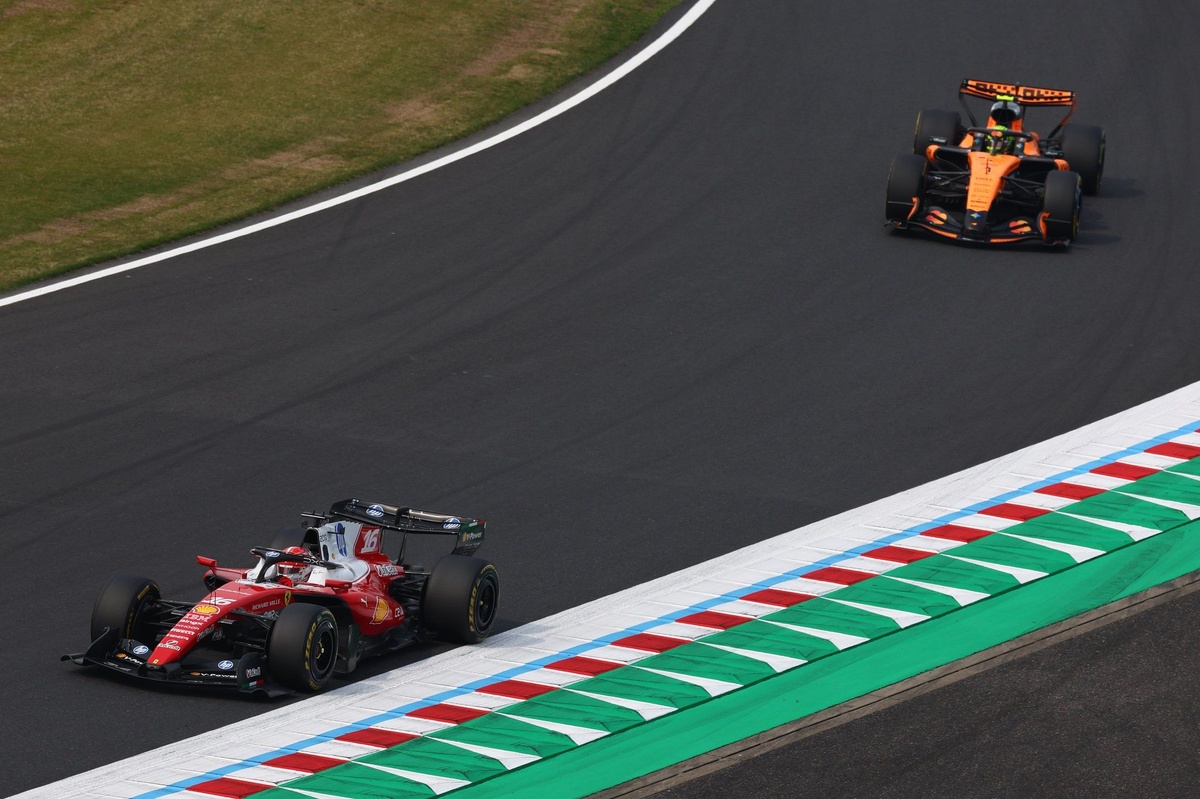
While Formula 1 insists – based on its own Formula 1 Fan Voice programme – that fans are enjoying the racing, drivers have been far more critical of the 2026 regulations so far.
One of the biggest talking points emerged at Spa-Francorchamps, where Oscar Piastri highlighted the issue of drivers being surprised by their own power units.
During qualifying, the Australian lost significant time on the straights compared to team-mate Lando Norris, with McLaren initially unable to explain why.
When team principal Andrea Stella held his media session on Saturday evening, the Italian explained that the power unit settings on both cars were virtually identical, leading him to point towards the “self-learning elements” of the power unit.
This is not Artificial Intelligence as most people know it, but it does involve forward-thinking algorithms that learn from lap to lap and even during a lap. If there is a deviation from the ideal energy management, these algorithms can adapt and determine the optimal deployment strategy for the remainder of the lap.
There are, however, two problematic aspects. First, drivers do not have everything under their own control. Stella explained that these systems are sensitive to driver input – meaning that still plays a major role – but the same applies to external factors beyond the driver’s control, such as changes in wind conditions or grip levels.
The second issue is that drivers can be surprised by their own power unit, something Piastri addressed at Spa: “It sucks. I can’t really say it any other way than that. When you’ve got qualifying grids decided by computers behaving or misbehaving, it’s a pretty crap way of going racing.”
‘I don’t think humans can rationally control these parameters’
Lewis Hamilton, Ferrari, Oscar Piastri, McLaren
Photo by: Alex Bierens de Haan / LAT Images via Getty Images
Speaking to a select group of media, including Motorsport.com, FIA single-seater director Nikolas Tombazis said he understands the drivers’ frustration regarding these self-learning elements.
“Well, it is true and their comments are understandable,” he said. “I think their comments are a consequence of the fact that energy is limited and therefore how you best manage it becomes supercritical. And then the various strategies that need to be deployed to do it are related to that.”
That raises the question of whether these self-learning elements could simply be banned, allowing drivers to control deployment entirely themselves through a button on the steering wheel.
After all, the sporting regulations state: “The driver must drive the F1 car alone and unaided.”
Tombazis believes, however, that banning such algorithms would be an overly simplistic idea.
“I don’t think you could go to that extreme,” he added. “First of all, if it was just really on-off for the driver whenever they want and as much as they like, then they would use all energy on corner exit for a very limited amount of time. And then the effects that people are complaining about would be even more obvious.”
In other words, top speeds would be reached even earlier on the straights and the amount of clipping would increase significantly. If drivers were to use all their electrical power on corner exit, they would run out of deployment even sooner on the straight than they already do today.
“And secondly, there are limitations about how much energy you can deploy or recover on the lap or the so-called SOC delta, the state of charge delta, things like that,” said Tombazis.
“That are limitations in order to prevent, let’s say, an arms race and the teams to have an even bigger battery, for example. We didn’t want teams to have to make a battery twice the size and then have heavier cars again.”
Because of all those restrictions and the complexity of today’s power units, Tombazis believes it is extremely difficult for a human to determine the optimal deployment strategy.
“So I don’t think humans can rationally control all of these parameters.”
Is there a solution for the coming years?

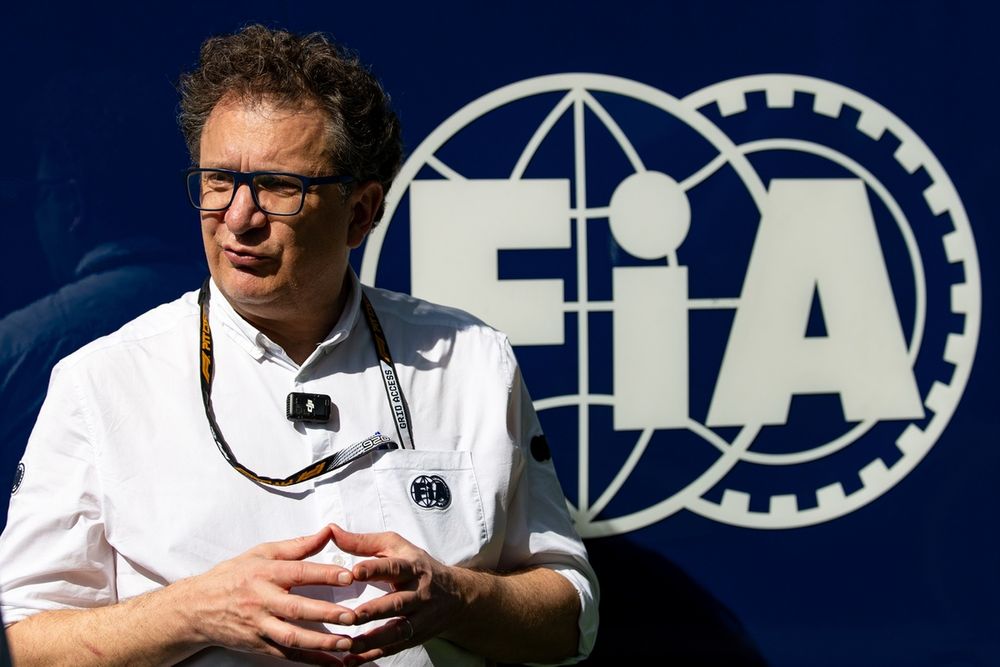
Nikolas Tombazis, FIA
Photo by: Kym Illman / Getty Images
Piastri has also suggested that even the 60-40 power split, which F1 will gradually move towards for the 2028 season, will not solve this issue. According to the McLaren driver, it is embedded in the DNA of the current engine regulations.
Tombazis, however, believes the announced changes will improve the situation and give drivers slightly more control again.
“When you have a big electrical part and you don’t rely on having a full battery at the start, energy management is important,” he said. “I think Oscar is a very intelligent driver, but I think he’s actually seeing what he feels is currently prevailing.
“I think when we go to the rebalancing, I believe it will be a step better. Will it be eliminated completely? No, but I do think it will be a step better.”
Tombazis concluded by acknowledging that this aspect of the 2026 regulations is more complex than the FIA would ideally have liked, and that he therefore understands the frustrations.
“It is complicated, no doubt, and it’s more complicated than we would like, absolutely, 100 percent, I fully agree with them,” he said. “But I think this is a consequence of the basic core issue.”
We want to hear from you!
Let us know what you would like to see from us in the future.
Take our survey
– The Autosport.com Team
Read the full article here


