





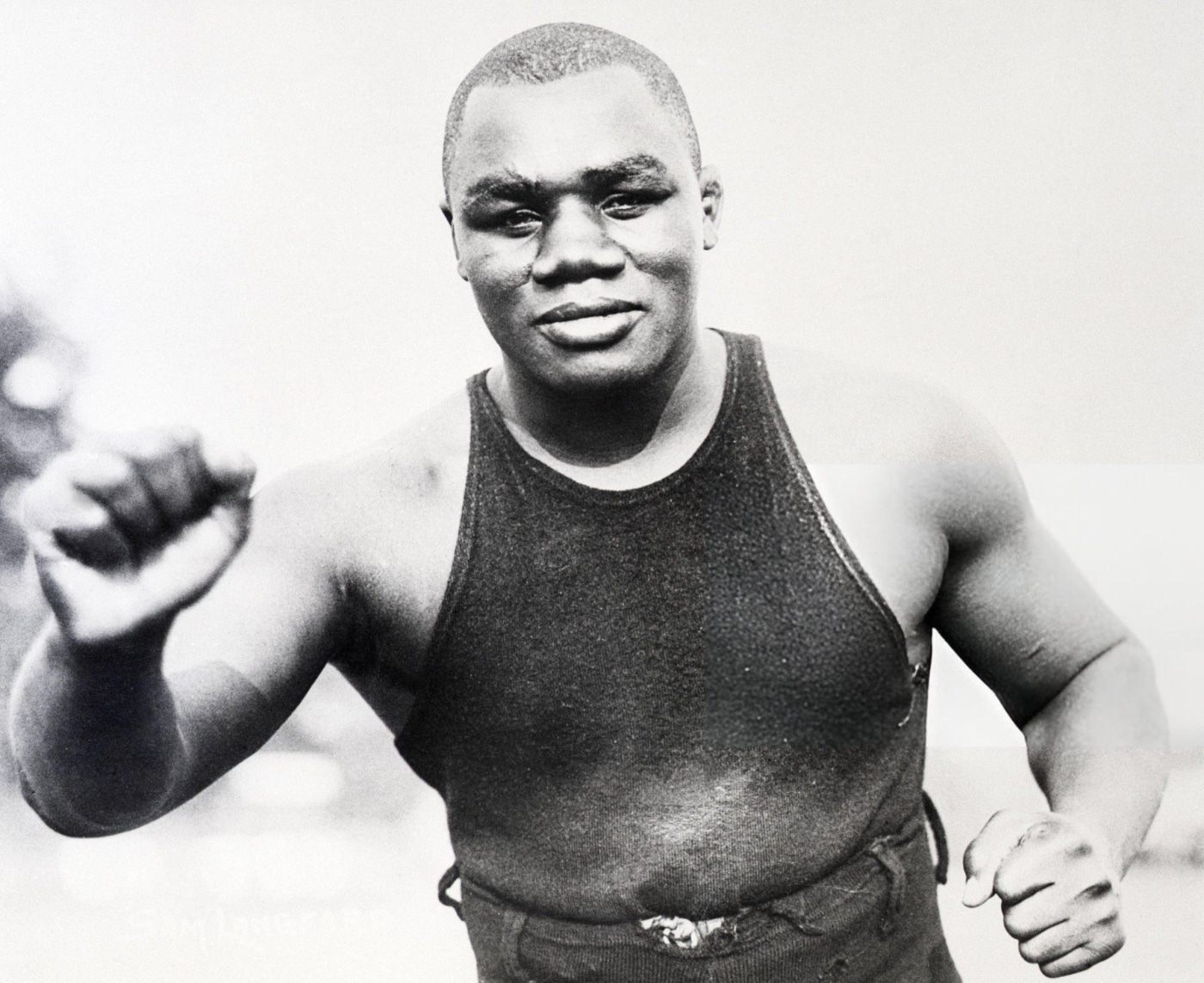


Langford was only 5 feet 7½ inches tall, yet he competed from lightweight through heavyweight. His documented record varies because newspaper decisions and other results from that era were recorded differently. What cannot be disputed is the quality and extraordinary volume of his opposition.
Former heavyweight champion Jack Dempsey explained in his autobiography why he never wanted to meet Langford:
“There was one man…I wouldn’t fight because I knew he would flatten me. I was afraid of Sam Langford!”
Racial barriers denied many elite Black heavyweights championship opportunities, forcing them to fight one another repeatedly. Langford met Harry Wills 18 times, Sam McVea 15 times, Joe Jeannette 14 times, Jeff Clark 13 times, and Jim Barry 12 times.
His talent was evident long before he became a heavyweight. Langford defeated lightweight champion Joe Gans in a non-title fight in December 1903. On September 5, 1904, he fought welterweight champion Joe Walcott to a 15-round draw at the Lake Massabesic Coliseum in Manchester, New Hampshire. Several ringside observers believed Langford deserved the decision.
Langford later defeated Young Peter Jackson, Jack Blackburn, George Cole, Dixie Kid, Stanley Ketchel and former light heavyweight champion Philadelphia Jack O’Brien. Few fighters in boxing history faced such accomplished opposition across so many weight classes.
On April 26, 1906, Langford weighed only 156 pounds when he challenged Jack Johnson for the World Colored Heavyweight Championship in Chelsea, Massachusetts. Johnson weighed 185, and won a clear 15-round decision. Langford became bigger, stronger, and more experienced afterward, but Johnson never fought him again after becoming the first Black world heavyweight champion.
Langford defeated Jeannette over 20 rounds in Paris on December 20, 1913, winning a heavyweight championship recognized by the French Boxing Federation. He also held versions of the World Colored Heavyweight Championship and won heavyweight titles in Australia and Mexico, but the sport never allowed him to compete for its leading world crown.
His eyesight deteriorated badly during the later years of his career. Even while half-blind in the early 1920s, Langford sought a championship fight with Dempsey. Manager Jack Kearns turned him away because Dempsey’s team wanted an easier opponent.
Langford never became the officially recognized world champion, but his record reveals something more important. He was feared by champions, tested across multiple divisions, and denied his greatest opportunity by the color line. That makes Sam Langford a compelling choice as boxing’s greatest fighter never to win a world championship.
Sam Langford in 1924. Photo: International News Photos/Public Domain
Read the full article here


