

I began watching the NBA in 1988, nearly 40 years ago now. Granted, I experienced it through the eyes of a child who was captivated by the game, but I was fortunate enough to grow up watching not only an entertaining brand of basketball but one built on consistency.
Free agency truly arrived the season after I became a fan, and trades have always been part of the league. Even so, continuity was still the norm. Players moved when relationships fractured, organizations believed they had reached their ceiling, or age dictated a different direction. It wasn’t common to see players traded simply because a team was trying to be fiscally responsible.
Today’s NBA is different. The modern collective bargaining agreement has made maintaining continuity increasingly difficult. Add the player empowerment era to that, and loyalty has become increasingly rare.
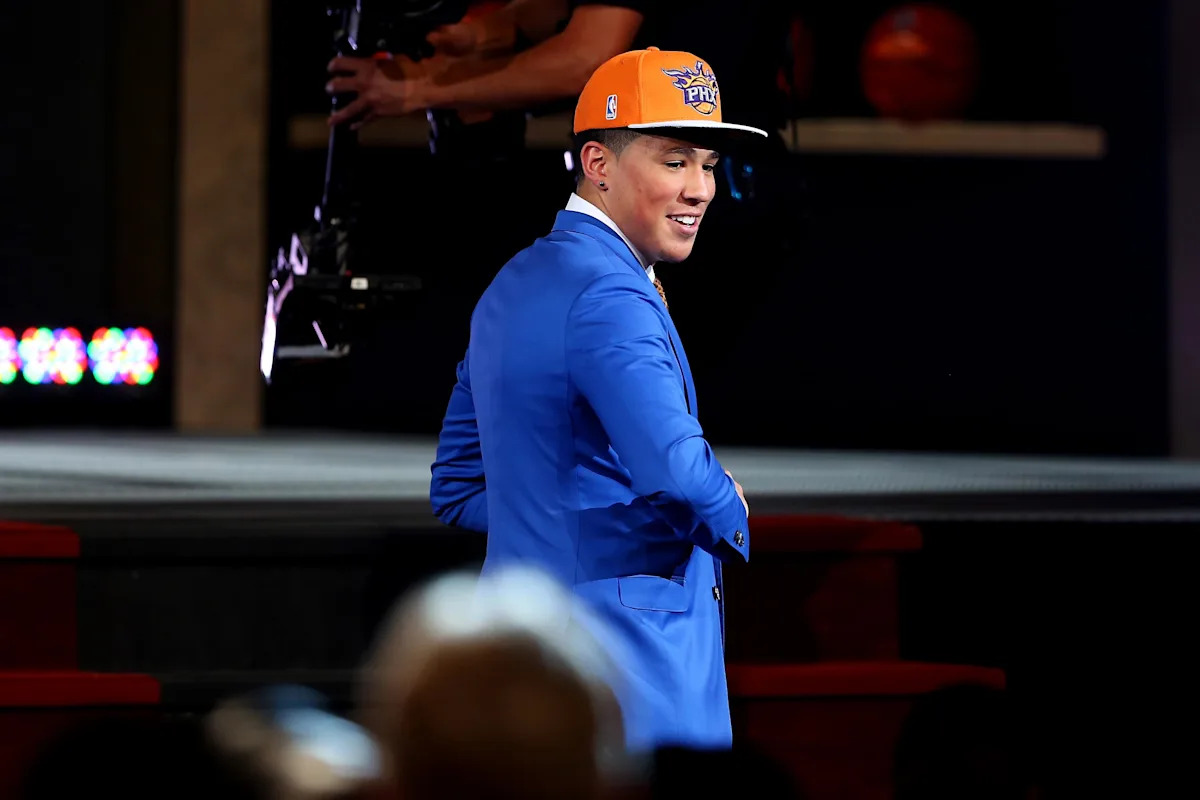
In Phoenix, we’ve experienced every version of that over the past few years. I now have a deep hatred of aprons, and I now possess many shirts with stains upon them as a result. At the same time, we’re one of the few organizations that still has a player entering his 12th season with the franchise. We know what loyalty looks like because we’ve watched Devin Booker embody it. He’s one of only four players who have remained with the same organization since 2015, joining Stephen Curry, Draymond Green, and Nikola Jokic.
But in an era defined by escalating salaries, annual cap growth, and restrictive tax aprons, loyalty has become a dying breed for both players and organizations. It’s simply become too difficult to afford it.
We see this in the conversations surrounding Devin Booker, whose salary will account for 35.1% of the cap this upcoming season. Unless he’s producing at an All-NBA level, people begin viewing that contract as a negative. That’s simply the reality of today’s NBA.
We’ve watched that same reality play out in Boston. The primary reason general manager Brad Stevens ultimately moved on from Jaylen Brown was his contract. Boston was scheduled to pay him $57.1 million this season and another $185 million over the following three years. That salary created an inflection point, forcing the organization to ask whether keeping one of its most beloved and respected players was still financially responsible.
Sure, the Celtics didn’t have to offer Brown the supermax extension. But he earned it. You can’t fault an organization for trying to stay loyal to a player who helped deliver a championship. At the same time, that loyalty eventually forced a decision, one that ultimately resulted in Brown being traded to the Philadelphia 76ers.
“The reality in this era and in this day of age of the NBA,” Steven stated in his presser explaining why the decsions was made, “and you can see it obviously with the last couple of champions and some of teams that were at the very top of the league, when it was all said and done at the end of this year, you have to do a great job, and you have to have the optionality to do a great job of building out depth, that hopefully replace the irreplaceable individual. And that’s not an easy thing to do.”
One thing I appreciated about what Brad Stevens said in his press conference was that he openly acknowledged the issue. He pointed directly to the way the current collective bargaining agreement is structured and how it discourages organizations from keeping together the players they drafted and developed. That’s something that has to be addressed when the next CBA is negotiated. I’m glad Stevens said those words publicly because it gives the players’ association something tangible to build from as both sides begin preparing for the next round of negotiations in 2029.
The league has to find a better balance. It shouldn’t penalize organizations or players for loyalty. The longer a player stays with one franchise and the better he performs, the larger his contract naturally becomes, and it should. Players deserve to be rewarded for their success. At the same time, the organization that drafted, developed, and retained that player should receive some benefit as well.
At the end of the day, this is sports entertainment, and part of what makes it entertaining is loyalty. And it is for the fans. It’s identifying a player you enjoy rooting for, watching him grow, and knowing there’s a good chance he’ll still be wearing your team’s jersey for years to come.
So how do you fix this? Let’s call it the “loyalty tax.”
I’ll use the Phoenix Suns as a practical example. Devin Booker is slated to make $57.1 million this season, which accounts for 35.1% of the salary cap. Now imagine a world where a loyalty tax is built into escalating contracts.
Booker is on his third contract with the Suns and has already signed his fourth. Imagine if cap relief became available beginning with a player’s third contract with the organization that drafted him. The player would still earn a salary based on the percentage of the cap he negotiated. In Booker’s case, that’s $57.1 million, or 35.1% of the cap. The difference is that the organization would receive a 5% loyalty tax break.
So while Booker still earns 35.1% of the cap, only 30.1% would count against the Suns’ cap sheet. That immediately creates $8.25 million in additional cap room, because 5% of this season’s $165 million salary cap equals $8.25 million.
What does that 5% accomplish? It gives the organization greater flexibility to remain competitive while rewarding it for drafting, developing, and retaining a homegrown player. It creates enough room to add an $8.25 million player to the roster. More importantly, it helps preserve continuity and competitiveness without forcing organizations into a financial inflection point that eventually leads to tearing everything down and starting over.
It sounds like a win win, but there are certainly byproducts to a system like this that could ultimately prevent it from ever becoming reality. If there’s a 5% loyalty tax break, that means the owners, if they choose to use it, are effectively paying for another $8.25 million player. Some owners wouldn’t have an issue with that. Others certainly would.
Then there’s the business side of the NBA. Maybe the league likes constant player movement. Every blockbuster trade creates another wave of merchandise sales. As I write this, there are probably brand-new Jaylen Brown jerseys being pressed in Philadelphia, waiting to hit the team store shelves. That doesn’t happen if players stay with one franchise their entire careers.
Perhaps the best strategy is to let them remain loyal for 11 years, then have them change their jersey number before Year 12. That seems to work pretty well for Devin Booker.
Overall, though, I believe the current system is broken. It’s forcing organizations to abandon long-term continuity in an effort to balance the cap sheet and avoid restrictive aprons. In turn, it hurts the customer base. It hurts the fans. Teams aren’t moving on from players because the chemistry disappeared, the locker room fractured, or age finally caught up to them. More often than not, they’re moving on because those players have become numbers on a cap sheet, pixels in an Excel spreadsheet that can no longer fit within the league’s financial restrictions. That feels like a problem worth solving.
Maybe a loyalty tax isn’t the answer. Maybe there are unintended consequences I haven’t considered. But the problem is real. The current system increasingly encourages organizations to move on from the very players they drafted, developed, and celebrated simply because the math stops working. That’s not a basketball problem. That’s an accounting problem. Fans invest in players, not cap sheets. They invest in relationships that take years to build.
If the next collective bargaining agreement can’t find a way to better reward loyalty, both sides risk losing one of the things that has always made the NBA worth following in the first place.
Read the full article here