







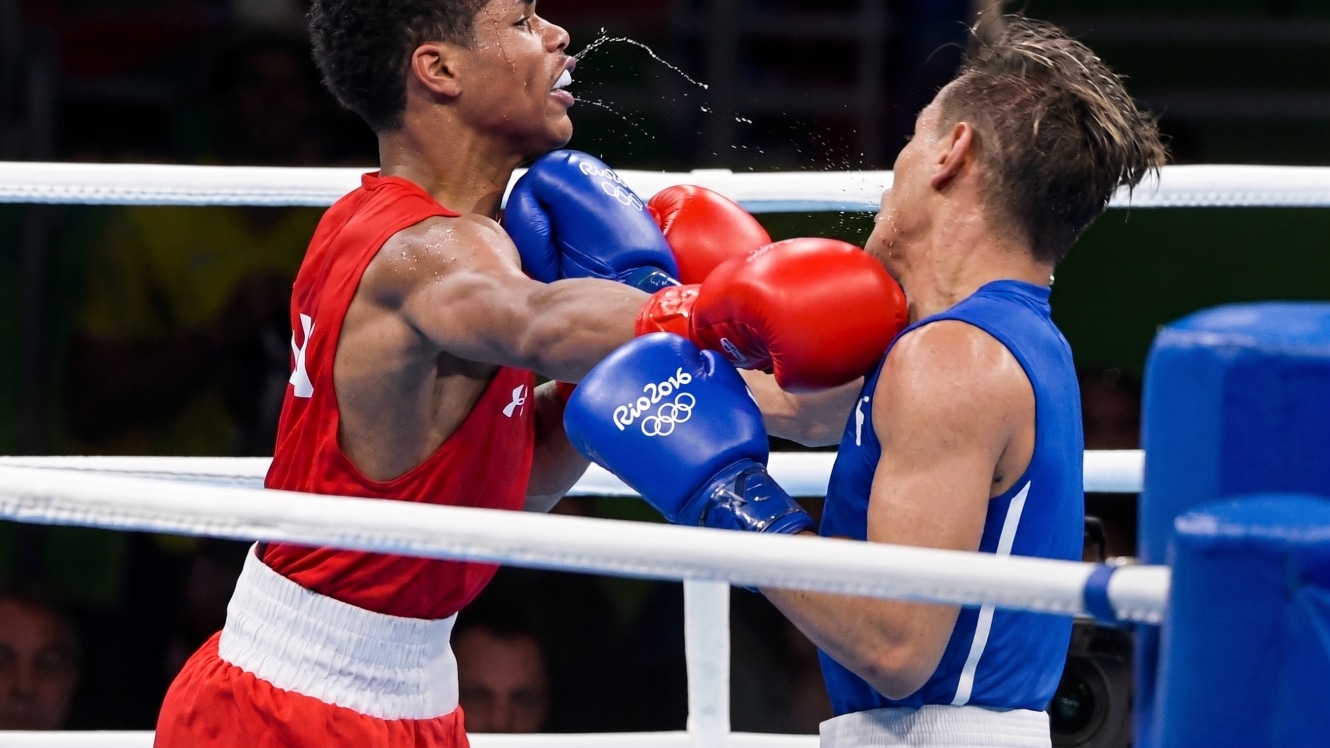
Shakur Stevenson did not lose the 2016 Olympic final because he lacked the skill to beat Robeisy Ramírez. He lost a close fight after changing what had worked for him. On August 20 in Rio, Shakur won the second round by picking sharper punches. In the third, he tried to protect the result instead of taking command of it.
Ramírez won the bantamweight gold medal by split decision, adding it to the flyweight gold he had taken in London four years earlier. Shakur, then 19, left with silver. It remains the last official loss of his boxing career.
The first round showed why Ramírez was dangerous. Both men were southpaws, but the Cuban was happier to close the distance and throw in bursts. He took the round on all three judges’ cards. Shakur answered in the second by changing his distance and lowering his hands so he could see Ramírez’s attacks and pick his punches. That adjustment won him the round unanimously.
There was a clear choice going into the third. Shakur could keep punching to interrupt Ramírez’s entries, as he had in the second, or make Ramírez miss and trust the judges to favor his cleaner work. By Shakur’s own account, his plan was to keep the final round quiet and get the decision. He was exhausted and conscious of the weight he had lost to make 56 kilograms.
That gave Ramírez an opening. Defensive boxing works best when the opponent pays a price for stepping in. As the Cuban pressed late, Shakur was increasingly concerned with denying punches rather than landing his own. He later recalled trying to grab Ramírez during the final 15 or 20 seconds as the punches came. Two judges gave Ramírez the deciding round.
It is tempting to draw a direct line from Rio to every professional fight in which Shakur has chosen caution. His low output against another southpaw, Edwin De Los Santos, gave critics an obvious comparison. But the Olympic final also shows that Shakur could adjust and win exchanges against Ramírez. The issue was what happened when he stopped imposing that second-round pressure with the gold medal at stake.
Nor does this result need a theory about Cuban influence over the judges. Rio boxing had genuine officiating controversies, but Shakur did not dispute this decision. He knew Ramírez had finished strongly. The tactical criticism is sharper without an unsupported claim about the scoring: with the final level, Shakur left too much of its most memorable stretch to the other man.
Shakur cried after the result, then turned professional and won world titles across multiple divisions. Years later, he said the pain of losing gold helped make him the fighter he became. Rio did teach him something. It also remains the clearest example of the cost of defending a close fight when he needed to win its final moments.
Stevenson wanted the gold medal, but he refused to pay the physical toll required to take it from a two-time Olympic champion. The moment Ramirez turned the third round into a trench fight, Stevenson chose self-preservation over victory.
Backing up in straight lines and wrapping up an opponent is not ring generalship. It is panic disguised as defense. Stevenson gave up real estate with every step, letting Ramirez dictate where every exchange occurred. When an elite Cuban fighter smells hesitation, he does not let you reset. Ramirez closed the distance, ripped shots through the guard, and showed the judges who actually wanted to dictate the terms of the fight.
Shakur could not match the hand speed in multi-punch flurries, so he resorted to negative tactics. The clinching was blatant, and throwing rabbit punches behind the head exposed how rattled he truly was under sustained fire. When a fighter relies entirely on single counter shots from long range, he becomes completely lost the second an opponent steps past his lead foot and stays inside his chest. Stevenson had no inside game, no desire to trade in the pocket, and no answer for pure offensive tenacity.
Amateur judges reward the fighter forcing the action and landing the harder, more eye-catching blows. Stevenson looked like he wanted to win an Olympic final on points while taking zero punishment. That mentality loses close fights on the big stage every single time.
Read the full article here


