

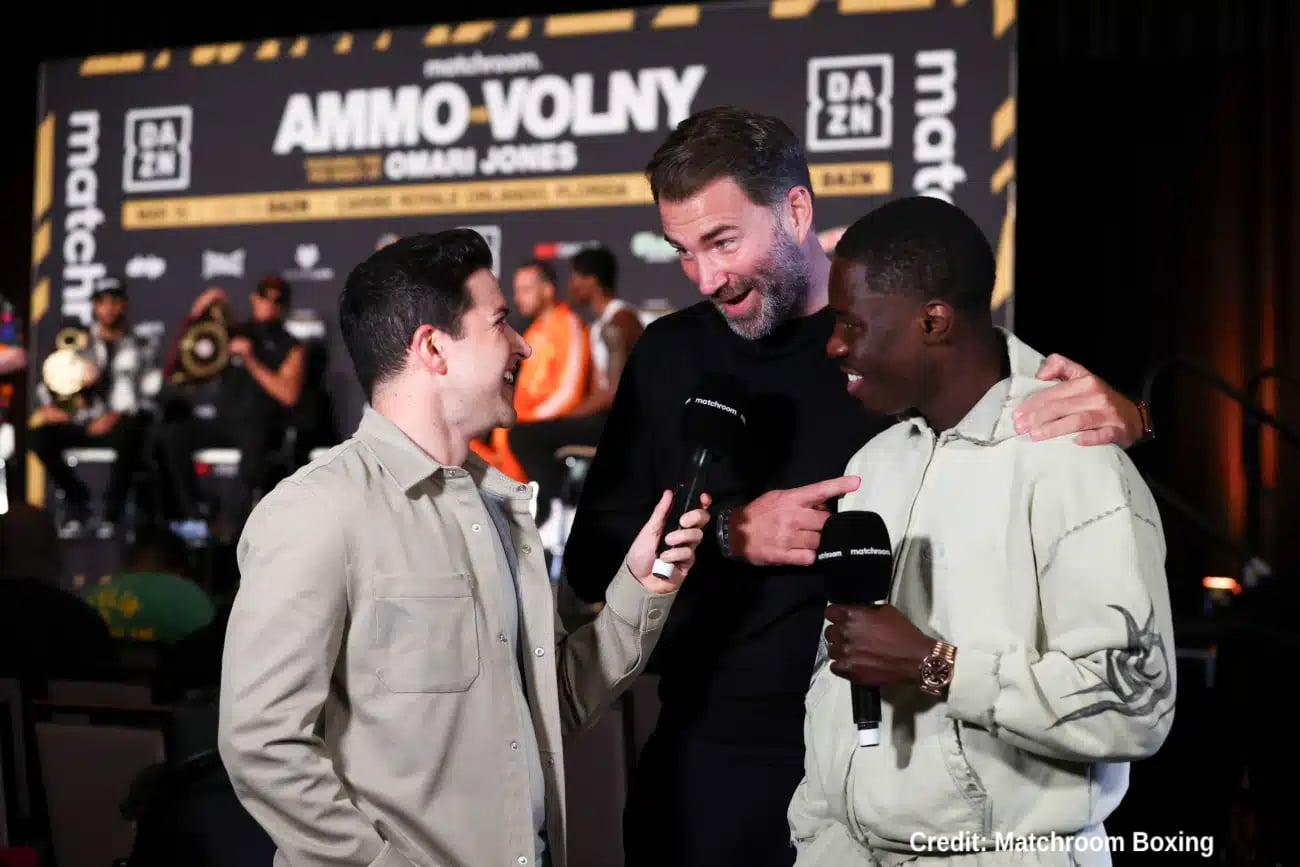

The former IBF junior welterweight champion took to social media this week to celebrate a financial milestone that once seemed impossible for a kid growing up in Brooklyn.
They use to call me little dirty they can’t call me dirty anymore I’m a millionaire . My neck icey and my wrist expensive. Hallelujah That kid that was selling Candy in them train stations made his dreams come true All i gotta do now is keep going Thank god 🙏🏾
— Richardson Hitchins (@HeIsRichardson) May 31, 2026
Nobody can take that achievement away from him. Boxing is a brutal business and very few fighters reach the point where they can call themselves millionaires. Hitchins fought his way from the amateur ranks to a world title and recently secured a lucrative deal with Zuffa Boxing. The criticism is not about the money.
Hitchins became a millionaire before answering the biggest questions of his career. While fighters like Gary Antuanne Russell, Subriel Matias, Ernesto Mercado, Andy Hiraoka, and Keyshawn Davis were being discussed as the most dangerous threats at 140 pounds, Hitchins managed to navigate around nearly all of them. He preserved his unbeaten record, won a world title, and turned that shiny “0” into financial security.
That’s why his social media celebration landed differently with some fans.
Hitchins sees a kid who sold candy in train stations and became a millionaire through boxing. Critics see a fighter who reached the top of the sport’s business ladder without taking the fights that would have settled the debates surrounding him. The irony is that his post proves the strategy worked.
An undefeated champion is more valuable than a fighter carrying losses from taking difficult risks. Hitchins protected his market value, stayed in position for title opportunities, and arrived at free agency with leverage. The reward was a major deal with Zuffa Boxing and a pathway toward even bigger paydays.
What’s interesting is that Hitchins signed with Zuffa at the same time as Edgar Berlanga. In many ways, the two careers tell a similar story. Berlanga became a millionaire before he was forced into the deepest waters of the sport. He secured major purses, headlined events, landed a Canelo Alvarez fight, and only then started taking losses when he stepped up against elite opposition. Hitchins has followed a similar business blueprint, albeit in a different division.
Supporters will argue that he owes nobody an apology for that. Boxing is prizefighting. The objective is to maximize earnings while taking the least amount of damage possible. If a fighter can become a millionaire while remaining unbeaten, most managers would call that a perfect outcome. The problem is that many fans still view boxing through a competitive lens rather than a financial one.
They wanted to see Hitchins against Matias. They wanted to see him against Russell. They wanted to see him against Mercado, Hiraoka, and Keyshawn. Instead, the conversation has already moved toward welterweight, where names like Devin Haney, Ryan Garcia, and Conor Benn offer far bigger purses than any of the dangerous contenders he is leaving behind. Those are the kinds of fights that can generate life-changing money regardless of the result.
The question fans keep asking is whether Hitchins would have arrived at this point had he been matched the old-fashioned way. If he had spent the last few years fighting the division’s most dangerous contenders instead of protecting his unbeaten record, would he still be a millionaire today? Nobody can answer that.
What many fans believe they already know is that this wealth was not built on dominating the junior welterweight division. It was built on managing risk better than anyone else.
Read the full article here