






Time to review the collection of young players the Guardians snagged in the 2026 MLB draft:
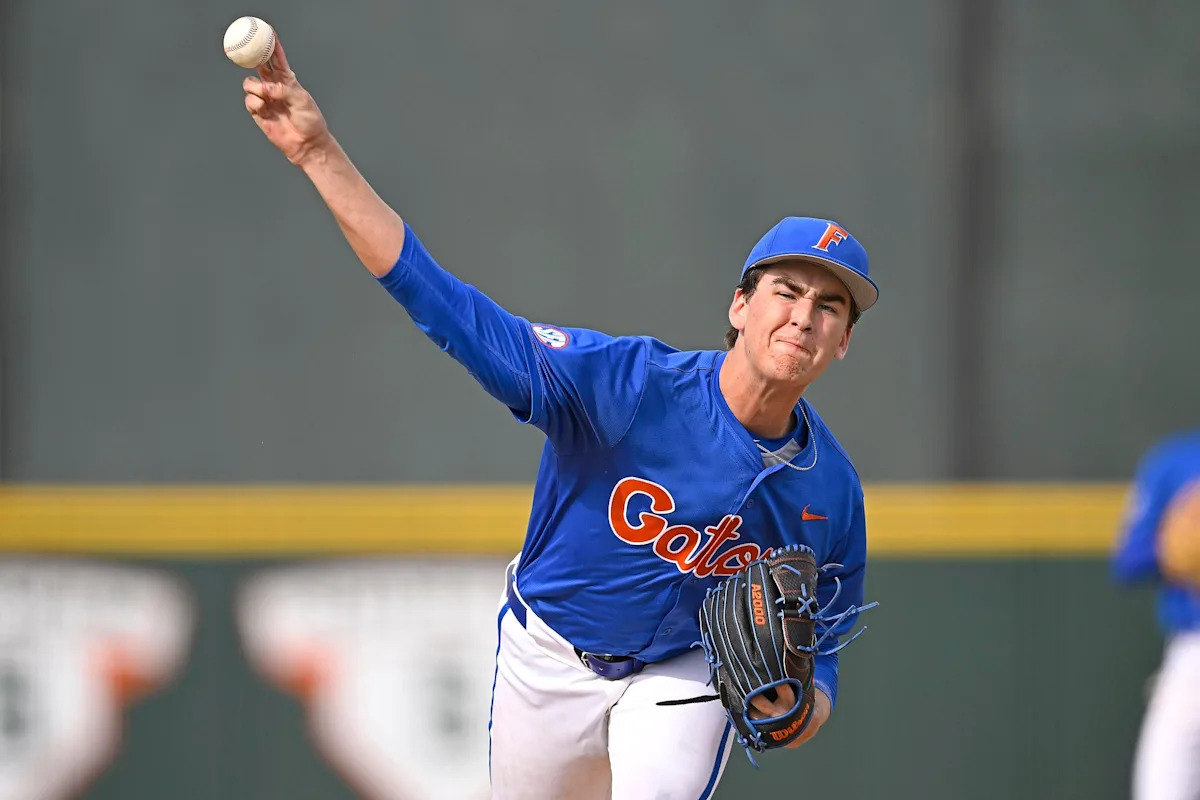
1st Round: Liam Peterson, RHP, Florida, 6’5, 225 lbs
Baseball America said:
“6-foot-5, 225 pounds and throws from a steep vertical arm slot. He throws a high-carry four-seam fastball that averages around 96 mph and has been up to 100. His fastball has clear plus traits and power, but he needs to improve his command to avoid throwing middle-middle heaters that get hit hard. All three of his secondaries are standout swing-and-miss pitches. He has obvious upside potential as a starter, but will need to make strides with his control and command to stick in that role.”
ESPN said:
“Peterson was in the mix at a lot of picks before the No. 19 spot where he was eventually selected. His physical ability — 6-foot-5, up to 101 mph, three-above average off-speed pitches — is substantial and with another tick of fastball command, he could be a frontline starter.”
Keith Law of the Athletic said: “Cleveland landed some of the best pure stuff in the draft here. …He’s 93-98 with a plus slider and 55 curveball and I think his changeup could easily end up an above-average pitch as well.”
2nd Round – Logan Schmidt, LHP, Ganesha HS, 6’4, 210 lbs
Baseball America said:
“Schmidt has a 6-foot-4, 215-pound frame and an easy, repeatable delivery that features a three-quarters slot and a consistently balanced finish. He has a starter’s operation and advanced feel to spot a three-pitch mix. After touching 97 mph on the 2025 circuit, Schmidt pushed his fastball up to 98 during his senior spring season and was consistently throwing the pitch in the mid 90s. He attacks the zone with his fastball and can locate it to both sides of the plate to get ahead in counts and set up his secondaries. Against righties, Schmidt is confident in a mid-to-upper-80s changeup that he sells with great arm speed and has above-average potential.”
Keith Law said: “Simplifying his pitch mix and cleaning up his delivery could make him a mid-rotation starter.”
3rd Round – Tre Broussard, LHH CF, Houston, 6’0, 190 lbs
Baseball America said;
“He’s a 6-foot, 190-pound outfielder with dynamic speed and one of the best center field gloves in the class. Broussard missed time early in 2026 with a hamstring injury but hit .344/.436/.472 in 44 games while stealing 25 bases. Broussard has an old-school leadoff skill set, with a hit-over-power profile and plenty of speed. He added a bit of strength and traded some contact for power in 2026 but still profiles as a 50-55 pure hitter with below-average game power. Broussard is a 70-grade runner who creates pressure on infield defenses and opposing batteries. He’s a high-volume and efficient basestealer who went 56-for-64 (88%) in two years at Houston. Broussard is one of the better center field defenders in the class.”
Fourth Round – Kade Lewis, LHH 1B/3B, Wake Forest, 6’2, 220 lbs
Baseball America said:
“He’s a 6-foot-2, 220-pound lefthanded hitter with a buttery smooth lefthanded swing and sound approach. He has a quiet setup and a low-maintenance swing with a slight uphill path but an all-fields approach and a knack for the barrel. He can drive the ball with solid power to both gaps and has gotten to consistent pullside home run power with metal bats, but his wood bat track record is more limited, and his raw power could be more conducive to a hit-over-power profile. That could make his defensive profile a challenge, as Lewis is a below-average runner and more of a first base defender than a third baseman.”
ESPN said:
Lewis (fourth round) is the most polished of the high picks from the college side. If everything works out just right, he might be a 55-grade hitter with 55-grade power who can play a decent third base, but otherwise he’ll be something like a league-average hitter at first base who can fill the most valuable side of a platoon.
5th Round – Lucas Moore, LHH OF, Louisville, 6’0, 185 lbs
Prospect Porch said:
Moore boasts elite bat to ball metrics. He put up a whiff rate of 11.8% in 2025, paired with a sub 8% strikeout rate, both some of the better in the entire draft class. It’s a slappy swing from the left side with a knack for contact and a strong ability to foul of pitches. Moore’s speed plays in a huge way. It’s comfortably 70 grade speed, and it’ll help him garner extra bases that most other wouldn’t. He’s one of the better base stealers in all of college baseball. Power hasn’t been a huge part of Moore’s game so far, it’s well below average at this point, but there could be more he could squeeze out of his lean frame further down the road. In the outfield, Moore projects as a plus glove in center field. He takes clean routes to the ball, covering a ton of ground with his double plus speed.
ESPN said: “He has elite athletic traits.”
6th Round – Deitan LaChance, RHH C, Oklahoma, 6’5, 231 lbs
MLB Pipeline said:
Lachance creates well-above-average raw power that plays to all fields with a combination of bat speed, strength and leverage in his massive 6-foot-5, 231-pound frame. He has a sound right-handed swing but his 36 percent chase rate ranked among the highest in NCAA Division I and is a cause for concern. He’s extremely vulnerable against breaking balls out of the zone but hammers curveballs and sliders that venture over the plate.
Questionable if he can stay at catcher defensively. Keith Law said: “This is a great gamble for the sixth round with an outside chance he becomes a regular.”
7th Round- Savion Sims, RHP, Texas HS, 6’8, 215 lbs
MLB.com said:
Sims has some of the highest upside in the class, and many expected him to head to Oklahoma after he wasn’t selected on Day 1. The Guardians are hoping to capitalize on the potential of the 6-foot-8 righty who touches triple digits on his fastball and still has room to fill out his frame. Getting his long limbs in sync and finding consistency on his slider and changeup remain a work in progress, but his arm speed is hard to find.
ESPN said:
Sims will regularly throw 100 mph someday, possibly soon, and is 6-foot-8 with a nice delivery, even if his pitch shapes aren’t elite.
8th Round – Matt Scott, RHP, Georgia, 6’7, 241 kbs
Perfect Game said:
Extra-large, athletic frame wiht broad shoulders and present strength throughout, additional room to grow moving forward. Right-handed pitcher, big rock step moving into a leg lift up above belt, balanced on backside over the rubber; hook to arm action through the back but plenty of quickness while working to a three-quarters release point. Fastball topped out at 93 mph and lived in the low-90s, creates big extension out front and shows sinking life to the bottom of the zone. Slider up to 84 mph with late, short bite to it and tunnels the pitch well out of the hand, playing off of fastball nicely. Flashed a changeup at 82 mph with occasional fade to arm side. Sound and under control delivery, repeats it well.
9th Round – Mario Pesca, RHP, Oklahoma State, 6’7, 241 lbs
Perfect Game said:
RHP with a 6-6 225 lb. frame from Bronx, NY who attends Cardinal Spellman. Big and strong physical build with the potential to get stronger. Pretty simple turn and throw delivery, slow paced and under control. Fastball was in the mid-80’s with good running life at times, complimented his fastball with a slurve type breaking ball that flashed good depth. Change up has similar running life to his fastball and mimics the pitch well. Has the ability to mix his pitches and keep hitters off balance.
10th Round – Ryan Bilka, RHP, Miami, 6’1, 208 lbs
Perfect Game said:
Tall and lean athletic build with plenty of room to get stronger. Two-way prospect who graded out better at this event as a right handed pitcher. Has sound mechanics on the mound with a high 3/4’s arm slot and good direction and energy to the plate, repeats his mechanics well. Steady mid-80’s fastball, showed good command to both sides of the plate and challenged hitters with the pitch. Slider was a quality second pitch with good power and sharpness from the same slot as his fastball.
11th Round – Jake Bean, RHP, Louisville, 6’3, 190 lbs
Baseball America said:
Bean is an impressive athlete who has the delivery, control and arsenal to profile as a high-probability starter. Bean sits in the 92-94 mph range with his four-seam fastball and has been up to 97, but his velocity this spring has been a bit up and down.His secondaries include an upper-80s short slider, a low-80s curveball and a mid-80s changeup.
12th Round – Ben Cleary, RHH INF, Santa Clara, 6’0, 200 lbs
Baseball America said:
Cleary is a contact hitter through and through. He stays within the strike zone and does an excellent job putting the barrel on the ball against any pitch type or velocity, with a 90% in-zone contact rate in 2026. The few home runs he has hit in college have gone to the pull side, but Cleary’s raw power is modest and he’s unlikely to grow into significantly more in the future. Middle infield defensive value should help curb the limitations of his offensive impact.
13th Round – Eric Dessens, LHH OF, Sacramento State, 6’1, 200 lbs
Baseball America said:
Dessens is a touch aggressive and doesn’t walk much, but he hammers fastballs and makes a lot of contact against high-level velocity, with more muted production and contact skills against secondaries. Dessens hits the ball hard and should have solid in-game gap power. He’s also a solid runner, but might not have the speed required for center field
14th Round – Carson Lane, RHP, UNLV, 6’3, 210 lbs
Not a lot out there but pitched in a tough environment and still got lots of whiffs. He gets good extension which the Guardians, of course, love.
15th Round – Alejandro Garza, RHH INF, Cal Poly, 5’9, 175 lbs
Baseball America said:
He is one of the hardest hitters in the country to strike out. He’s never struck out more than 6.2% of the time in a single season and owns a career 5.4% strikeout rate, but he also expands the zone freely and offers little on-base value beyond the singles and doubles he collects when he puts the ball in play. He also has well-below-average raw power and might never hit more than five homers a season with a wood bat. Garza is a below-average runner and has started at third base for three seasons.
16th Round – Sebastian Rolon, RHP, Florida HS, 6’2, 195 lbs
Perfect Game said:
Works from a full windup with a full arm path in back, high 3/4’s arm slot, has easy arm speed and a clean release. Fastball topped out at 88 mph, lots more velocity there as he matures, gets some carry up in the zone. Curveball has downer shape and he showed very good feel for the pitch and landed it for strikes on any count.
17th Round – Travis Lutz, RHP, Lamar, 6’4, 230 lbs
Prep Baseball Report said: “Long arm action, over-the-top slot. Curveball played with 12/6 shape, showed feel for pitch.“
18th Round – Parker Dilhoff, LHP, UNLV, 6’4, 240 lbs
Not much out there but he’s from Xenia, Ohio and struck out a bunch of guys in college. Throws low 90’s with the fastball.
19th Round – Zac Cowan, LHP, LSU, 5’11, 211 lbs
Baseball America said: “Cowan throws a fastball that sits around 90 mph and will touch 93, and uses a low-80s changeup as his go-to secondary and best overall pitch.”
20th Round – Parker Coil, LHP, Arkansas, 6’3, 195 lbs
Perfect Game said:
Tall and slender frame with longer limbs and big projection. A primary pitcher, fluid and loose delivery with athletic movements that sequence well. Full and clean arm stroke with a 3/4 release and good extension at release. Good angle to the fastball and gets arm side run, works down and moves the ball around. 1-7 shape to the breaking ball with tight spin and plays off the fastball well. Confident in the changeup with similar design to the fastball.
Undrafted Free Agents Announced So Far: Tyler Albanese, RHP, San Jose State, Pablo Figueroa, RHP, Central Point Christian Academy, Kellen Montgomery, RHP, UC Santa Barbara, Heath Andrews, RHP, NCSU, Cooper Carlgren, RHP, Lamar.
CBS Sports ranked Cleveland’s draft class as one of the top five of this year’s draft. Jim Callis of MLB Pipeline ranked the Guardians’ draftees as one of the top six classes for this year.
You can read Baseball America scouting reports here and reviews of the Guardians’ draft class here. Well-worth the subscription. You can read what Kiley McDaniel of ESPN said here.
For my own part, I love that the Guardians got a lot of big, strong pitchers. I can’t wait to see what their development group can do with that kind of clay. I also like LaChance a lot, and don’t see why he couldn’t be a big RHH stick at first base if catching doesn’t work out. If I had to make one prediction, it would be that Matt Scott will become a high leverage reliever for the Guardians in fairly short order. Let me know what you think of this year’s draft class in the comments below!
Read the full article here


