

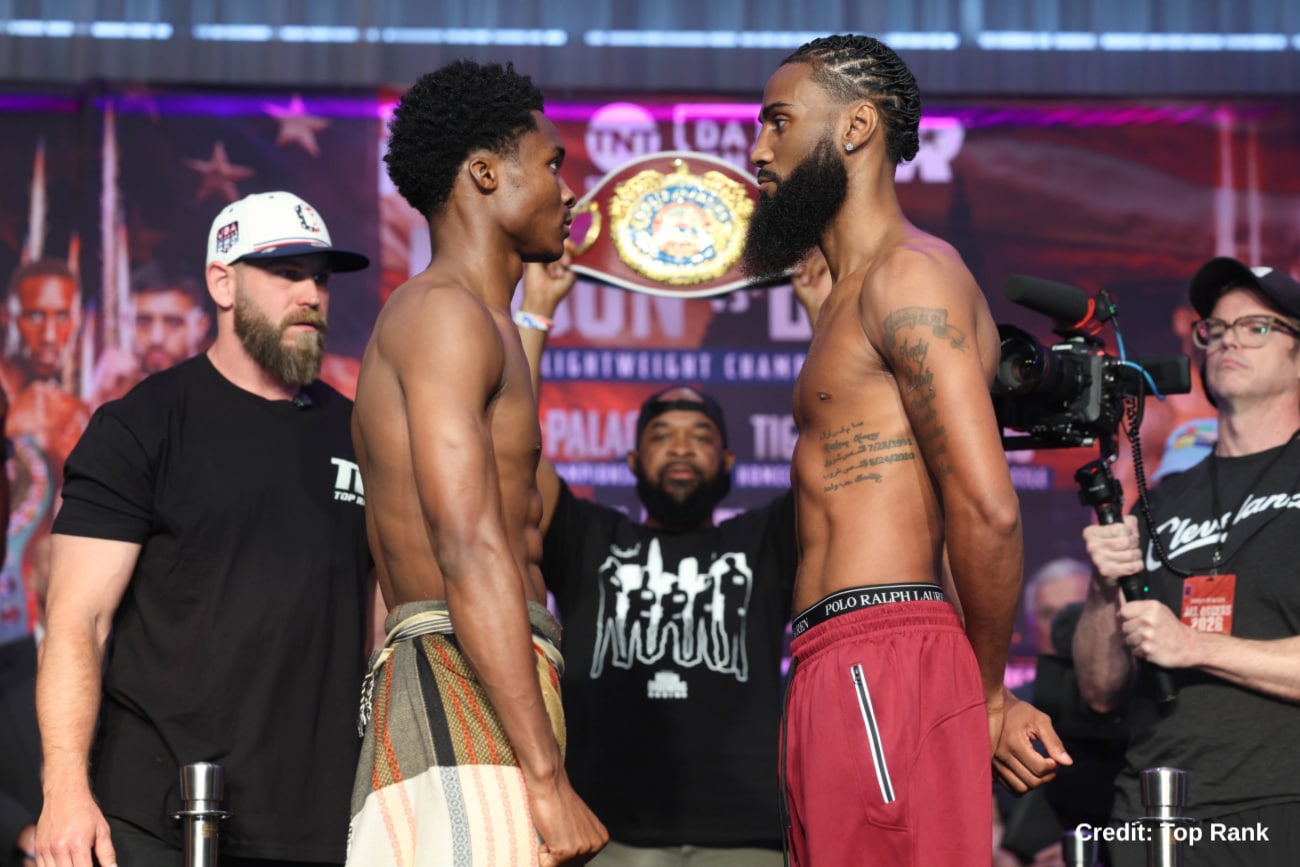

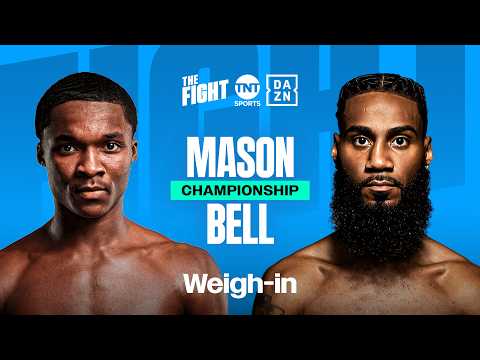
Abdullah Mason is expected to retain his WBO lightweight title against Albert Bell. Bruce Carrington enters his fight as the clear favorite. Tiger Johnson is also expected to handle his assignment. Throughout the card, the promotional side has been matched to win rather than challenged to prove itself against opponents with a realistic chance of pulling off the upset.
That may make sense from a promotional standpoint, but it does little to create anticipation.
Sport thrives on uncertainty. Fans tune in because they don’t know what’s going to happen. When most viewers believe they already know the likely winners before the opening bell, much of the drama disappears.
This card doesn’t feature a true 50-50 fight. It doesn’t even offer many matchups that feel like legitimate 60-40 contests. Instead, it resembles a collection of showcase bouts designed to move prospects and champions forward with minimal risk.
That’s an odd way to introduce a new television franchise.
TNT executive Craig Barry has spoken about attracting casual fans through storytelling, high-end production and premium presentation. Those elements certainly matter. Strong commentary, quality production and effective promotion can elevate a broadcast.
They can’t manufacture competitive fights.
No amount of graphics, shoulder programming or studio analysis can replace the suspense that comes from two evenly matched fighters stepping into the ring with genuine questions to answer.
If anything, the debut card sends the opposite message. Rather than asking fans to invest emotionally because either man could win, it asks them to admire the development of fighters who are widely expected to prevail. That’s a difficult sell for casual viewers.
The irony is that this partnership deserves to succeed. Boxing needs broader exposure, and TNT’s reach could introduce the sport to viewers who haven’t followed it in years. DAZN also benefits by putting its brand in front of a much larger audience than it reaches through streaming alone.
But if “The Fight” is going to become a destination series instead of just another boxing broadcast, the matchmaking has to become bolder.
Fans don’t need every main event to be an upset waiting to happen. They do need meaningful uncertainty. Give them a genuine toss-up. Give them a dangerous opponent. Give them a reason to wonder who will have their hand raised at the end of the night.
Until that happens, the biggest obstacle facing this promising new series won’t be production quality or marketing. It will be predictability.
It really is dead on arrival if this is the blueprint moving forward. Network executives love to talk about “storytelling” and “premium presentation,” but you can’t dress up a predictable sparring session and call it an elite television product. Casual fans aren’t stupid. They might not know every fighter’s amateur record, but they know when a contest lacks actual jeopardy. If viewers can look at a poster and immediately pick the winner with 99% certainty, they are going to change the channel.
Launching a brand-new franchise with safe, showcase fights is a massive missed opportunity. TNT and DAZN have the platform to make boxing mainstream again, but that only works if they give people a reason to care. If they keep serving up these one-sided matchups, the series will be ignored before the summer is even over.
It takes real nerve to put top prospects in genuine toss-up fights, but that risk is exactly what creates superstar drawing power. Until the promoters involved realize that a thrilling, competitive loss is worth more to a television audience than a dull, predictable win, this series is just going to occupy late-night space instead of moving the needle.
Would it have been asking too much to have Andy Cruz step in as the replacement opponent after Joe Cordina pulled out? Throwing Cruz into that slot would have instantly turned a lukewarm debut card into an absolute must-watch event for anyone who cares about real boxing.
Instead of a genuine elite matchup, we get Albert Bell. Let’s look at why the promoters went this route: Promoters love convenience, and Bell was already deep in training to face Andy Cruz on a separate DAZN card scheduled for July 18th. When Joe Cordina’s visa issues blew up the main event, pulling Bell from that July 18th slot was the easiest logistical plug-and-play option. It saved Top Rank and Matchroom from having to build a replacement opponent from scratch on short notice, especially since Bell is an Ohio native who can help sell tickets in Cleveland.
Let’s be real about the matchmaking logic here. Abdullah Mason is Top Rank’s shiny young champion, and they want him to look spectacular on a major new platform like TNT.
Cruz possesses a defense-heavy, elite amateur pedigree that makes anyone look bad. He is a high-risk, low-reward nightmare for a short-notice fight.
Bell is a 33-year-old fighter who has spent his career coasting on safe decisions against low-tier opposition.
By choosing Bell, the promotion gets a guy who is technically “undefeated” on paper to sell to the casual audience, but who poses almost zero threat of actually knocking out or upsetting the champion.
An Olympic gold medalist like Cruz against a young phenom like Mason is exactly the type of aggressive, bold matchmaking that would make “The Fight” a destination franchise. It would signal to the sports world that this series is about the best fighting the best, not just another platform for showcase bouts.
Instead, they took the safe road, protected the asset, and gave us a main event where the outcome feels decided before the first bell.
Read the full article here