






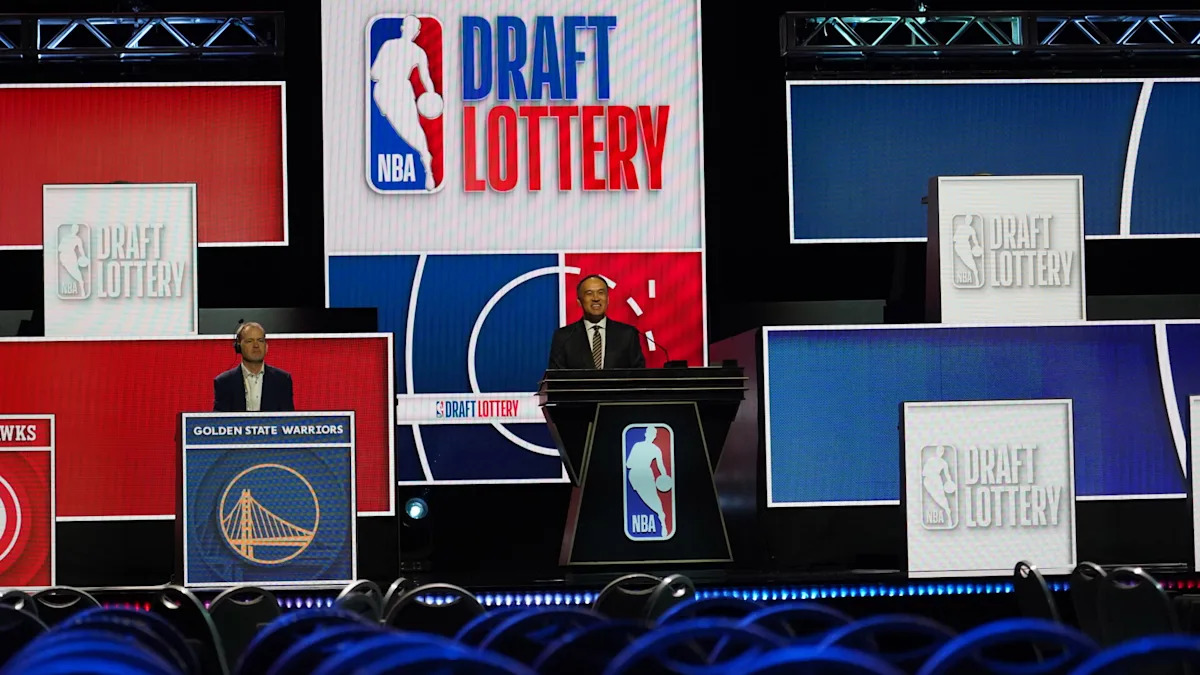
Adam Silver’s anti-tanking quest — a dramatic reaction to this year’s unique situation with an especially deep draft — comes to a head this week when the NBA owners are scheduled to meet and vote on that latest lottery reform proposal.
That proposal is a modified version of the “3-2-1” proposal put forward last month (named after the number of ping-pong balls a team could get). A number of league front offices have serious concerns about what this will mean in terms of trading draft picks and for the value of picks already traded. This new proposal dramatically flattens the odds of the lottery and expands it to 16 teams — that changes the value of picks that could be traded or picks that already have been. From Mike Vorkunov at The Athletic.
Team executives have predicted that first-round picks would be harder to trade under the new rules, as the 3-2-1 format gives teams higher up in the standings a better chance to land not just a high draft choice but the No. 1 pick…
Earlier this month at the draft combine, some team executives bemoaned that these changes are coming after those picks have been dealt. A majority of the league would be impacted by these after-the-fact changes. In 2027, 14 teams have already traded away control of their first-round picks. In 2028 and 2029 each, only 12 teams control their own first-round picks without any encumbrances, swaps or as part of elaborate waterfall conveyances.
The NBA offseason loves the attention that offseason blockbuster trades generate, but making first-round picks less likely to be traded means it’s harder to put together a deal for someone like Giannis Antetokounmpo.
The value of all those already traded picks and swaps changes under this new “3-2-1” system, which is the latest, further flattening the odds that seems to be the league’s only solution to tanking.
As a reminder, here is how the new system would break down:
• Three teams with the worst records: They fall into a poorly-named “relegation zone” and be penalized for their poor performance by only getting two lottery balls, giving them a a 5.4% chance at the No. 1 pick, and they could fall all the way to 12th in the lottery.
• Teams with the 4-10 worst records: They get three lottery balls and an 8.1% chance at the No. 1 pick.
• Teams that finish as the No. 9 and 10 seeds in each conference will each get two lottery balls and a 5.4% chance at the No. 1 pick. (If this had been in place this season, Golden State, the LA Clippers, Miami and Charlotte would have had the same odds at getting the No. 1 pick as Washington, Utah and Sacramento.)
• Teams that lose the 7-8 play-in for each conference get one lottery ball, and with it a 2.7% chance of landing the No. 1 pick (this season that would have been Orlando and Phoenix).
The 3-2-1 proposal also grants Commissioner Adam Silver dramatically expanded, unchecked authority to punish teams he perceives as tanking. Again from The Athletic.
“He would be able to fine a team up to $10 million, force them to forfeit or transfer draft picks, reduce lottery odds, change draft positions or suspend team officials, according to league sources.”
The NBA owners, so scared of the perception of tanking — even though fans of teams in places like Utah and Washington were good with it for this season to chase the talent they need to win — that they are expected to pass it.
This new system moves the NBA another step away from the very point of having a draft in the first place — to get the worst teams the best incoming players to help balance the talent around the league. For small or mid-market teams, the NBA Draft remains the best — and for some, the only — way to acquire the talent needed to win. Those teams also could trade draft picks to help bring in winning talent, but now those picks’ values have changed, and trading them may no longer make sense.
In the league’s attempt to refine the system over the past decades, they’ve moved away from that core idea of helping the struggling teams, and now teams that lose because they just don’t have the needed talent are likely to be bad longer. And if the NBA is concerned about fan bases tuning out, having them struggle for years on end with little hope of getting quality players is a good way to do it.
Read the full article here


