

Two hands. That’s the way you’re taught, from the first time you set foot on the court and your coach has you pair up to start practicing how to pass. Whether you’re bouncing it off the wood or sailing it from your chest, you throw the pass with two hands. That’s how you best ensure the ball will arrive safely; that’s just how it’s done.
“How it’s done,” of course, changes as the passer and recipient grow up, and especially as the passer grows more daring. In a story included in his wonderful 2010 book, “The Art of a Beautiful Game,” Chris Ballard noted that part of what made Steve Nash such a brilliant and multifaceted facilitator was his predilection toward eschewing time-honored, bog-standard two-hand feeds in favor of one-handed deliveries from all angles. Those more risqué, insecure transmissions might set most orthodox coaches’ teeth on edge. What Nash’s coach lamented, though, was that we hadn’t broken from orthodoxy sooner.
“Sometimes we’re slow on teaching things,” Mike D’Antoni told Ballard. “Most coaches teach you to put two hands on it, and to be honest with you, we probably need to teach kids to throw with one hand. Sometimes, I think we limit.”
D’Antoni’s coaching career was nothing if not a repudiation of those limits — a decades-long exploration of just how far, and how fast, one could push the line of offensive innovation. The results of that inquest include:
-
10 playoff appearances in 16 seasons, including three trips to the conference finals, leading four separate franchises to the postseason;
-
Two selections as the NBA’s Coach of the Year — one in 2004-05, when his “Seven Seconds or Less” Suns took the NBA by storm, and in 2016-17, when he led the Rockets to 55 wins and the NBA’s No. 2 offense in his first year on the job — making him one of just 11 coaches in history to earn the honor multiple times;
-
Creating an offensive ecosystem in which two different lead guards under his charge, Nash and James Harden, could be named the NBA’s Most Valuable Player (and which could also coax career-best play from the likes of Jeremy Lin, Steve Blake, Kendall Marshall, Raymond Felton, et al.);
-
Ushering in a pace-and-space uprising in Phoenix that would play a gargantuan role in redefining how offenses would operate in the decades to come;
-
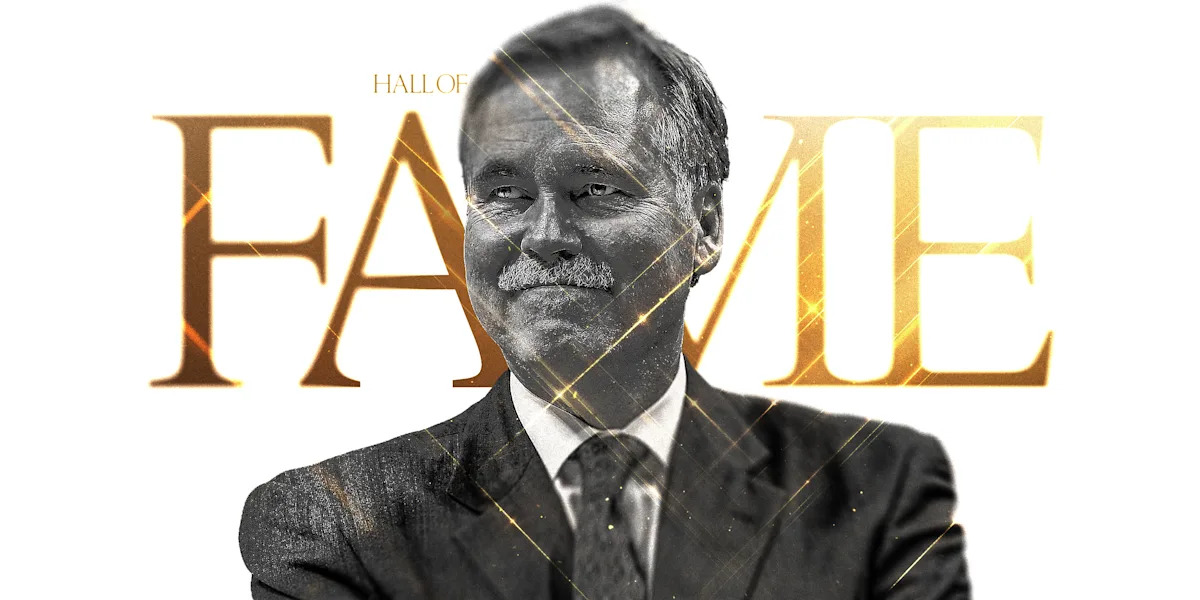
And, as of this weekend, enshrinement in the Naismith Memorial Basketball Hall of Fame.
“A coach is only as good as his players are,” D’Antoni told reporters this spring, according to NBA.com’s Jeff Zillgitt. “And I got really lucky.”
D’Antoni wasn’t the first head coach to preach the gospel of stomping the gas pedal to the floorboards, hunting opportunities to score early in the shot clock, playing smaller if it meant getting more skilled players on the floor, bombing 3-pointers or weaponizing the space that shooters can create by attacking the rim. (Shouts out to the late, great Don Nelson, and to “Guru of Go” Paul Westhead.) But the way he coalesced those principles, his dogged commitment to them, and the expression and success they found in the mid-aughts “Seven Seconds or Less” Suns helped fundamentally change offensive basketball.
Steve Nash and Mike D’Antoni made magic in Phoenix. (Photo by John W. McDonough/Sports Illustrated via Getty Images)
(John W. McDonough via Getty Images)
Which is kind of funny, considering, as D’Antoni once told The Athletic’s David Aldridge. “My whole thing was defense.”
“I was an awful offensive player,” he said. “I knew how to run an offense, and I could pass. But I couldn’t finish. One of the reasons I went to Italy was because I couldn’t shoot the ball.”
This is, perhaps, too unkind a reading. (Read enough about D’Antoni, or listen to him long enough, and you’ll become intimately familiar with his gift for self-deprecation.) After averaging 15.3 points per game on 45.4% shooting as a collegian at Marshall University, D’Antoni became a second-round pick of the then-Kansas City-Omaha Kings back in 1973, spent a season with the Spirits of St. Louis in the ABA, and had a cup of coffee with the San Antonio Spurs — a team that would later become the bane of his existence as the head coach of the Suns — before the unceremonious end of his stateside playing days. But the self-described “feisty little prick” wasn’t done yet.
D’Antoni would go overseas, landing with Italy’s Olimpia Milano, where he’d become a teammate of Joe “Jellybean” Bryant — and a favorite of Bryant’s young son, Kobe, who would later call D’Antoni “one of my first basketball heroes.” (Alas, that early-days hero worship didn’t necessarily help D’Antoni keep everything copacetic during his ill-fated sojourn with the Kobe-Dwight Howard-era Lakers.) Over 13 seasons in Milan, D’Antoni became one of the most decorated players in European hoops history: the club’s all-time leading scorer, and the winner of five Italian League titles, two FIBA European Champions Cups (what we now call the EuroLeague), two Italian Cups, one FIBA Korać Cup and a FBA Intercontinental Cup.
After retiring as a player in 1990, D’Antoni began his life as a coach: first for Olimpia Milano, and then with Benetton Treviso. In Europe, D’Antoni began his experimentation with reorienting the geometry of the floor. Everyone knows big men are supposed to stay planted near the basket. What D’Antoni’s system presupposed was … maybe they aren’t?
“The one thing that I was able to jump on real quick was the big guys,” D’Antoni told reporters this spring, according to Zillgitt. “I thought they were much more skilled. They could shoot the 3, they could run, they could handle the ball. We could do a lot of different things, and I could open up the game a lot more because of their skill. So that was probably the influence that Europe gave me, was that you can play five-out because your center and [power forward] and everybody, you have five skilled players on the court.”
That notion — “just put five skilled players on the court” — seems almost quaint now, but that’s only because of how D’Antoni helped popularize it. He was, as ESPN’s Kevin Arnovitz once put it, “a revolutionary idealist,” a leader whose vision of the game prized simplicity, speed, smarts, spacing, sharing and sheer joy. It’s a vision that produced some of the most explosive, efficient and effective offenses the sport has ever seen, and that inspired an awful lot of coaches — including those who coached against D’Antoni’s teams over the years — to shift their tactics toward his way of thinking.
“The guy who deserves the most credit for changing the way the league is played is Mike D’Antoni,” said Steve Kerr — who served as D’Antoni’s general manager in Phoenix in the 2007-08 season, and who twice coached against his Rockets in the playoffs with the Warriors — in 2018. “[…] “In the old days, you had kind of three [players] out [on the perimeter], two in [closer to the basket]. You had your traditional power forward, whether it was Karl Malone or Charles Oakley or somebody like that who was going to maybe shoot a 15-footer, but he was going to be banging down in the paint. Mike eliminated that and created all that much more space.”
Instead of just pounding the ball into the post while everyone else stood around watching, D’Antoni wanted something peppy, something happy, something uptempo. He wanted that power forward out of the mid post, relocated out to the corner. He wanted someone camped in the opposite corner, too, and another perimeter player waiting in the slot.
He wanted his big off the block, up at the 3-point line, where he could set a ball screen and dive, hard, to the rim. He wanted to give his point guard as much space as humanly possible in which to knife into the teeth of the defense and make quick decisions. He wanted to force the defense to do the same, betting that — if he had the right shooters outside, the right rim-runner rolling down the middle and the right quarterback calling the play — his guys could make those defenders wrong, over and over and over again.
He was right. A lot.
It wasn’t just the system, of course. D’Antoni got the green light to shift to the small-ball looks that made Seven Seconds or Less sing — moving Shawn Marion to power forward and Amar’e Stoudemire, who’ll join D’Antoni in Springfield, Massachusetts, this weekend, to the center spot — when Suns brass OK’d him to “use your best five” rather than fielding the most traditional lineup possible. They got him bombs-away wings like a young Joe Johnson and Quentin Richardson before those were even really a thing in the NBA.
And when they traded star point guard Stephon Marbury back to his hometown Knicks in a deal that shaved some $29 million off Phoenix’s books, they cleared a path to offer a six-year, $65 million contract to the Mavericks’ starting point guard, a little Canadian fella named Nash. The Mavs, unsure how the about-to-be-30-year-old’s at-times ailing back would age over the ensuing half-dozen years, decided not to match the deal. Cue the symphony.
“He showed what can happen when a great point guard has an open court and the freedom to make choices,” D’Antoni later said of Nash, to Lee Jenkins of Sports Illustrated. “The game explodes.”
The explosion in Phoenix turned Nash into a two-time NBA MVP. It turned Stoudemire into a multiple-time All-Star and All-NBA selection, one of the most feared finishers and most productive offensive big men in the league. And it set the stage for the offensive revolution to come.
In D’Antoni’s first full season in Phoenix, the Suns won 31 of their first 35 games. They finished a league-best 62-20, scoring 112.7 points per 100 possessions — at that time the highest offensive efficiency mark since the play-by-play era started in 1996, just ahead of Michael Jordan’s Bulls and the Stockton-to-Malone Jazz. According to Jared Dubin’s adjusted efficiency metrics at Last Night in Basketball, which measure how much better or worse a team’s offense and defense were than the league’s average unit in that season, that inaugural Seven Seconds or Less squad featured what is still the second-best offense relative to its competition since the ABA-NBA merger in 1976. (The only one better? The 2003-04 Dallas Mavericks … with Nash at the controls.)
In that 2004-05 campaign, the Suns averaged 97.35 possessions per 48 minutes — not only the fastest pace of play in the NBA that season, but faster than any team in the previous five seasons. They also averaged 24.7 3-point attempts per game — not only more than any other team in the NBA that season, but more than all but one team since 1996 (the 2002-03 Celtics, led by Antoine Walker, who famously took so many 3s “because there are no 4s”).
Last season, that pace would’ve ranked 27th in the NBA, and that 3-point attempt rate would’ve finished dead last, several sub-basements below the Sacramento Kings’ 30.2 triple tries per game. This is how it works; a wall stands for generations, someone breaks it down, and before too long, you’re so far past it that you can’t even see where the wall once stood.
“The influence is there in the strategy,” Kerr said in 2018. “And then, over the last 10 years, every player in the league has spent his summers shooting 500 3-pointers a day.”
Kerr knows all too well just how far the influence spread; it certainly made it to the Bay. After his Warriors knocked off the Cleveland Cavaliers to win the 2015 NBA championship, assistant coach Alvin Gentry — who’d been one of D’Antoni’s lieutenants in Phoenix before joining Kerr in Oakland — pitched the Dubs’ victory as vindication for D’Antoni: “We just kicked everyone’s ass playing the way everybody complained about!”

While the impact of D’Antoni’s ideology spread far and wide, with champions in Miami and San Antonio and Oakland and elsewhere borrowing bits and pieces from the playbook he put together, he himself never reaped the benefits. As brilliant and influential as his Suns teams were, they never quite got over the hump.
They went 232-96 in his four full regular seasons in Phoenix, but never got past the Western Conference finals, falling to the Spurs in 2005, after starting small forward Johnson suffered a broken orbital bone in the second round, and to the Mavericks in 2006, with Stoudemire missing nearly the entire season after undergoing microfracture surgery in his left knee. (As Tom Ziller wrote in “FreeDarko Presents: The Undisputed Guide to Pro Basketball History,” “That the Suns remained able to contend while shifting Amar’e the Conqueror’s minutes to Boris [Diaw] the Dancer — all while leaving Nash’s MVP MO untouched — is nothing short of amazing, and quite possibly D’Antoni’s greatest achievement.”)
They fell to the Spurs again in 2007 — a.k.a. the Robert Horry Hip Check Series, which saw Stoudemire and Boris Diaw suspended for Game 5 after leaving the bench following Horry’s attack on Nash — and to the Spurs again in the first round in 2008.
“If Joe doesn’t get hurt and he [is around to defend Tony] Parker, if [Tim] Duncan misses that 3, if that thing [with Stoudemire and Diaw] goes another way, I’m a much smarter coach,” D’Antoni told ESPN’s Eric Neel in a 2009 feature.
That sword cuts both ways, though.
“And if Tim Thomas doesn’t hit that shot with seconds left against the Lakers in the first round in ’06 — a shot I didn’t want him to take — I’m an idiot. […] It’s the rhythm of life,” he added. “Sometimes it gets you. Things happen.”
“Things happen” is an appropriate descriptor for D’Antoni’s subsequent stint in New York, where he got the Knicks back to the playoffs for the first time in seven years and back over .500 for the first time since Jeff Van Gundy left town before departing midway through the 2011-12 season, citing “conflicting visions of the club’s future” amid an ongoing power struggle with franchise centerpiece Carmelo Anthony.
It also works for his two seasons in L.A., which started ignominiously — he took over after the Lakers fired Mike Brown five games into the 2012-13 season, after a widely reported dalliance with rehiring Phil Jackson — and was marred by internecine squabbling between Bryant and Howard, Pau Gasol bristling at his role being altered and minimized, Nash’s persistent struggles to return from a broken leg, and eventually Bryant suffering the ruptured Achilles tendon that would spell the beginning of the end of his career.
D’Antoni would get another crack at a winner in 2016, when Daryl Morey — an infamous analytics adherent who saw in the data an argument for not only adopting the coach’s pace-and-space zealotry, but accelerating it — hired him to take the reins of a Rockets team that soared to 56 wins and the Western finals with Harden at the controls in 2014-15, but had slunk back to .500 the following season. In Harden, D’Antoni saw another offensive maestro capable of orchestrating an elite offense. So D’Antoni tossed his new All-Star the keys, deciding to dispense with the prefatory pleasantries and just turn a player who’d previously been considered a shooting guard into a point guard.
“Normally, they would just bring [the ball] up, move it two times, then give it to [Harden], then let him [initiate the offense]. And after he’s struggled to get the ball or had to wrestle to get the ball,” D’Antoni told Dubin in 2016. “We’re just trying to make it easier for him. Why camouflage it? You know that’s where it’s going. You know he has to make plays. So why not do it? And it gives him a sense, also, of purpose for the team that he understands: to get everybody involved to a certain degree without losing his identity.”
Those Rockets did operate according to Harden’s identity. Unlike Nash, he preferred to operate at a more deliberate pace, attacking in isolation. The Rockets, then, became the NBA’s preeminent isolation team, going 1-on-1 far more often and more successfully than any other team in the league — the sort of thing that might have been anathema to an earlier version of D’Antoni, if it didn’t seem to continue generating so many damn points per possession.
“I like when there’s no thinking,” D’Antoni once cracked during his time in Houston. “So we just do the same thing every friggin’ time.”
They did add one D’Antoni wrinkle, though. While the Rockets lacked the same sort of high-octane movement his Suns had, they hit upon a pretty simple and ingenious way to create even more space for Harden to cook: empowering shooters like Harden, Eric Gordon and Ryan Anderson to bomb extremely deep 3s, expanding the area of the court that defenses had to honor, sort of an attempt to recreate the defense-snapping impact of Stephen Curry’s range in the aggregate.
“The [3-point] line is there,” D’Antoni told SB Nation’s Kristian Winfield in 2017. “Doesn’t mean you have to stand on it.”
The approach had its merits. Houston ranked second, first and second in offensive efficiency in D’Antoni’s first three seasons on the bench. The Rockets won 55, 65 and 52 games in those seasons, played at a 50-win pace in the pandemic-shortened 2019-20 campaign, and won at least one playoff series in all four of his seasons. In 2017-18, after the arrival of Chris Paul, D’Antoni had the Rockets humming to the tune of the league’s best record and net rating, and came within one win, perhaps one hamstring pull and a hellacious record-setting 27 consecutive missed 3-pointers, of beating arguably the greatest team in NBA history.
(It’s the rhythm of life. Sometimes it gets you. Things happen.)
After that season, when the Harden-Paul partnership had run its course, D’Antoni took a new shuffled-up star tandem — this time, Harden and old pal Russell Westbrook … and tried to figure out how to make it work, effectively by returning to his small-ball roots. The dramatic midseason decision to essentially just stop playing centers, leaning into the 6-foot-5 PJ Tucker and the 6-foot-7 Robert Covington as Houston’s versions of Draymond Green in a five-out small-ball look didn’t light the NBA on fire; the Rockets went just 12-10 down the stretch, with the league’s No. 17 offense, and barely made it past CP3’s upstart Thunder in Round 1 before running aground in the second round of the playoffs in the bubble against the eventual champion Lakers. But D’Antoni — who would step away from the Rockets at season’s end — went down his way.
“I thought my mistake in Phoenix was questioning it and backing off of what we wanted to do,” D’Antoni told Rob Mahoney in 2019. “We could’ve been much better if we would have doubled down. We went another route. […] That was a mistake. We’re not doing that here. We’ll double down.”
D’Antoni’s willingness to double down — to follow his convictions for how to play to the end of the line, consequences be damned — helped produce some of the best offenses the NBA has ever seen. It helped change the very shape of the way the game is played. And along the way, it helped show hoops watchers of all stripes — including even those crusty old coaches — that sometimes the best option on the board is to dispense with orthodoxy, sling that one-hand sidearm bounce pass and let the basketball gods sort ’em out.
“Coaches hear [something], start to believe it, then do it, and it becomes a self-fulfilling prophecy,” D’Antoni told Jack McCallum early in the legendary Sports Illustrated writer’s seminal 2006 book, “Seven Seconds or Less: My Season on the Bench with the Runnin’ and Gunnin’ Phoenix Suns.” “My point is, it doesn’t have to be that way. It’s not written in stone.”
Read the full article here