



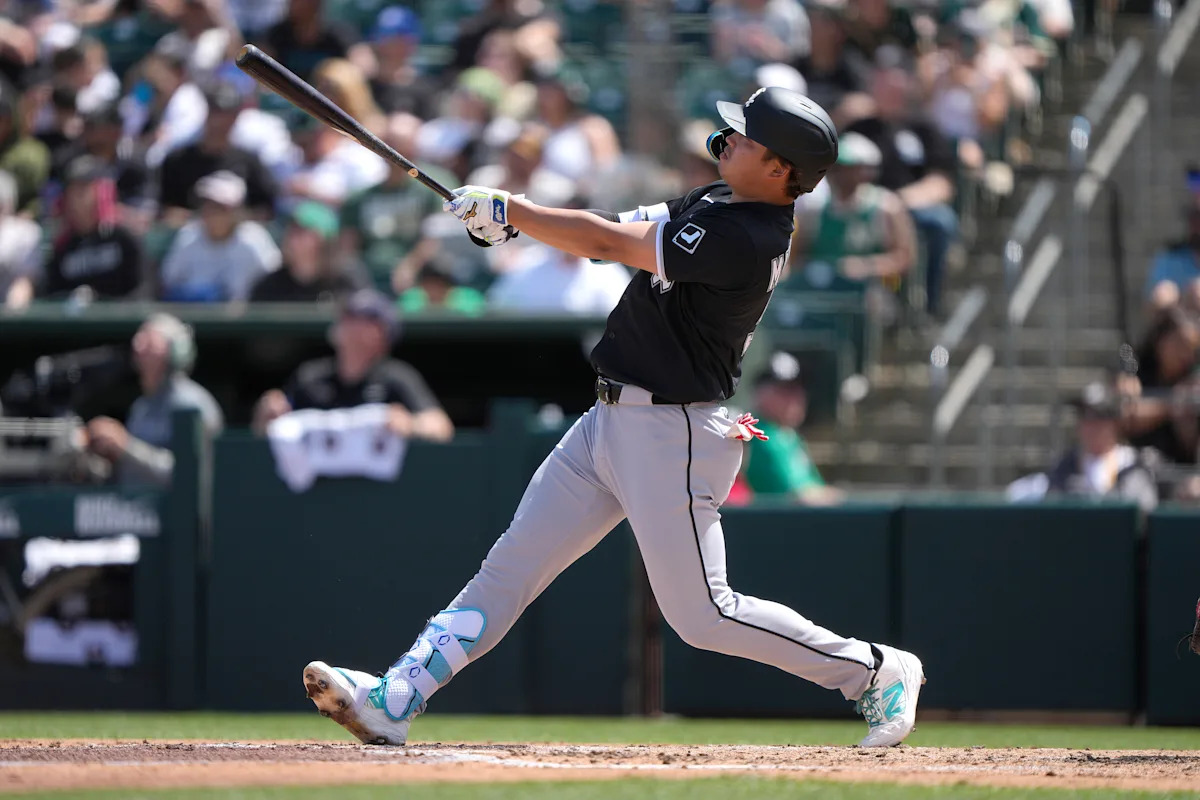
Picture this. A player with unfathomable power who obliterates every ball he makes contact with and a decent understanding of the strike zone. Picture that player also with a very steep bat path that creates a massive hole in his swing that makes them extremely prone for in-zone whiffs, to the point where they can go stretches where making contact would be an accomplishment.
Who am I describing? Maybe, for older fans, Rob Deer comes to mind. Perhaps Adam Dunn or Mark Reynolds, the real three-true-outcome pioneers. Maybe it’s Joey Gallo, whose tenure in New York is still a fresh wound to some. Hell, it can describe late-career Giancarlo Stanton to an extent.
Some of the more prospect-minded of you probably thought of Spencer Jones and, if we’re being honest, that’s pretty reasonable, but the player I’m specifically describing has nothing to do with the Yankees at the moment: Munetaka Murakami. Just look at that Baseball Savant page!
The former NPB star signed a surprisingly cheap two-year deal with the Chicago White Sox in the offseason after his once-nine-figure value fell apart after injuries and startlingly bad contact numbers slowed down the hype train in Japan. There were real concerns that he just wouldn’t be able to make enough contact against major league pitching for his undeniable, generational power to take hold. That also sounds familiar, no?
In reality, the prospect Jones and Murakami are extremely similar hitters. I’d say Murakami has better plate discipline, as he’s had a very impressive start in terms of chase rate, but Jones makes up for it with his startling raw power. Both have big holes in their swings in terms of in-zone contact (Jones 60.2%, Murakami 68.5%) that rank towards the bottom of professional baseball, but both run solid walk rates. As pure baseball players, you could argue Jones has a higher floor with his plus-speed and defense at a more premium position than first base, where Murakami has been OK after a disastrous time at third base in the NPB, but that isn’t what we’re focusing on.
With all the similarities between them, what Murakami does should be watched by not only Yankees fans, but the Yankees’ organization. If he flounders with prolonged slumps against the pure nastiness of MLB pitching, that could prove to be a concerning sign for Jones. On other hand, success from Murakami in spite of his flaws could provide a roadmap for Jones, who is 15 months younger and on the doorstep of the major leagues.
The overall range of Murakami’s damage thus far has been centered on absolutely demolishing bad pitches. He enters Tuesday with an average exit velocity of 99.6 mph on pitches in the heart of the plate with a .571 xwOBA, elite numbers on pitches that are meant to be crushed.

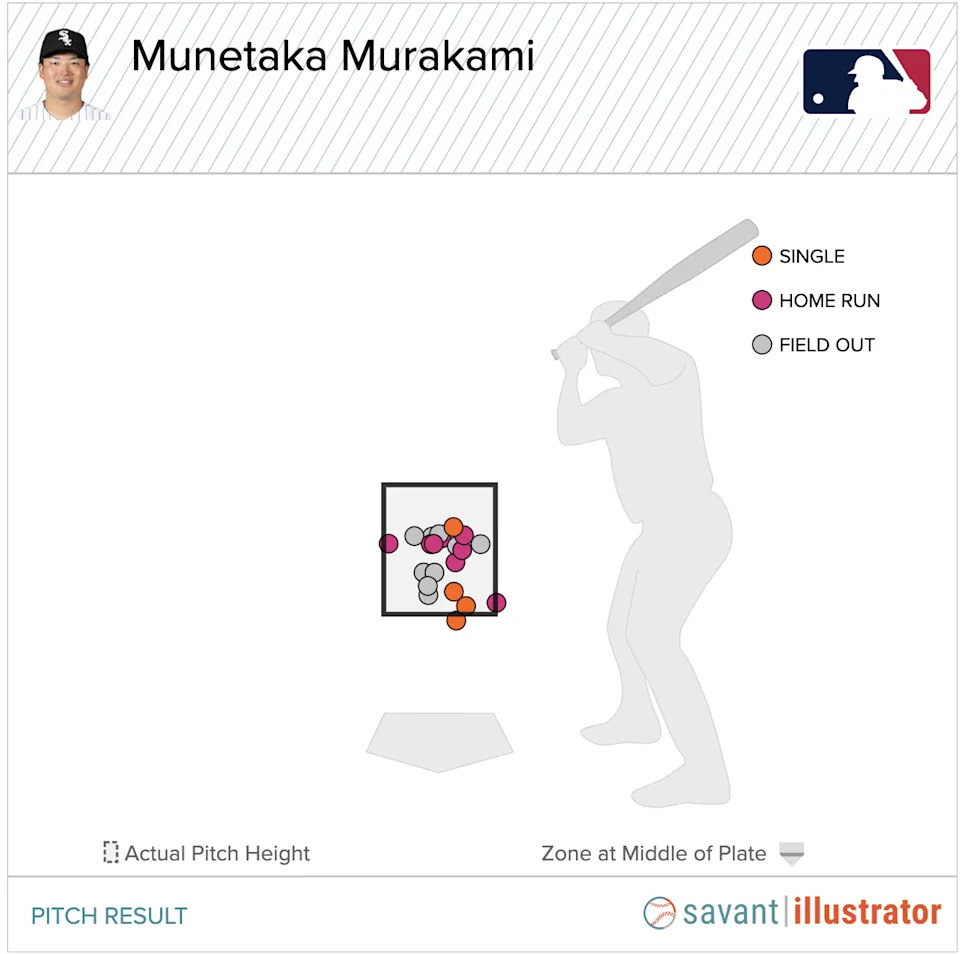
One of the most damning stats on Murakami in NPB was his struggles against high velocity, but even though most pitchers in MLB nowadays are capable of throwing 95, there are still softer throwers that Murakami has been able to feast on. Of his eight home runs to this point, just one of them was hit off a fastball over 94.5 mph, which was a 98.3 mph heater from Elvis Alvarado over the weekend.
View Link
So far, he has just two hits all season on pitches above 95 mph and a whiff rate above 30 percent, but he’s still managed to put good swings on the ball and is actually underperforming the expected stats. As you might expect with a tremendously high strikeout rate and a low chase rate, that means a whole lot of whiffs in the zone:

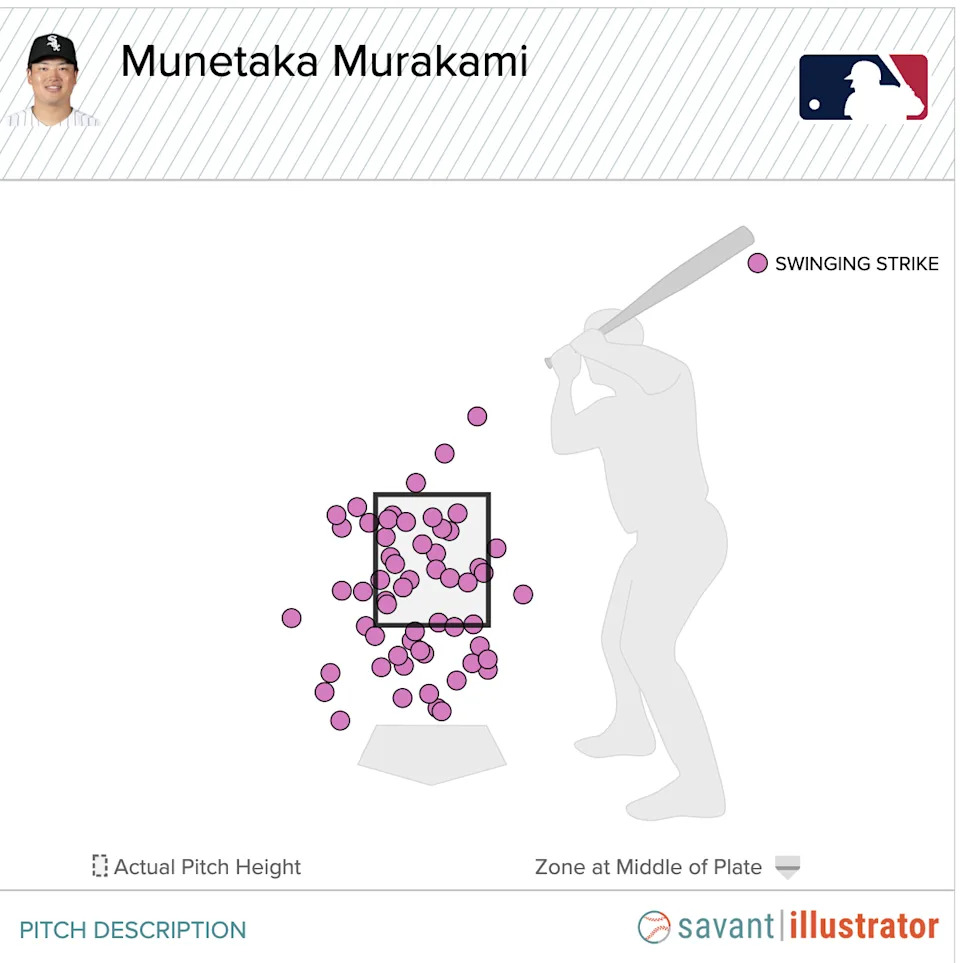
If we compare these to Jones, the Yankees’ prospect is doing even more damage on pitches over the heart of the plate (.602 xwOBA, 102.3 avg EV) but is whiffing more (31.3 percent) in Triple-A. Against 95+, Jones is running an untenable 53.6 Whiff%, but is obliterating the ball when he makes contact. That’s been the story of both of their seasons, which is what makes them theoretically such similar players.
There’s no doubt in my mind that Jones would be on the major-league roster of maybe 10 teams across the majors with his tremendous upside, but he finds himself blocked in the Yankees’ system, which has three big-money starting outfielders, but a spot could open up soon, whether that’s next year, or midseason. If someone gets hurt, there’s a chance he’s first up instead of his fellow prospect-in-limbo Jasson Domínguez after being added to the 40-man roster in the offseason.
If there’s any player across the league that we should keep a close eye on, it’s Murakami. There’s no better comp for Jones as he gets closer and closer to making his MLB debut, and what Murakami does over the course of his first major league season could give us a major clue regarding Jones’ chances of making it in the bigs.
Read the full article here


