

MLB commissioner Rob Manfred said the San Francisco Giants’ communication with their players about the team’s “Pride Night” caps was “inadequate” and “not clear” in a letter dated June 19 to U.S. Sen. Josh Hawley (R-Mo.), which the politician posted to social media on Monday.
Manfred explained that while the Giants and Los Angeles Dodgers — who play among some of the largest LGBTQ communities in the country — have permission from MLB to utilize the pride emblem on their uniforms during a scheduled Pride Night, those clubs are also responsible for clarifying to team personnel that no player or uniformed staff member is required to wear the themed uniform.
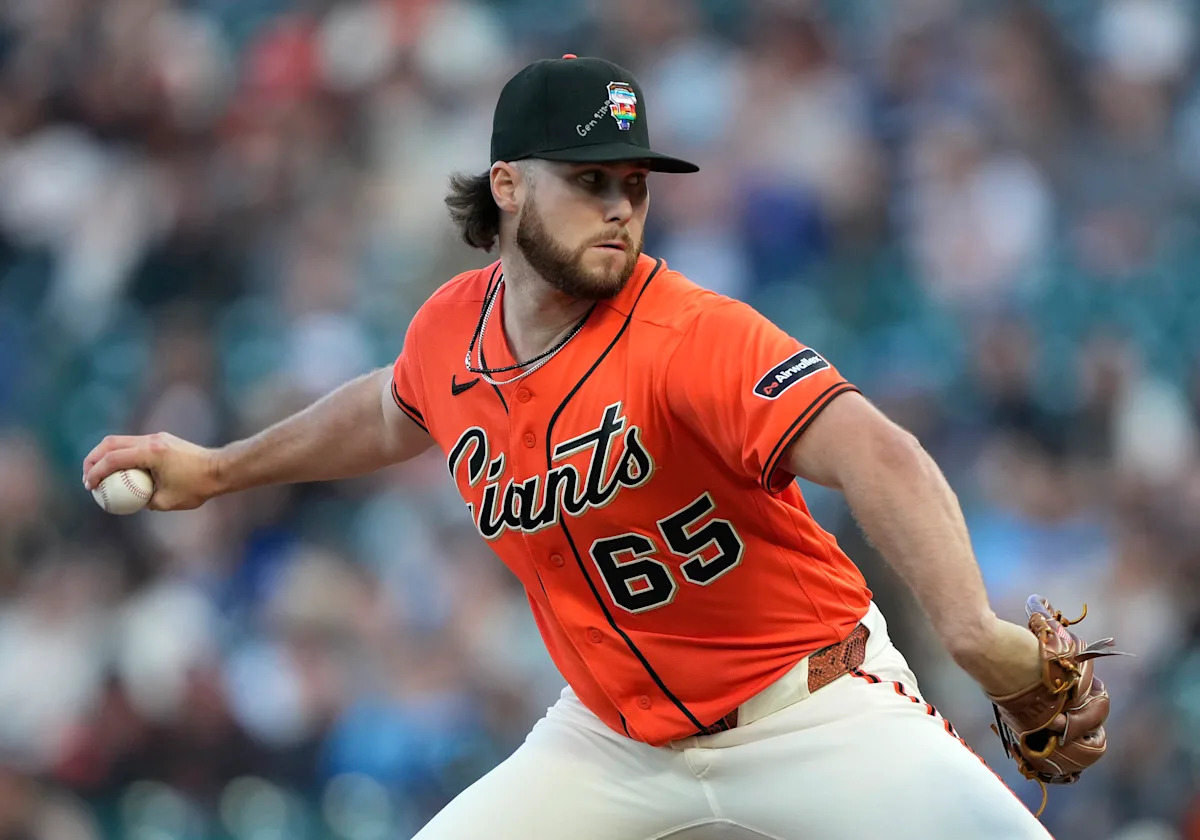
Hawley previously issued a letter to Manfred scrutinizing the league’s warning about the uniform adaptations that three Giants pitchers made during a June 12 loss to the Chicago Cubs, a defeat that occurred on the Giants’ Pride Night. Starter Landen Roupp and relievers JT Brubaker and Ryan Walker took the field with Bible verses written on the team-issued caps, which colored the traditional “SF” logo with a rainbow pattern.
Following the release of Hawley’s letter last week, Harmeet K. Dhillon, the United States Assistant Attorney General for Civil Rights at the U.S. Department of Justice, authored her own letter. She, too, addressed Manfred and said the U.S. Equal Employment Opportunity Commission would further investigate MLB for religious discrimination.
In Manfred’s letter to Hawley, he pointed to MLB’s strict uniform policy.
“… MLB has a policy negotiated with the Major League Baseball Players Association that states a “[p]layer may not write, attach, affix, embroider or otherwise display nicknames or messages on apparel or playing equipment.’ This policy is enforced without regard to the substance of the messaging.”
Manfred later noted in the letter: “… By warning the Giants players that they may not include Bible verses on their caps in the future, MLB was not discriminating or chastising those players based on their religious beliefs; rather MLB was enforcing (with only an oral warning) a long-standing, collectively bargained rule that keeps uniforms clean and avoids controversy. The rule has been similarly applied to a variety of messages, some as innocuous as messages to a player’s mother or honoring a deceased friend.”
Although Roupp, Brubaker and Walker were issued a warning about future violations of MLB’s uniform policy, Manfred emphasized that they weren’t fined or disciplined for the Bible verse inscriptions they featured on their Pride Night caps earlier this month.
Manfred dedicated part of his letter to providing context about MLB’s celebration days. There are 12 league-wide events each year in which every team’s uniform is altered to commemorate the day. Those are Mother’s Day, Father’s Day, Armed Forces Weekend, Play Ball Weekend, Memorial Day, Lou Gehrig Day, Independence Day, Hall of Fame Weekend, Childhood Cancer Awareness Day, Sept. 11, Jackie Robinson Day and Roberto Clemente Day.
MLB clubs are allowed to include other celebration days in their schedules, but, as Manfred wrote, beginning in 2023, the league adopted a policy of not permitting clubs to wear special uniforms or equipment on those team-specific celebration days, “except under very narrow circumstances.”
That same year, the Giants and Dodgers requested their use of the pride emblem on Pride Night uniforms to “be grandfathered in” as an exception to the policy.
“… MLB agreed to allow them to utilize the hats/uniforms with the emblems provided that no player or uniformed staff would be required to wear them, and that the team would speak to the players to make sure they were comfortable with the apparel,” Manfred wrote.
That qualification was apparently unmet by the Giants, who Manfred said botched the necessary messaging on the subject.
“… After the game had concluded, my office issued a routine oral warning about the uniform policy violation — unfortunately, it was issued before we became aware of the Giants’ lapse in communication,” he wrote.
Manfred finished his letter to Hawley by conveying MLB’s goal in this scenario:
“In closing, MLB believes in the right of our players and fans to express their religious beliefs, and at the same time supports the communities in this country that are fans of our Clubs, including the LGBTQ community. We believe that a policy permitting our Clubs to celebrate or honor segments of its fan base, yet does not require players or other on-field personnel to directly participate in the celebration in ways that make them uncomfortable, strikes the right balance.”
Read the full article here