







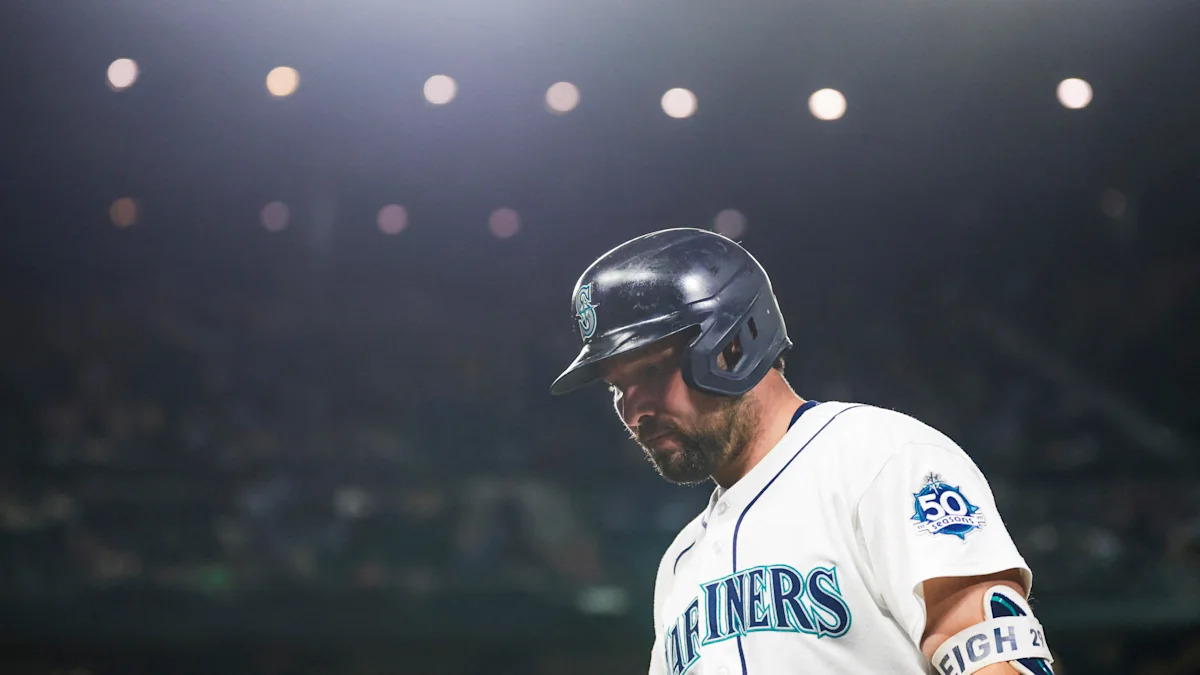
The Mariners were pushed to the brink of elimination Tuesday night, losing to the Astros 7-0.
Logan Gilbert never found a rhythm in this one, allowing baserunners to lead off each of the first three innings. Over only four innings of work, Gilbert allowed 10 hits, walked two batters and struck out only three. He avoided disaster in both the first and second, but couldn’t perform the escape act a third time, giving up a three-run homer to Christian Walker in the top of the third to open up a larger Astros lead, one that would never be threatened.
View Link
“Should have been a little more outside,” Gilbert said on the home run pitch to Walker. “It was kind of middle low. Not a great spot. It was 1-0 but still you gotta get it to the spot that we’re trying to go to.”
Keeping the current rotation, Gilbert would be slated to start in the final game of the season Sunday. When asked about his feelings on making that start, he said, “I mean, that’s my job. I love pitching. Like, it’s going to be taken away one day. So if I can have the ball, I want it. There’s fans showing up that pay their hard-earned money to watch up play, regardless of the situation. So, you know, I owe it to them, to the organization, everybody. But honestly I just love pitching.”
The Astros jumped out in front quickly in the top of the first. Jeremy Peña reached with an infield single on a ball that forced J.P. Crawford to dive to his right. After Peña stole second on the first pitch of the next at bat, Yordan Álvarez grounded an RBI single through the right side to drive him in. The next two hitters singled as well to load the bases with nobody out. Despite a rough beginning to his start, Gilbert wiggled his way out of trouble and stopped the bleeding right there. In the process, he struck out Yainer Díaz to pass Mark Langston for fourth on the Mariners’ all-time strikeout leaderboard. The Mariners managed a couple of baserunners in the bottom half of the inning and made Cristian Javier labor a bit, but Julio Rodríguez flew out to the warning track to leave the runners stranded. After an inning, the M’s trailed only 1-0.
The vibes of this game were gross from the get-go and one of the few moments that commanded my complete attention came on a bungled appeal call in the top of the fourth. Cam Smith never touched first base while avoiding a collision with Josh Naylor, who was attempting to field an errant throw from Brock Rodden. Cal Raleigh, who was backing up on the play, applied a tag to Smith before he could return to the base, and first base umpire Marvin Hudson signaled the runner safe. The Mariners then formally appealed with Gilbert stepping off the rubber and throwing to first, and when Hudson again signaled Smith safe — objectively the wrong call, mind you — Dan Wilson attempted to challenge the call and was denied for taking too long. He came out of the dugout to mount a protest, which convinced the umpires to huddle and discuss it, but they ultimately decided to leave their decision the way it was.
View Link
The play didn’t end up having consequences — the Mariners did get through the inning unscathed despite an additional base hit by the following hitter — but it is going to allow me to beat the drum about my hatred for the modern appeal play. Hudson gets it wrong on the field twice, though his interpretation of the first tag by Raleigh seems ambiguous; Wilson said Raleigh’s first tag during the play was because he thought the runner had made an attempt at second, a separate issue altogether. Either way, the rules allow for challenging a fact-based appeal, and Wilson was denied this opportunity for taking too long to challenge despite making said challenge immediately after attempting the formal appeal. Wilson apparently would’ve had to submit the challenge after Raleigh’s first tag, even though Raleigh was appealing something entirely different with it.
These days, in a fashion that’s emblematic of the sport as a whole grappling with its past, the line between archaic appeal play rules and instant replay challenges creates controversy more often than it doesn’t. In this case, it resulted in the wrong call being made. If formal appeals are to be encouraged, then teams shouldn’t be timed out of challenging incorrect appeal decisions immediately after they are made. MLB should probably find a way to sort out this weird gray area before it rears its ugly head in a more consequential moment.
Anyway, the last three paragraphs were a testament to how uneventful this game was from the Mariners’ side of things. I spent multiple innings writing that out and nothing of note happened in the meantime.
In the sixth inning, the Astros tacked on an additional run with a solo homer to left by Isaac Paredes. It was around this time I switched over to the radio to take one of my last opportunities to hear Rick Rizzs, who is finishing up his final year in the booth calling Mariners baseball. I cherished every moment, even as he choked out a dejected call of an Álvarez two-run homer in the eighth to extend the Astros’ lead and set the eventual final score. It’s been talked about ad nauseam at this point, but one of the true calamities of the 2026 season is Rizzs getting stuck with one of, if not the most disappointing season in franchise history for his swan song. A true injustice.
Tuesday night marked the fall equinox in the Northern Hemisphere, and while the Mariners still need another loss or Rangers win to be officially eliminated from playoff contention, their loss to the Astros might as well have marked an end to summer in the baseball sense as well. The Mariners will not be playing meaningful fall baseball in 2026. For the 44th time in 50 seasons, the Mariners will head inside for the long winter as another team from their division keeps playing.
Read the full article here


