






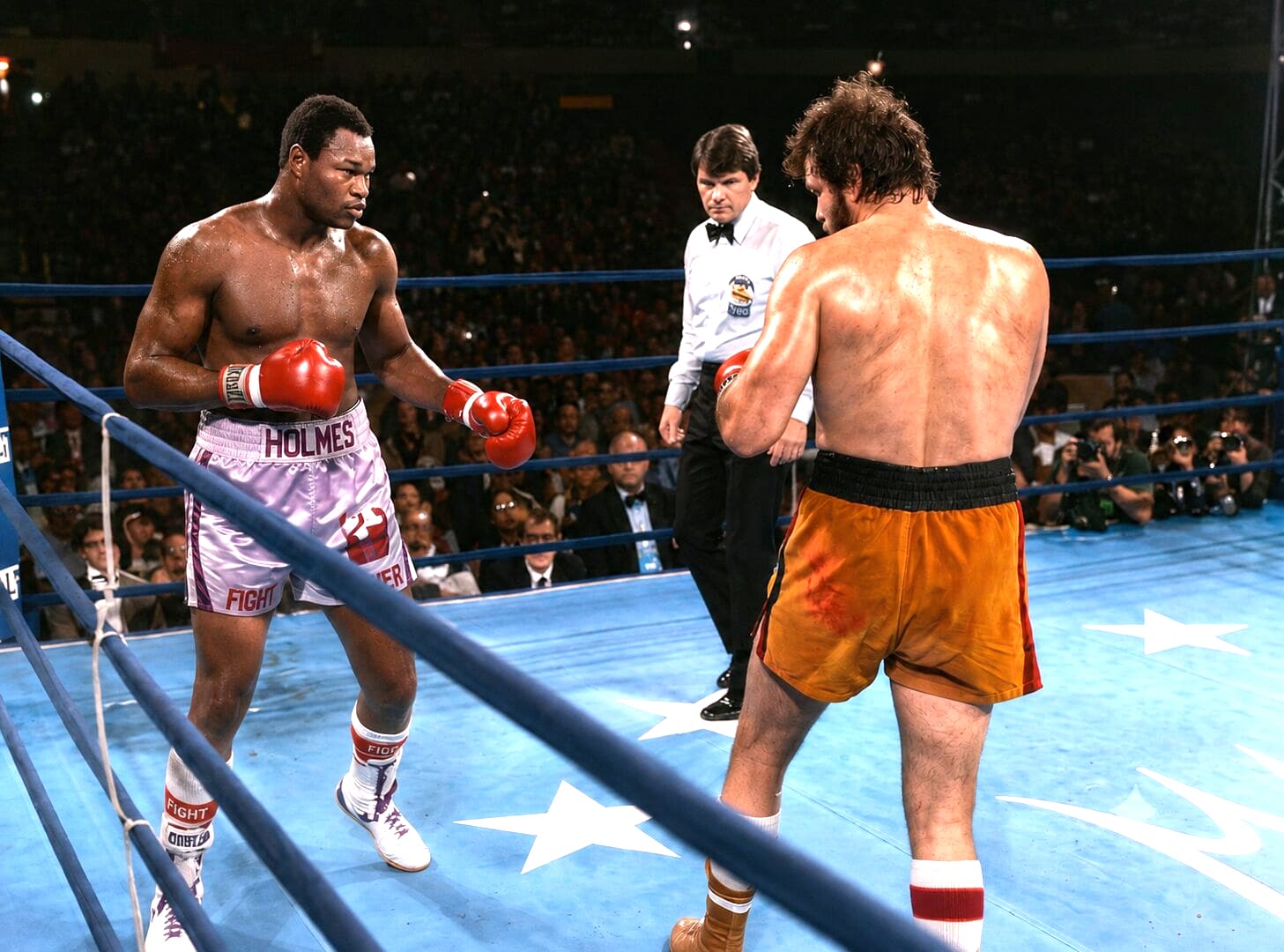


The timing could hardly have been worse. Just 13 days earlier, Duk Koo Kim died from injuries sustained in his lightweight title fight with Ray Mancini. Boxing was facing intense criticism over fighter safety, and every televised bout carried added scrutiny. Holmes then defended his WBC heavyweight championship against Randall “Tex” Cobb, a durable pressure fighter whose style played directly into the champion’s strengths.
It took only a few minutes to see how difficult the fight would be. Holmes established his jab immediately, keeping Cobb at the end of his punches while the challenger trudged forward looking for openings that rarely appeared.
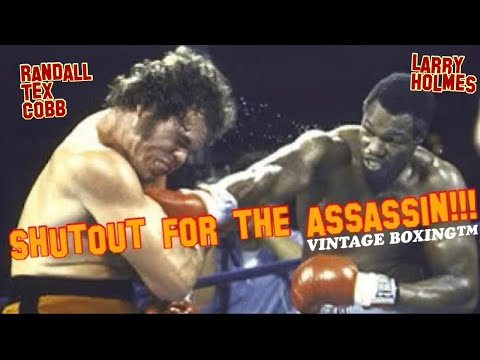
Holmes took control almost immediately, repeatedly snapping Cobb’s head back with straight punches while staying comfortably out of danger. Cobb kept marching forward, but each attempt to close the distance brought more punishment than success.
Before long, the championship no longer felt competitive. Cobb’s determination never wavered, yet he had no answer for Holmes’ speed, timing or control of the distance.
Howard Cosell reached that conclusion as the rounds wore on. Working the ABC broadcast, he repeatedly questioned why referee Steve Crosson allowed the fight to continue. Cosell called it a total mismatch and wondered whether the prolonged punishment damaged boxing’s public image. His frustration became one of the night’s defining storylines, and the bout is widely remembered as the final straw that led him to leave professional boxing broadcasts.
Nothing about the performance was reckless. Holmes avoided unnecessary risks and dominated virtually every round. Cobb spent most of the fight trying to get inside, only to run into the jab again and again.
Yet that same superiority turned the fight into an ordeal for many viewers. Every clean jab and unanswered combination reinforced the same question: when does a championship fight stop being competitive enough to continue?
After 15 rounds, the scorecards reflected the one-sided action. Holmes retained his title by unanimous decision. Cobb never touched the canvas despite absorbing hundreds of punches. His courage was beyond question, though the wisdom of allowing him to remain in the fight drew severe scrutiny.
Holmes-Cobb became far more than another title defense. It showed what can happen when a champion operates on a completely different level from his challenger. Coming less than two weeks after Duk Koo Kim’s death, the fight also renewed questions about when a referee should stop a one-sided beating.

Read the full article here


