




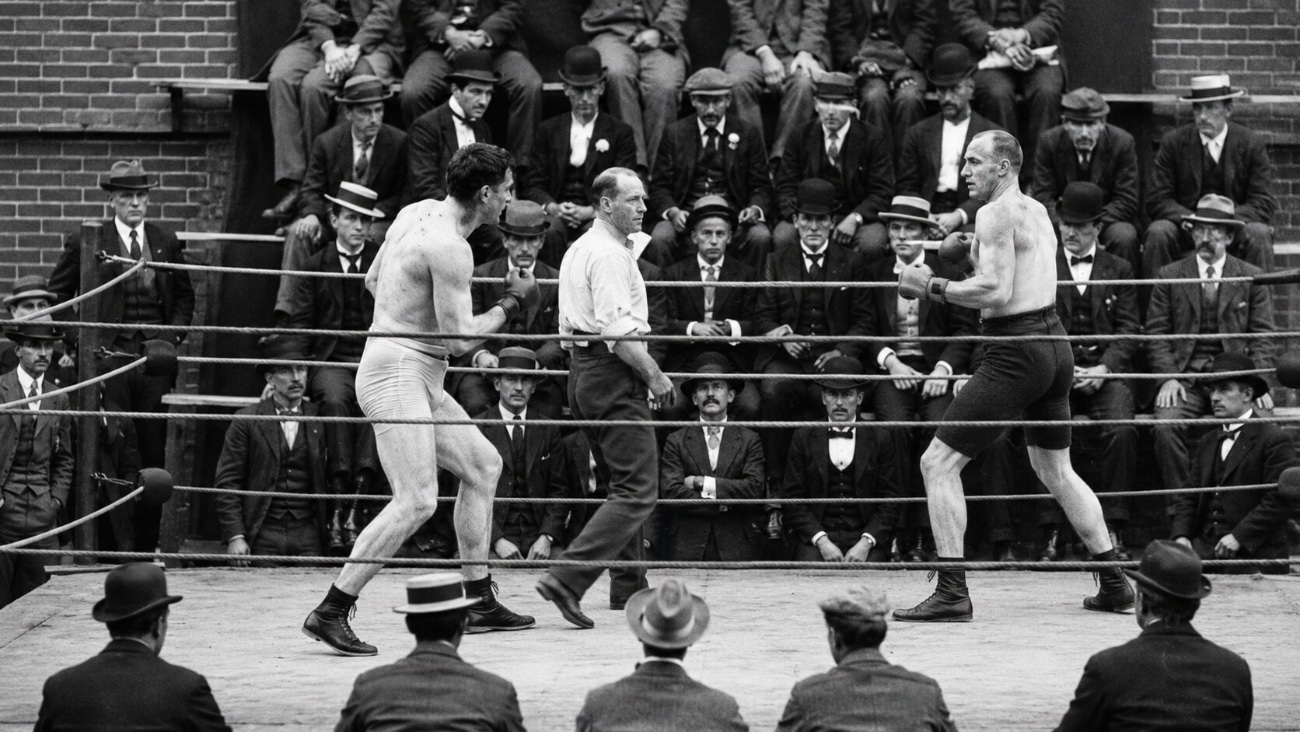
Heavyweight champion James J. Jeffries retained his world title on July 25, 1902, with one of the most dramatic comeback knockouts in boxing history, stopping former champion Bob Fitzsimmons in the eighth round before a packed crowd at the San Francisco Athletic Club’s new Arena in San Francisco, California.
Click here to watch live boxing this weekend


The scheduled 20-round rematch carried enormous significance. Jeffries was making the fifth defense of the heavyweight championship he had taken from Fitzsimmons three years earlier with an 11th-round knockout at Coney Island. Many believed the rematch would determine if the younger, physically imposing Jeffries or the aging master boxer still ruled the sport.
Jeffries entered the ring as roughly a 10-4 betting favorite thanks largely to his overwhelming physical advantages. “The Boilermaker” weighed about 219 pounds, nearly 50 pounds heavier than the 172-pound Fitzsimmons, who was approaching 40 years old. Despite giving away tremendous size and more than a decade in age, “Ruby Robert” remained one of boxing’s most feared punchers and the leading challenger for the championship.
The fight drew a gate of $31,880, with ticket prices ranging from $5 to $20. Jeffries collected a purse of $14,346, while Fitzsimmons earned $9,564. The San Francisco Athletic Club cleared roughly $7,970 after expenses, including a $500 payment to referee Eddie Graney. The octagonal Arena seated approximately 8,000 to 10,000 spectators, with nearly every seat occupied for the heavyweight championship rematch.
For seven rounds, Fitzsimmons boxed brilliantly. Using superior footwork and sharp punching, he repeatedly beat the champion to the target. By the second round, Jeffries’ nose had been broken. Deep cuts surrounded both eyes. Blood streamed down the champion’s face. Fitzsimmons kept landing clean combinations against the larger man. Jeffries refused to wilt.
Fighting from his trademark crouch, he absorbed punishment while waiting for his chance. Although badly swollen and nearly blinded by blood, the champion remained dangerous because of his durability and punching power.
The ending came suddenly in the eighth round. After another exchange, Fitzsimmons momentarily lowered his guard and spoke to Jeffries. Contemporary reports differ on exactly what was said. Some believed Fitzsimmons taunted the champion. Others believed exhaustion prompted him to invite Jeffries to throw his best punch.
Only one opening was needed. Jeffries fired a crushing right hand to the body before a devastating left hook crashed into Fitzsimmons’ jaw. The former champion collapsed and was counted out, giving Jeffries a knockout victory despite appearing to have lost nearly every round.
Although victorious, Jeffries looked like the beaten man. His face was grotesquely swollen and badly cut, while Fitzsimmons showed comparatively little visible damage. Observers remarked that anyone seeing the two fighters afterward would likely have guessed the wrong winner.
The bout briefly generated whispers that the knockout had been staged, but those claims quickly disappeared. Fitzsimmons dismissed any suggestion of wrongdoing, saying Jeffries had won fairly and that “to the best man belongs the laurels.” Jeffries, peering through swollen eyes, returned the respect by calling Fitzsimmons “the most dangerous man alive” and later described him as the greatest fighter of his weight.
Referee Eddie Graney also rejected the rumors, praising the contest as nearly flawless with no fouls or questionable tactics. Veteran boxing writer George Siler reached the same conclusion, crediting Jeffries’ extraordinary stamina for carrying him through the punishment before delivering the decisive finish.
The victory extended Jeffries’ reign as heavyweight champion. He successfully defended the title two more times before retiring in 1905 without losing the championship in the ring. His lone career defeat came five years later after returning from retirement to challenge Jack Johnson.
Fitzsimmons also added another remarkable chapter to his career. Rather than retire, he moved down in weight and became boxing’s first three-division world champion by capturing the light heavyweight championship.
Few heavyweight title fights have produced such a dramatic reversal. After absorbing seven rounds of punishment, Jeffries needed only one opening to preserve his championship and cement one of the most memorable victories of his career.
Last Updated on 2026/07/25 at 12:48 AM
Read the full article here


