







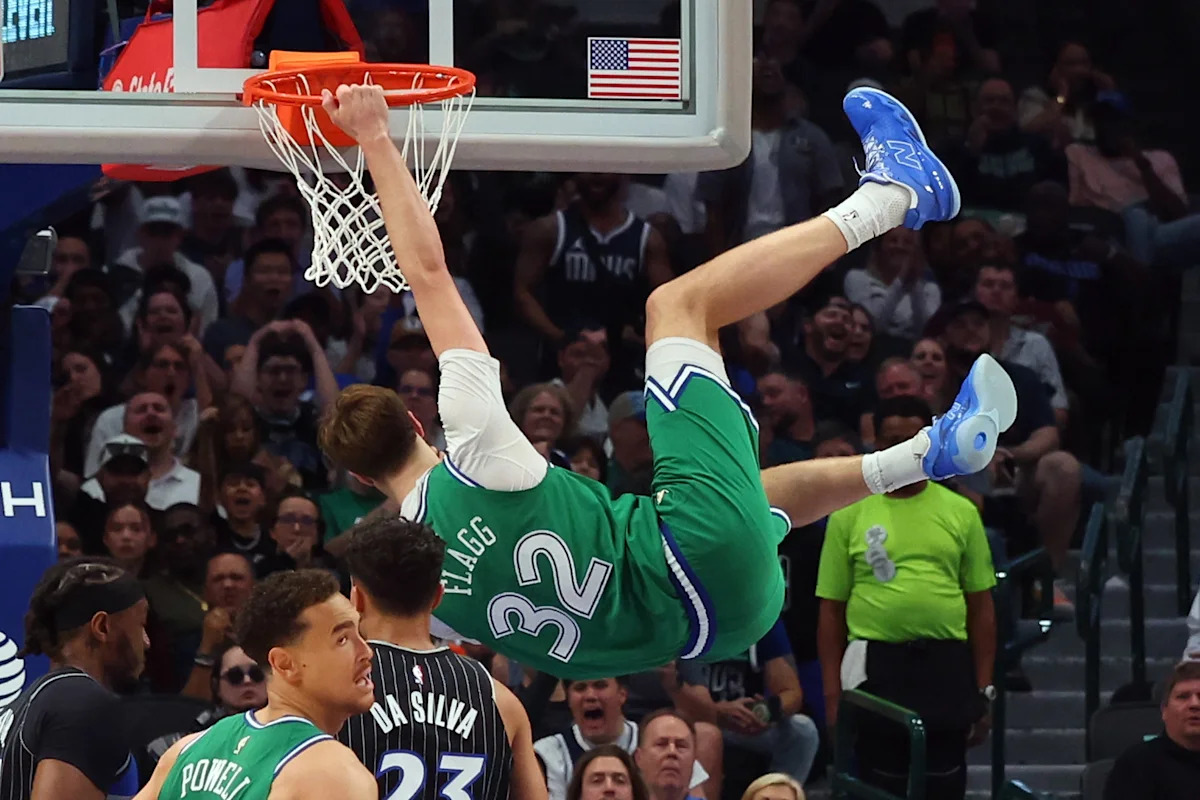
Using the latest release in the NBA2K franchise to simulate Mavericks Year Two scenarios for Cooper Flagg? It can get weird. And I’m talking Nathan Fielder movie trailer — compelling weird.
We all know how Flagg’s rookie year went — incredible for the individual, slow-moving car crash for the team.
With NBA 2K27 finally out, it seemed like a good time to do some projections on what comes next. Originally, I was going to do a five-year projection — until Cooper’s Year 2 fully pulled me in, heart first.
First off: I didn’t alter any settings or change anything that would make the Mavericks any better than what NBA 2K created them to be. No trades. No roster moves. Nothing. I let the computer cook.
I hit “Sim Regular Season” and waited for the first stop.
The NBA Cup was over — and guess who won?
That’s right, Mavs fans. Dallas hangs its first Cup banner in this simulation.
And who might be the Cup MVP, you ask?
Ooof. Those 3-point numbers.
But I can’t deny the results.
As I continued the sim, I had to deny somewhere between 25 and 30 trade offers for Kyrie Irving, but especially with the early success, I felt like we had to let the team ride it out. No meddling. No panic. We were staying the course.
Next stop: the All-Star Game.
I located Cooper in the Rising Stars Game, where he dropped 25 points, but he didn’t make the actual All-Star Game. Which, honestly, reminded me of everything I find dumb about the All-Star Game in the first place.
So I kept simming.
I noticed the wins were beginning to pile up, but I wanted to let the season play out before checking the standings.
And then, at the end of the regular season, there the little Mavericks sat:
The No. 2 seed in the West.
No end-of-season awards for Flagg, but Naji Marshall was named Sixth Man of the Year. Flagg, meanwhile, averaged a solid 22 points per game and pushed his 3-point percentage up to 35% — respectable considering he was launching eight attempts from deep per game.
Then came the playoffs.
First matchup: the Denver Nuggets.
And somehow — amazingly — the Mavericks pulled it out in seven games.
A successful season. I would have taken that result 10 out of 10 times.
But Round 2 was against our dear friends, the San Antonio Cowboy Accessories.
I braced myself for the inevitable disappointment.
Instead, the Mavs beat them in six.
At this point, I started to really believe.
I started imagining what I would do if this were happening in real life. Would I survive the glee? Would my body be physically capable of processing this much unexpected joy?
And then came the question I probably shouldn’t have allowed myself to ask:
Could my digital Mavericks make it to the Fake NBA Finals?
The Western Conference Finals wasn’t even against the Thunder. They had already been bounced in Round 2.
Instead, it was the Minnesota Timberwolves.


And suddenly, this wasn’t just a fun little NBA 2K experiment anymore.
So let me ask: Would you consider this a successful season?
A No. 2 seed in the West. A first-ever NBA Cup. Cooper averaging 22 points a game and shooting 35% from three. A playoff series win over Denver. Beating the Spurs in six. Naji Marshall winning Sixth Man of the Year.
At what point does this go beyond “successful” and into “wildest dreams” territory? The playoff berth? The first-round win?
But for now, the Mavericks were staring down the Timberwolves in the Western Conference Finals, with the Thunder already gone. Ultimately, the Mavs bowed out in five games after Digital Flagg picked up an injury in Game 2 of the Fake WCF.
If this happened in real life — if Cooper’s second season actually played out this way — what would you do?
Would you be thrilled and call the season a massive success regardless of what happens next? Would you start believing this team is actually ready to contend? Or would you be sitting there, like me, thinking, wait a minute… are we really two wins away from the NBA Finals?
Because at this point, I wasn’t simulating the rest of the season to see what happened.
I was simulating because I needed to know. And because this offseason will not end.
Read the full article here


