






By now most fans know that MLB has proposed a significant overhaul in the Rule 4, or domestic, draft. It would make high school players ineligible and college players eligible after the sophomore year instead of junior, reduce the draft overall from 20 rounds to 12, and cut the bonus budget by more than 30 percent. There are numerous knock-on effects of this, secondary and tertiary fallouts that we can anticipate and bemoan their coming.
It’s funny that I wrote about the MVP field yesterday — Bobby Witt Jr. would finish first or second in balloting if the vote were held today, and he was drafted out of high school. Konnor Griffin, the graduated consensus top prospect in baseball, high school draftee. Gunnar Henderson, Mike Trout, Madison Bumgarner, Alex Rodriguez, Mel Ott … the history of baseball is littered with examples of greatness as teens or 20-year-olds who didn’t need college seasoning. Why make Mike Trout, famously underscouted, play two years at Pitt before he can join an MLB organization?
The impact this would have on free agency is perhaps most profound. It would be virtually impossible for a player to reach the majors before his age-22 season, meaning he becomes a free agent after his age-28 season. I think the league may dangle some service time changes in CBA negotiations to cleave a gap between younger and older players in the union, but keeping the six-year system as it is means players will be at the end of their primes when they hit free agency.
Aaron Judge and Shohei Ohtani got their contracts when they hit the open market at 30 and 29, respectively, but they are not the model example. The younger you are, the more you’re going to make, and MLB deliberately engineering an ever-older free agent class increases downward pressure on those earnings. Not to mention you incentivize players signing extensions early, when players see a modicum of a salary bump than MLB minimum but you still have Ronald Acuña Jr. making $12.5 million a year as a 28-year-old.
Most of all, we see MLB’s continual attempt to control all of baseball itself, not just the federally-protected, Supreme Court-ratified monopoly they enjoy over the top flight of the sport. This has come in waves, from thinning out the minor leagues after 2020, making broadcasts harder to watch than ever, and seemingly being fully committed to missing games in 2027 when the collective memory of anyone who was around in ‘94 knows how dark an idea that is.
The more that MLB constricts, contracts, and breaks faith with its most faithful, the more we can start to see that it’s been late-stage capitalism all along. This thing that I love with all my heart, that I commit ridiculous amounts of time and brain space — why do I have Aaron Judge’s career OPS memorized? Why? — is a black hole, a maw so dense that no dollar will be able to achieve escape velocity.
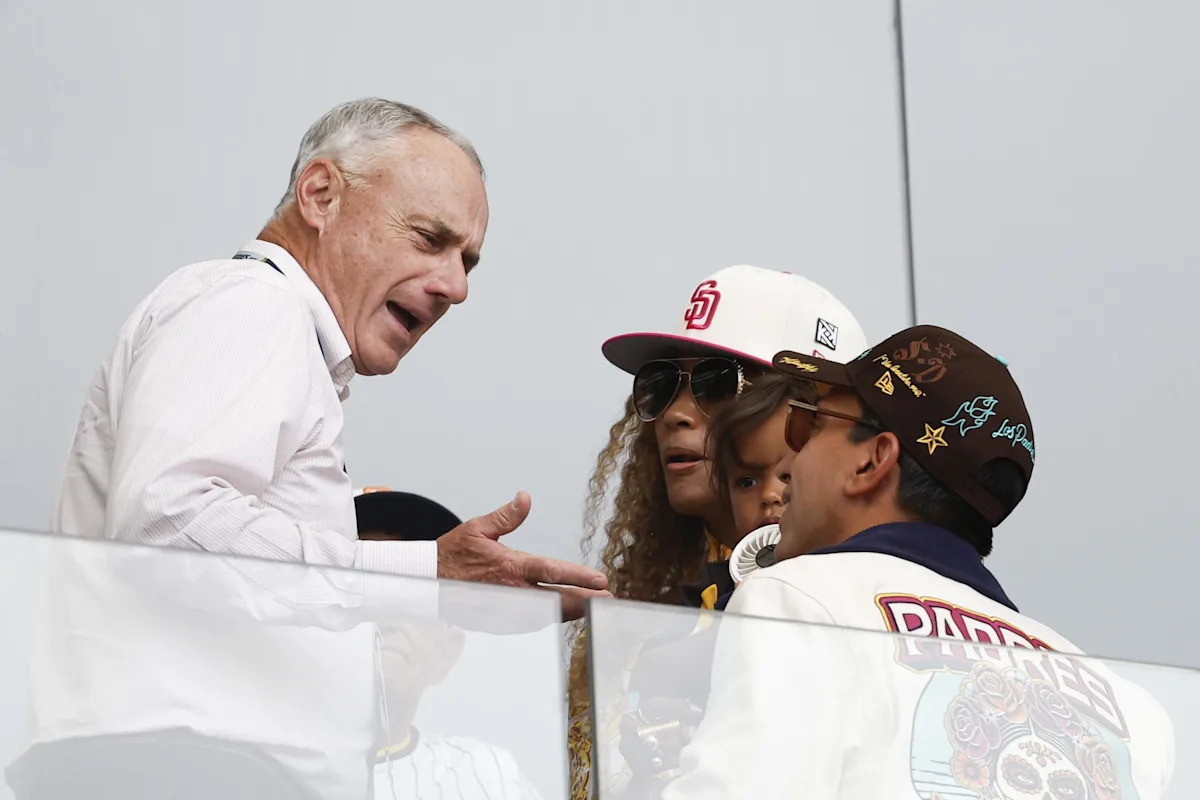
For a moment in the spring I was hopeful that Rob Manfred would start to worry about his legacy. He’s coming to the end of his term with a work stoppage on the horizon, and while he is a very effective, and very well-compensated, heat shield for a 30-man country club committed to spending ever less, he’s still a man. Legacy should weigh on the minds of the ambitious — look no further than the President’s fervent desire to put his name on everything he possibly can — and I had a hope for just a little bit that that weight would motivate Manfred to care about baseball, the small b that isn’t in the acronym of his employer.
But I don’t know if it’s possible for Rob to care about small-b baseball. He’s certainly not incentivized to care about it, the proverbial general trusted with a weapon his livelihood depends on him using.
Read the full article here


