



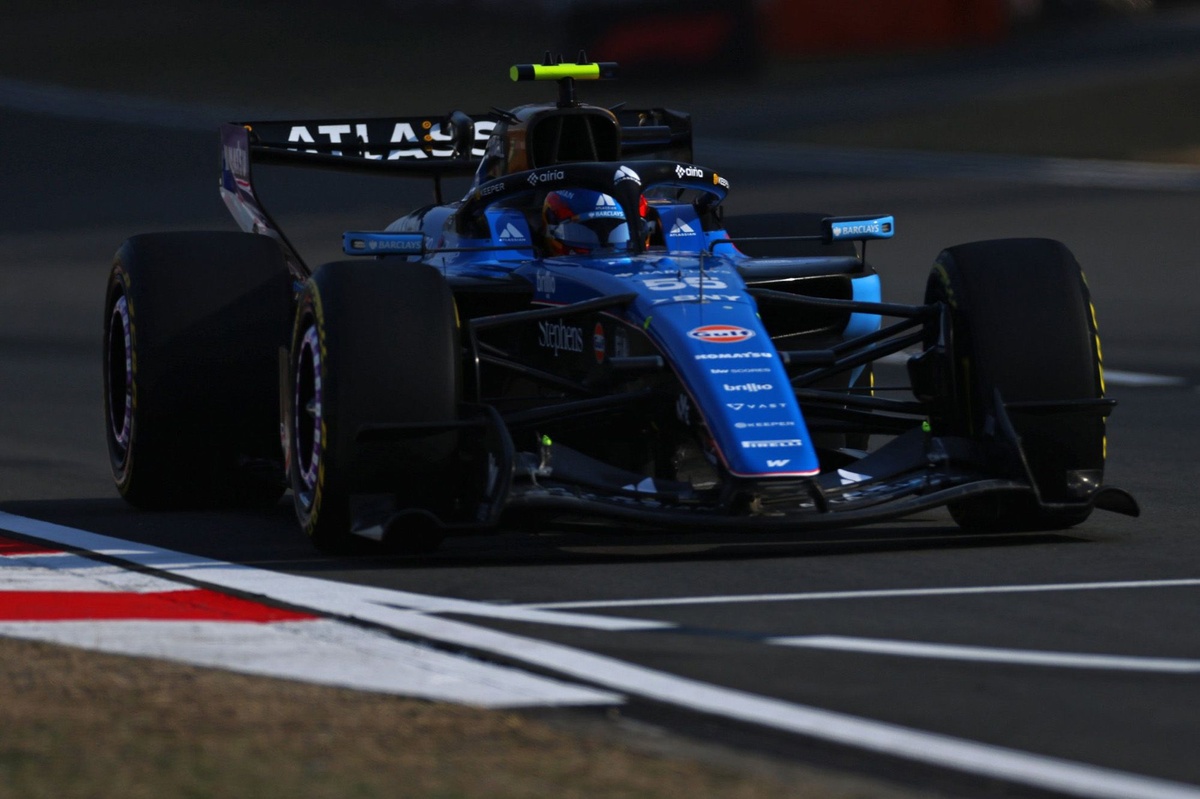
Some things in Formula 1 never change, even when new regulations come into force. Carlos Sainz’s ninth-place finish illustrated this with a shrewd strategy at the Chinese Grand Prix.
Instead of using the Overtake mode for its purpose in Shanghai, he used it to defend himself from the car behind. It is precisely in situations like this that a driver’s clear-headedness shines through in critical moments.
Even in the duel between Charles Leclerc and Lewis Hamilton, at one point the two Ferrari drivers slowed down before the line that activates overtaking mode, so as to maximise energy and power to attack their team-mate. In the case of the Spanish Williams driver, however, the scenario was completely different.
With an overweight car, Sainz knew full well that defending against Franco Colapinto’s Alpine would not be easy. Colapinto had started on hard tyres and made the swap to mediums, closing in rapidly on Sainz.
An opportunity, however, presented itself when, with just a few laps to go, George Russell found himself in the position of having to lap both the Spaniard and the Argentine.
The moment the Briton overtook Colapinto on the long straight leading to Turn 14, Sainz glanced in his mirrors and chose to lift off the throttle on the exit, even at the cost of losing a few metres. However, this decision had a very specific purpose: just before the final corner lies the line that determines eligibility to use overtaking mode, provided one is within a second of the car ahead.
Overtake mode works in a similar way to the old drag reduction system as, even when being lapped, if a driver is less than a second behind the leading car at the detection point then Overtake mode becomes active.
Carlos Sainz, Williams
Photo by: Guido De Bortoli / LAT Images via Getty Images
And Sainz exploited this to use Overtake mode in defence against Colapinto, using the extra electrical energy granted to make it harder for the Alpine driver to close the gap.
“It was a P9. I knew that if he attacked me, I wouldn’t play anything too stupid, considering that I could have a top-10. For the team, a point is still a good result,” said Sainz.
“So I wasn’t going to play aggressive, but then I saw the blue flags coming and I said ‘if I play this well and give him dirty air, get my Overtake mode, give him dirty air, get my Overtake mode’. Rather than DRS train, an Overtake mode train,” explained Sainz.
The tactic worked and secured Williams its first points of the season, an unexpected result given the current performance of the car, which is still significantly heavier than the competition – although the numerous retirements certainly helped, including those of Max Verstappen – who was fifth at the time of his forced pit stop due to a cooling issue – and the two McLarens.
It is a real boost to morale though, encouraging the team to keep pushing and gradually reduce the car’s weight over the coming months, with a weight-reduction programme that James Vowles has confirmed to have been extended to around six races compared to the original plan.
“In the end, it’s still a P9; it’s not what I want. Even though they’re good points for me and the team, I really hope they serve as motivation, as a boost for everyone back home to push and dig deep,” said the Spaniard.

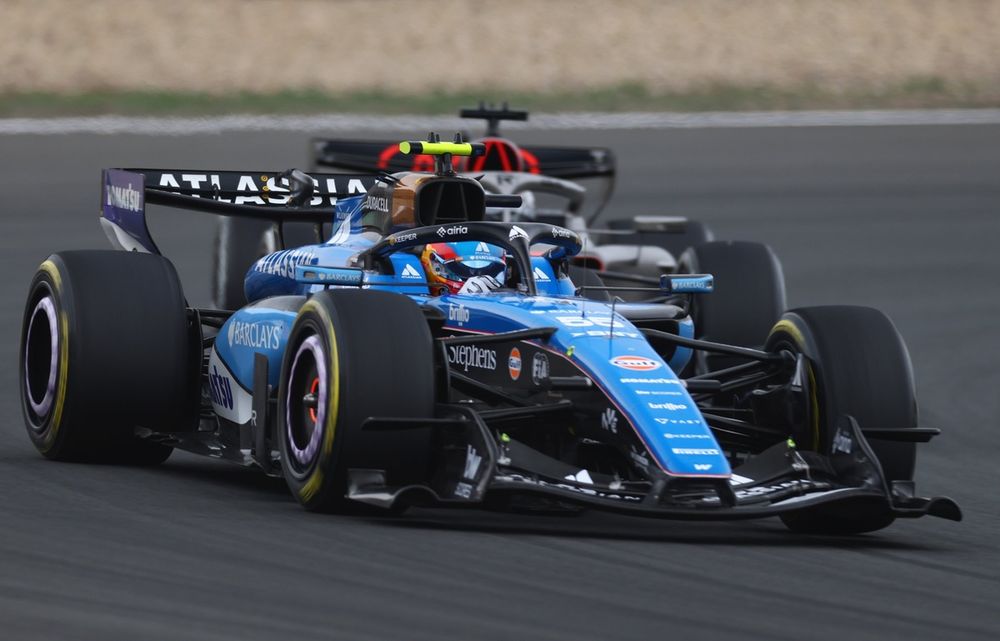
Carlos Sainz, Williams
Photo by: Alastair Staley / LAT Images via Getty Images
“It’s not the start to the season we wanted; it wasn’t what we expected from this car, so I think this result to push hard back in the factory. Because the reality is that today, even whilst battling with the midfield cars, I felt I had no chance. It’s frustrating, but at the same time it’s a good result to take home, and we hope it helps everyone.”
We want to hear from you!
Let us know what you would like to see from us in the future.
Take our survey
– The Autosport.com Team
Read the full article here


