







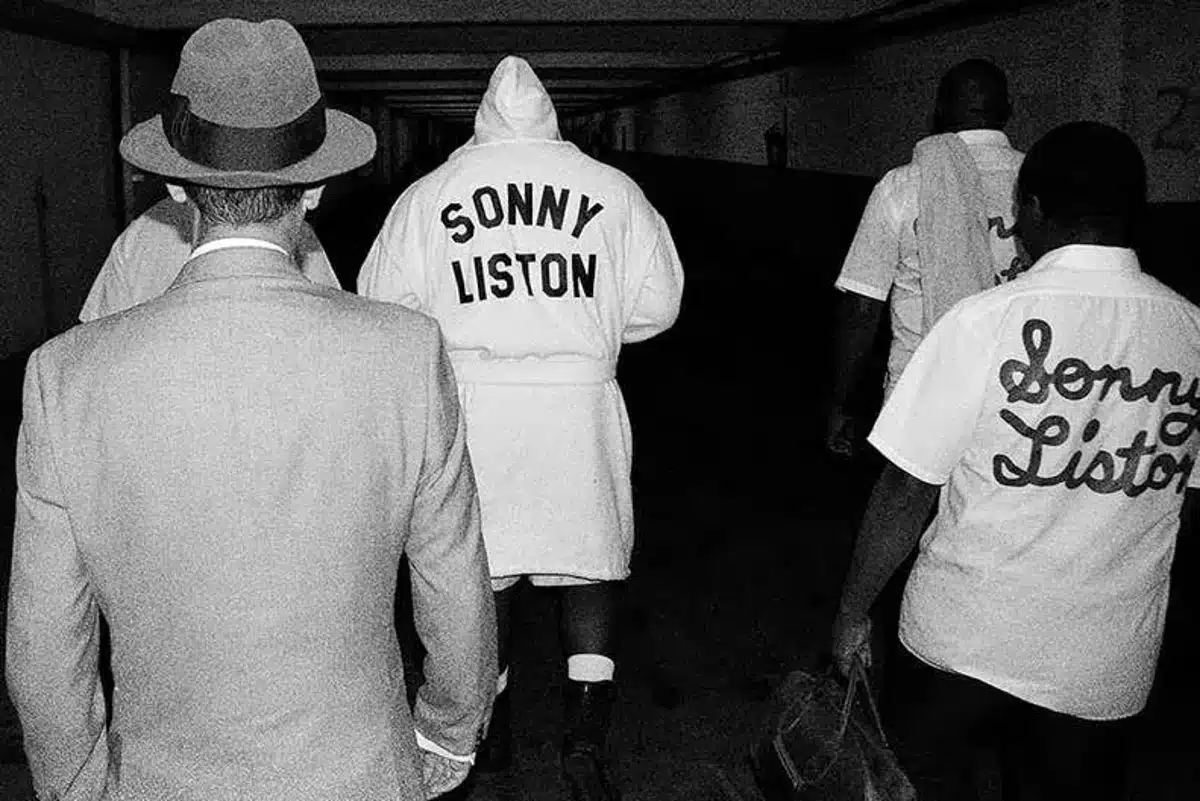


There were legitimate reasons to scrutinize him. Liston’s history included prison time for armed robbery, further arrests and ties to men with organized crime interests in boxing. Frankie Carbo and Frank “Blinky” Palermo held financial interests in his career. Reporters were justified in questioning those relationships.
The coverage frequently went beyond examining his history. It allowed that history to obscure every other part of him. Boxing offered Liston no rehabilitation story, even though prison was where he learned to box and found the skill that gave him a legal profession. His past was not presented as something he had survived. It became proof that he remained permanently dangerous.
Race also influenced how America saw him. Patterson was considered respectable, articulate and safe for the heavyweight title. Liston became the large, scowling Black man coming to take it away. His size, stare, and criminal record were packaged together until the fighter disappeared behind the character.
Liston did little to soften that image because he never looked comfortable performing for the press. He rarely smiled, gave short answers, and looked ill at ease during interviews. Reporters often interpreted his discomfort as hostility. He lacked the education, confidence and media training to present another version of himself.
Other Black heavyweight champions had qualities that helped reassure or captivate the public. Joe Louis projected quiet dignity. Patterson displayed sensitivity and vulnerability. Muhammad Ali later controlled every room through humor, intelligence, and language. Liston possessed none of those qualities. His silence allowed promoters and reporters to define him.
Destroying Patterson strengthened the monster boxing had created. Liston knocked him out in 2:06 at Comiskey Park, then required only four additional seconds to repeat the result in their July 1963 rematch. Those victories should have confirmed his place as an exceptional heavyweight. Instead, they made him look cruel.
The performances were also reduced to physical intimidation. Liston possessed enormous strength and punching power, but he was not an unskilled bully. His long jab controlled distance, his body punches weakened opponents, and his ability to cut off the ring prevented smaller heavyweights from escaping. Cleveland Williams and Zora Folley were beaten by a technically developed fighter, not merely a frightening man with heavy hands.
Cassius Clay understood Liston’s public identity and used it against him. He mocked Liston’s appearance, age and intelligence before taking the championship in February 1964. When Liston remained on his stool after the sixth round, the supposedly indestructible champion was recast as a coward. The disputed first-round finish in their 1965 rematch added another permanent stain.
Questions about those fights have followed Liston for decades, but they now overshadow almost everything he accomplished. His mob associations, two losses to Ali and mysterious death dominate his story. His jab, strength and destruction of the leading heavyweights of his era receive far less attention.
Liston contributed to his reputation through his criminal activity and the people surrounding his career. Those facts ultimately swallowed every other part of him. Boxing built a monster, profited from the fear, and discarded the man once Ali supplied the sport with a more charismatic champion.

Read the full article here


