

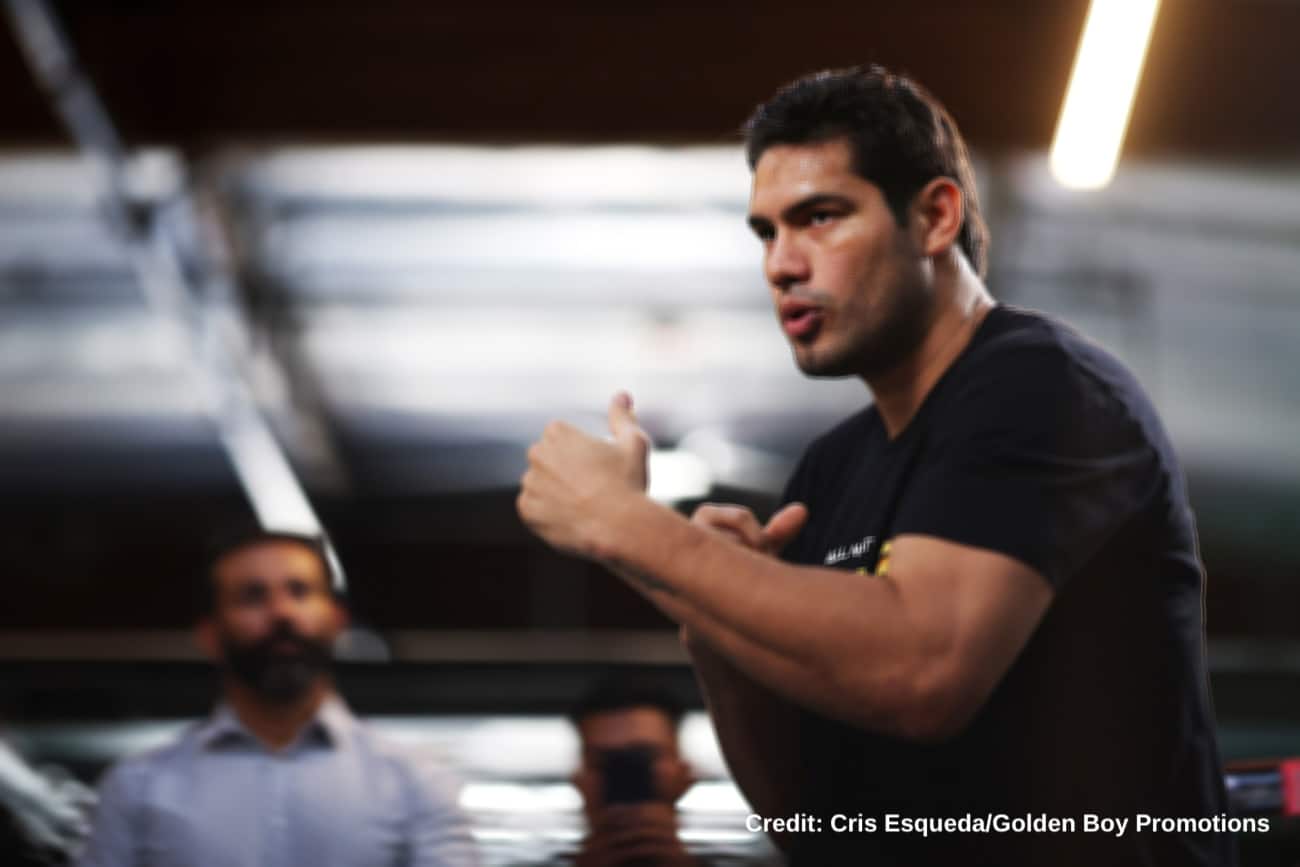

“This will not just be a regular fight,” Ramirez said. “We’ve sparred a lot, but it’s different with smaller gloves and no headgear.”
The 200 rounds of sparring may work against him. Ramirez claims it removes the mystery, but it also means Benavidez knows exactly what happens to Ramirez’s composure when he’s pushed into a corner.
Ramirez pointed to the contrast in styles as the part that should hold up regardless of familiarity. Benavidez brings a forward, pressure-heavy approach, while Ramirez expects to rely on movement and positioning over 12 rounds. That dynamic has been visible before in sparring, but never with rounds scored or a title attached.
The weight is the other variable. Ramirez has already settled at cruiserweight, while Benavidez is moving up from 175 pounds for this fight. Ramirez did not question the move directly, but made it clear that adding weight is not automatic.
“You need to make sure you’re ready for that,” Ramirez said. “You have to be confident in your body and listen to it.”
The undercard carries its own signals. Jaime Munguia enters the co-main event against Armando Resendiz with Eddy Reynoso in his corner and input from Canelo Alvarez, backing his claim that experience over 12 rounds will be the difference. Resendiz, who described himself as the hunted, has leaned into a pressure approach and expects a fight rather than a technical exchange.
Oscar Duarte’s position is more complicated. He had prepared for a world title opportunity against Richardson Hitchins before that fight fell through, a shift he described as mentally difficult. He now faces Angel Fierro in a 10-round bout, a matchup that replaces a title path with a reset.
“I was ready for a championship fight,” Duarte said. “That was tough, but now I’m focused on what’s next.”
The main event may come with built-in familiarity, but the weight, stakes, and scoring ensure it will not play out the same way.
Read the full article here