




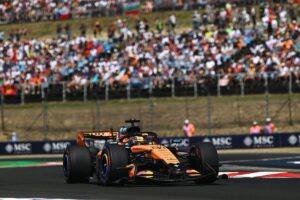


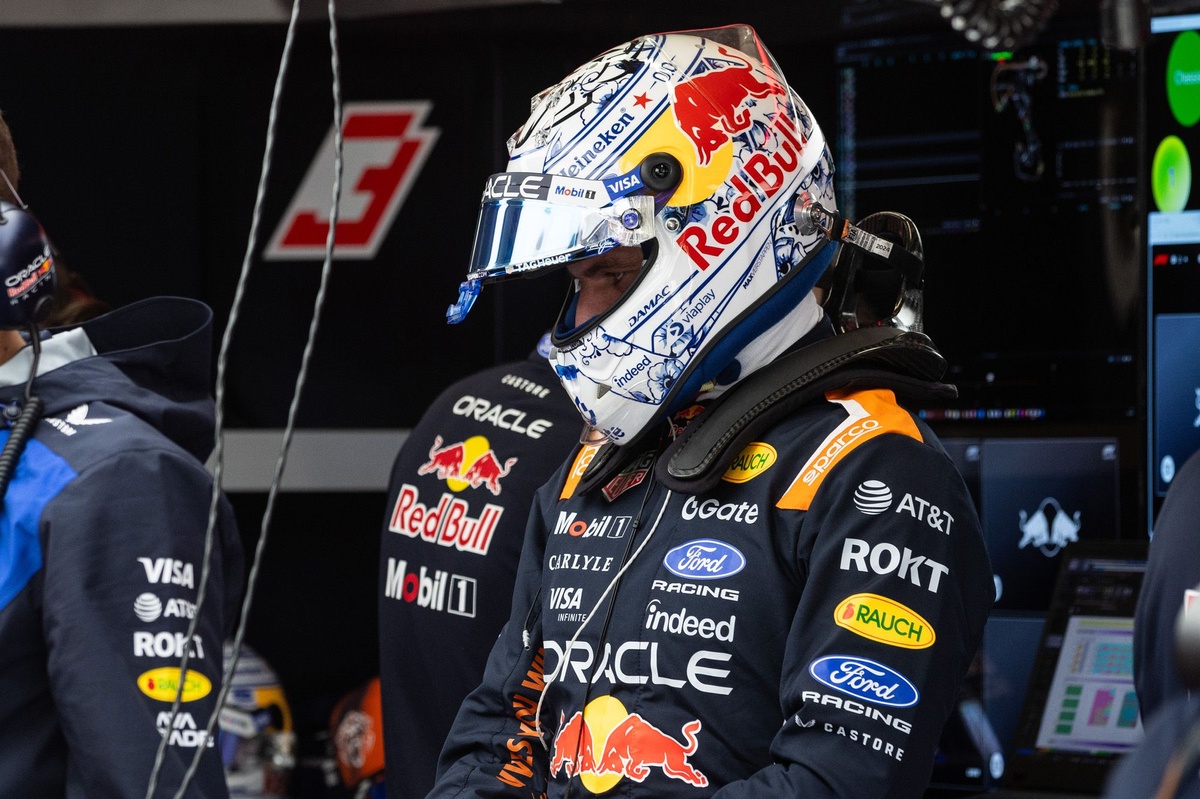
During Formula 1’s media day in Monza, one topic dominated all conversations with the drivers: energy management. After two energy-rich circuits in Budapest and Zandvoort, this promises to be another race weekend in which the weaknesses of the current regulations will be fully exposed.
Top speeds at the Temple of Speed will be considerably lower than in previous years, with Oscar Piastri even saying that McLaren’s simulations indicated lower top speeds than in Hungary.
This is partly related to the extremely low harvesting limit of just four megajoules for the Monza weekend. This is intended to limit the amount of super clipping, but means there will be a significant amount of regular clipping, with drivers running out of MGU-K power early on the straights.
It is no coincidence that Verstappen already used Monza as an example in 2023 when warning about the current regulations. The Red Bull driver predicted downshifting on the long straights, and according to the drivers, that is exactly what will happen this weekend.
In 2026, however, Verstappen no longer wants to criticise the regulations every weekend, partly because he has mentally accepted that this season can no longer be salvaged – something that applies both to Red Bull’s performance and to F1 as a whole.
“It’s going to be pretty painful,” said the four-time world champion. “This track is just very energy inefficient, but I also don’t want to be too negative about it all.
“It is what it is. I have accepted it mentally. I prepared for a weekend where it will be a bit different. You cannot push flat out and you have to be gentle with the throttle pedal, let’s call it like that.”
After two high-energy circuits, the flaws in the current regulations will once again be laid bare at Monza
Photo by: Simon Galloway / LAT Images via Getty Images
The latter applies in several respects. Drivers have to adapt to the ideal approach in terms of energy management, however unnatural that may feel. Moreover, small deviations from that can confuse the self-learning algorithms in the power unit, which can have major consequences – as Piastri experienced first-hand at Spa.
Verstappen stressed that the FIA and F1 are doing everything they can to ease the pain – including the extremely low harvesting limit for this weekend – but that the fundamentals simply cannot be changed in the short term. Monza will therefore be a weekend of gritting their teeth.
“Changes are being made to try and make it better, but better doesn’t mean that it’s fixed. It’s far from fixed,” said Verstappen. “But, I mean, everyone is trying to do the best they can, the FIA and F1, they are all trying to deal with the current situation.”
Red Bull more competitive in Monza than in Zandvoort?
Although the overall picture promises to be painful, Monza could in theory suit Red Bull slightly better than Zandvoort, where Laurent Mekies’ team was a long way off the pace throughout the weekend and clearly the fourth force.
With drivers running without MGU-K power on many parts of the circuit, the internal combustion engine could play a slightly greater role and, judging by the FIA’s ADUO results, Red Bull has the most powerful one.
Nevertheless, Verstappen remains sceptical. Besides the internal combustion engine, it will also come down to managing the limited amount of energy available, and that is precisely an area in which Red Bull has not been particularly strong.

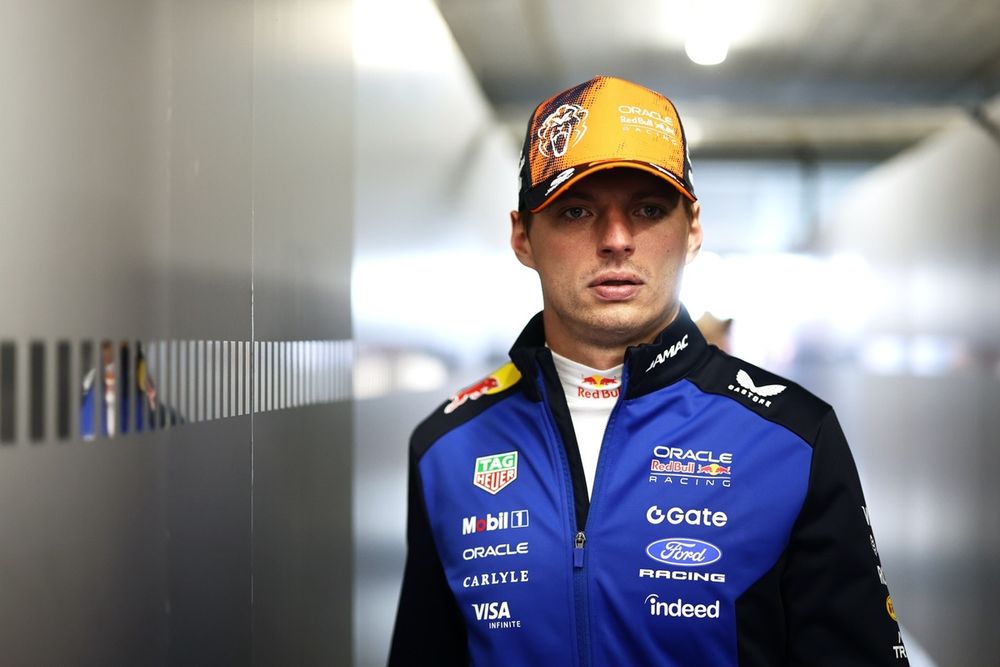
Verstappen had the flu at Zandvoort, but says he has now made a full recovery
Photo by: Mark Thompson / Getty Images
“I think on the inefficient tracks, we’ve not been particularly great with energy, so I don’t expect miracles here. It will still be tough,” he said.
“Other teams around us are bringing upgrades at the moment, so they are making steps forward. We were already behind before that, so I don’t expect that to change now. But we just try to learn more about the car and the things that we want to do different for next year as well.”
The only positive news is that Verstappen is personally feeling better again. The four-time world champion was suffering from the flu during his home race in Zandvoort, but has since recovered.
“I felt good in terms of the impact [after the crash] because it was the SAFER barrier. That was the first time I hit that and actually it did its job really well,” he said.
“But yeah, I was very ill. And actually, once you’re fully healed, you appreciate again how good it is to feel like that. Because the whole weekend in Zandvoort was awful and even after Zandvoort for a few days, I was still not good.
“So it was actually really nice to have that week to recover and feel better again. Because it’s been a very long time that I felt like that.”
We want to hear from you!
Let us know what you would like to see from us in the future.
Take our survey
– The Autosport.com Team
Read the full article here


